Ezekiel 25 17 and the Pentagon’s prayer theater: what Pete Hegseth borrowed, and why it matters

The phrase ezekiel 25 17 sat at the center of a Pentagon prayer service that was meant to bless a war effort, but the wording used from the podium closely matched Quentin Tarantino dialogue instead of a plain reading of the Old Testament.
Verified fact: Pete Hegseth said his prayer drew on Ezekiel, and he later framed the text as a military prayer tied to combat search and rescue. Informed analysis: the mismatch between the sacred framing and the cinematic language is now the real story, because it raises a sharper question than whether one verse was quoted correctly.
What is being hidden inside the language of Ezekiel 25 17?
The central question is not whether Hegseth mentioned a Bible passage. It is why a Pentagon worship service, presented as a solemn moment of devotion, delivered wording that closely tracks a violent film monologue. The prayer was spoken on Wednesday at a Pentagon service described as part of a new series designed to bless the Iran war effort. Hegseth said the prayer was based on a passage in Ezekiel, and the verse associated with that citation is one that speaks of “great vengeance” and “furious rebukes. ”
Verified fact: the wording heard at the podium was presented as a prayer for search-and-rescue crews. It was also described as “CSAR 2517, ” shorthand for Combat Search And Rescue. Verified fact: the same text echoed lines from a Quentin Tarantino film in which actor Samuel L. Jackson delivers a much longer speech built around the same biblical cadence.
The issue is not merely literary. It is institutional. A defense secretary was using a worship service inside the Pentagon to frame wartime conduct, while borrowing language that blurred scripture, film, and military branding into one message.
How did the Pentagon prayer turn into a film quote?
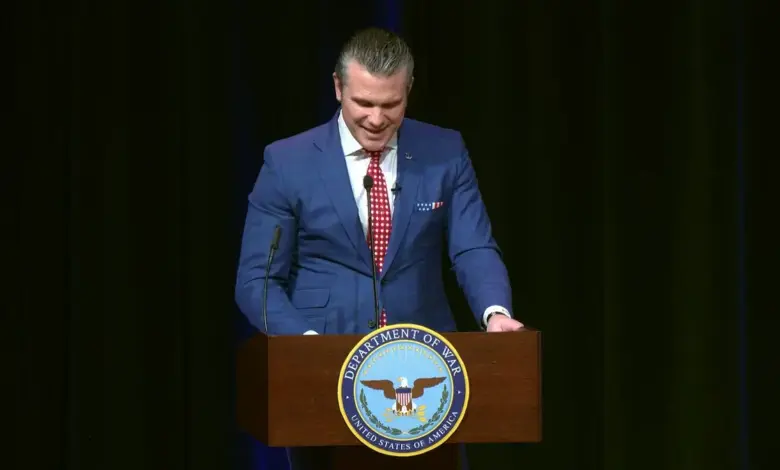
The service unfolded around a sequence that made the borrowing more visible. Hegseth stood at a podium with a Bible stamped with a Jerusalem Cross and the words “Deus Vult. ” He first read from Luke 7, then singled out the line, “And blessed is the one who is not offended by me. ” He used that passage to argue that people often misread events through cultural, political, or philosophical lenses.
He then shifted to a prayer he said had been handed to him days earlier and linked it to the rescue mission that located and extracted Air Force crew members shot down in Iran. The prayer used the same opening structure as the film monologue: “The path of the downed aviator is beset on all sides by the iniquities of the selfish and the tyranny of evil men. ” It continued with language about a “brother” and “the valley of darkness, ” then ended with a declaration that vengeance would be laid upon those who sought to capture and destroy the brother.
Verified fact: the last two sentences of the prayer mirrored Ezekiel’s language, but the speaker was changed from God to the commander of the U. S. mission. That shift matters. It recasts a script associated with divine judgment into a human military register, which is why the prayer reads less like a devotional text and more like a performance of sanctioned force.
Who benefits when worship and war are fused?
The public face of the service was devotion. The practical effect was message discipline. Hegseth said what people hear in the worship service should affect the policy and military decisions they make, including decisions related to the war. That line matters because it collapses the boundary between spiritual ritual and operational judgment.
Verified fact: this was the second month in a row that Hegseth, who likes to call himself “secretary of war, ” read a violent prayer during a Pentagon worship service. Verified fact: he cast the prayer as part of a broader effort to bless the U. S. war against Iran. Informed analysis: the beneficiaries are those who want religious language to reinforce military purpose, because the service gives policy a moral halo without requiring public debate over the meaning of that symbolism.
There is also an apparent credibility problem. Hegseth said the prayer reflected Ezekiel 25 17, but the phrasing more closely matched the film scene than the biblical text alone. He did not mention the film script or the actor’s delivery when he presented the prayer. That omission matters because it suggests the sacred explanation was used to cover a text that drew heavily from pop culture violence.
What do the named institutions and documents actually show?
The only named documentary anchors in this matter are the Bible passage, the film dialogue, and the Pentagon prayer itself. The book of Ezekiel contains a short line about vengeance. The film dialogue expands that line into a theatrical threat filled with righteous condemnation. Hegseth’s prayer fused the two, while also inserting military identifiers such as “CSAR 2517” and the title “Sandy 1. ”
Verified fact: the rescue mission reference tied the prayer to a recent extraction of Air Force crew members shot down in Iran. Verified fact: Hegseth said he had just been discussing blockades with Admiral Cooper before turning to the service. That sequence suggests the worship setting was not separate from policy talk; it was placed directly beside it.
Viewed together, the facts show a pattern rather than a one-off slip: religious language, wartime messaging, and cinematic violence were blended into a single Pentagon moment. The result is not just confusion over a citation. It is a public demonstration of how easily sacred text can be repurposed to sanctify conflict.
What accountability is still owed after Ezekiel 25 17?
The Pentagon does not need more theatrical prayers. It needs clarity about whether a worship service is meant to be devotion, morale-building, political signaling, or all three at once. If Hegseth intends to invoke scripture, he should do so without borrowing violent film language that obscures the source. If the service is meant to shape policy, that claim should be stated openly and examined publicly.
Informed analysis: the broader concern is transparency. A defense secretary who uses a worship platform to bless a war effort and then anchors it in a text that resembles a movie monologue invites scrutiny over what authority he is actually claiming. The public deserves a clean line between scripture, symbolism, and military purpose.
Until that line is restored, ezekiel 25 17 will remain less a Bible citation than a test case for how far ritual can be stretched before it stops looking like faith and starts looking like propaganda.