Kyaw Chin Doe apprehended: the arrest that leaves the Lambton College shooting case with one unanswered question


Police say kyaw chin doe has been apprehended in the Dane Nisbet case, but the most important detail remains missing: how the arrest happened, and what investigators learned from it. That silence matters because the case has already moved through a Canada-wide warrant, multiple charges, and a fatal shooting that killed a 20-year-old junior hockey player outside a bar on the Lambton College campus.
What is known, and what is still being withheld?
Verified fact: Sarnia police posted Monday evening that 24-year-old Kyaw “Chin” Doe had been apprehended. He had been wanted for second-degree murder, two counts of attempted murder, and possession of a firearm while prohibited. Police had already described him as the subject of a Canada-wide warrant in connection with the Dane Nisbet case.
Verified fact: Dane Nisbet, 20, died in the early morning hours of Friday, April 10, after someone opened fire outside a bar on the Lambton College campus. Police said three people were injured in the shooting. One suffered life-threatening injuries, while two others had non-life-threatening injuries.
What remains unclear: police have released no immediate word on the circumstances of Doe’s arrest. That absence leaves a gap at the center of a case that has already produced arrests, search warrants, and a sharply expanded reward for information. The question is not whether action was taken; it was. The question is what this arrest now means for the wider investigation, and why the public still does not know the sequence that led to it.
How did the investigation narrow in on the prime suspect?
The record so far shows a widening law-enforcement response. Investigators identified Doe as the prime suspect in the Lambton College shooting and said they believed he had left the Sarnia area and was in hiding. They also said he had ties to criminal networks in western and northern Ontario. At the time of the incident, he was subject to a court order prohibiting him from possessing firearms.
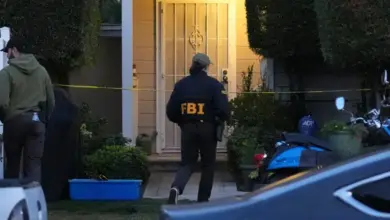
Search warrants were executed on April 11 at two London homes, where a vehicle was recovered and one suspect was arrested. In a separate set of warrants on April 12, police searched both a Sarnia home and a hotel unit in nearby Point Edward while looking for Doe. They did not find him at that time, but they did arrest one of the two women with the suspects the night of the shooting. Police also said they believe they found the weapon used in the shooting during the hotel unit search: a Glock 45 acquired outside Canada.
That trail matters because it shows the case was not built on a single breakthrough. It unfolded through a chain of physical searches, vehicle recovery, and arrests tied to the people around the scene. In the middle of that work sits kyaw chin doe, now apprehended but still central to unanswered questions about planning, flight, and access to the firearm.
Who is implicated, and who says they are not?
Police have charged Oudom Bun, 23, of London with second-degree murder and two counts of attempted murder. Ava-Leigh Lightheart and Johnathan Osborne-Walsh, both 19, are each facing multiple charges, including being an accessory after the fact to murder. A man who was in the Point Edward hotel unit was also arrested.
One woman who was let out of the vehicle after the shooting occupies a different place in the case. Police said there is no evidence of any culpability regarding her, and she is now considered a witness. That distinction is important: it shows investigators are separating those they say may have helped conceal the aftermath from someone they do not believe played a criminal role.
For the Nisbet family, the case has also been framed publicly through the loss of a young athlete. Nisbet had played for teams including the North Middlesex Stars, Mooretown Flags, Sarnia Legionnaires and Lambton Jr. Sting Triple-A. Police described him as a tough and talented player whose passion for the game touched everyone lucky enough to know him. That human detail gives the investigation a wider public weight: this is not only a firearms case, but a homicide that has landed in a community with clear and personal grief.
Why did the reward rise to $50, 000, and what does that say about the search?
The reward for information leading to Doe’s arrest was increased to $50, 000 thanks to donations received. That increase signals how difficult the search had become and how much pressure investigators were under to produce a result. It also suggests the arrest was not treated as routine, but as the outcome of a sustained effort supported by public incentives.
Informed analysis: the enlarged reward, the Canada-wide warrant, and the sequence of searches together point to a case where police were trying to overcome mobility, concealment, and possible network support. In practical terms, the investigation appears to have depended on both traditional enforcement steps and public cooperation. The apprehension of Doe removes one immediate unknown, but it does not by itself explain how he was found or who, if anyone, helped him move or hide.
That is why the arrest should be read as progress, not closure. The public still does not have the arrest circumstances, and the broader case still includes charges against multiple people, a recovered vehicle, a reported firearm, and a homicide that began with gunfire outside a bar on campus. The facts now visible suggest a layered investigation, not a simple manhunt.
What should happen next in the Dane Nisbet case?
Police, prosecutors, and court officials now face a basic transparency test: explain the arrest timeline, clarify the remaining roles in the case, and state what can be confirmed about the weapon and the movement of suspects after the shooting. Those answers matter because the case already includes a dead victim, injured survivors, and multiple people facing serious charges.
For the public, the standard should be straightforward: verified facts should be fully documented, and unresolved questions should not be left buried beneath the headline of an apprehension. kyaw chin doe has been apprehended, but the case remains incomplete until investigators account for how the shooting unfolded, how the search succeeded, and what the arrest reveals about the network around it.