Animal Welfare Crisis in Ireland: 5 Shocking Details After Documentary Footage Spurs EU Concern

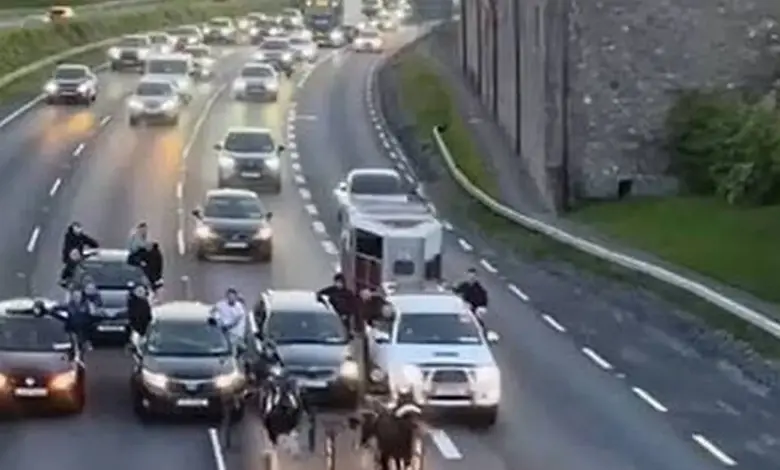
A new television documentary has turned a local controversy into a wider test of animal welfare standards in Ireland, after footage of horses being struck and forced along public roads drew attention beyond the country’s borders. The programme, broadcast on a German public broadcaster on April 18 as part of a series focused on animals, featured the work of My Lovely Horse Animal Rescue and has since fed concerns raised to policymakers. What makes the issue sharper is not just the footage itself, but the growing pressure for consistent enforcement across Europe.
Why the documentary matters now
The central concern is not abstract. The documentary showed horses being struck, driven at speed through busy urban streets, including central Dublin, and involved unregulated sulky racing. That imagery has become a political prompt as well as a public one. Campaigners say the material has reached members of the European Parliament as part of efforts to strengthen protections. In that sense, animal welfare is no longer being discussed solely as a domestic enforcement issue; it is being framed as a cross-border standards question.
At the heart of the story is My Lovely Horse Animal Rescue, a charity that rescues, rehabilitates and rehomes animals. Its presence in the documentary gives the issue a practical dimension: the problem is not only what is visible in the footage, but the burden placed on rescue groups that deal with the aftermath. The reaction also reflects a broader expectation among European citizens that animal protection laws should not depend on geography or uneven enforcement.
Road safety, enforcement and a policy gap
The controversy has also collided with a separate political warning. A Fine Gael TD said there is a glaring gap in road safety laws around horse-drawn vehicles. Michael Murphy, Chair of the Oireachtas Transport Committee, described a recent incident in Clonmel as shocking and deeply distressing, saying it created a serious risk to public safety and resulted in the tragic death of a horse. He said the situation was entirely avoidable and exposed a troubling reality in which young people were placed in control of powerful animals on public roads.
That assessment matters because it shows how animal welfare is being pulled into a wider debate about road safety and enforcement. Murphy said the issue cannot continue and called for a coordinated national response to regulate horse-drawn vehicles on public roads. He argued that the matter spans multiple policy domains — road safety, animal welfare and enforcement — and therefore needs a whole-of-government approach. He also called for an interdepartmental working group involving the Departments of Transport, Agriculture and Justice to examine risks, strengthen protections and address enforcement powers available to An Garda Síochána and local authorities.
What lies beneath the headline
The deeper significance is that the documentary has exposed a gap between public expectation and practical control. The footage of horses driven through central Dublin and across busy roads raises a direct question: how can laws that exist on paper be made to operate consistently in real conditions? That question sits at the core of the current debate over animal welfare, because the issue is not only whether bad conduct exists, but whether the system can reliably prevent repeat incidents.
There is also a reputational dimension. Once the footage reached policymakers outside Ireland, the issue moved into a European frame where standards are compared and scrutinised. The documentary’s impact suggests that public tolerance for visible mistreatment is narrowing, especially when it appears on roads shared with other traffic and in settings where enforcement is unclear. In that environment, the debate is unlikely to fade quickly.
Expert and official reaction
The clearest official intervention came from Michael Murphy, Chair of the Oireachtas Transport Committee, who called for a coordinated national response. His remarks underline a key point: this is not being treated as a single-agency problem. Instead, the response proposed by Murphy places transport, agriculture and justice in the same conversation, with local authorities and An Garda Síochána also part of the enforcement picture.
The documentary’s focus on My Lovely Horse Animal Rescue also adds an operational perspective. Rescue organisations can only do so much once animals have already been placed in harmful conditions. That is why the latest debate is moving beyond the images themselves and toward structural safeguards. If policymakers act, the question will be whether they can translate concern into enforceable rules that protect both road users and animals.
Regional implications beyond Ireland
The wider significance extends well beyond one documentary or one country. Campaigners say the issue has already reached MEPs, which means animal welfare in Ireland is now part of a broader European conversation about enforcement consistency. If the concern spreads, it could sharpen scrutiny of how member states handle horse-related activity on public roads and whether existing protections are robust enough in practice.
That makes the current moment unusually sensitive. The combination of shocking footage, a fatal incident in Clonmel and calls for a national response has created momentum that is difficult to dismiss. The unresolved question is whether the documentary will lead to lasting reform, or whether the public outcry will once again outpace the pace of enforcement. Either way, the pressure on Ireland’s policy response is now unmistakable.