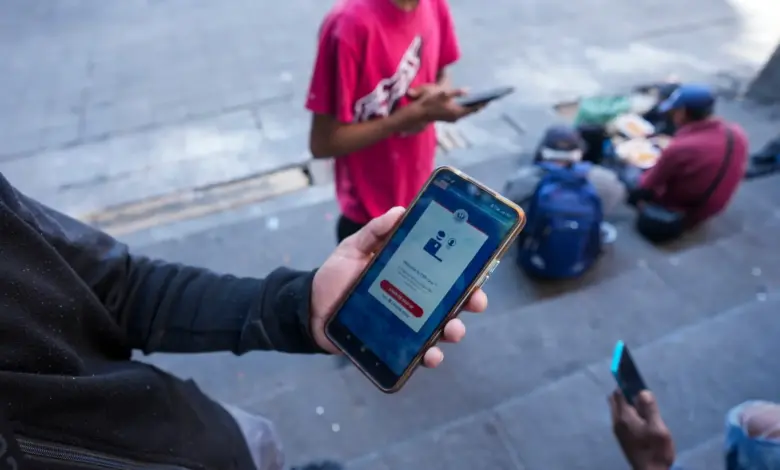
For hundreds of thousands of people, cbp one was never just an app. It was the doorway through which they entered the United States with a measure of legal protection while their asylum cases moved forward. Now, that protection is once again being put at risk, leaving families to weigh another round of uncertainty after a court fight over the rules that governed their stay.
What is the administration trying to do now?
The Trump administration plans to again end the temporary legal status of people who applied for asylum in the United States through cbp one. The move was outlined in a court filing in Boston, Massachusetts, after a judge previously ruled that an earlier attempt to terminate that status was unlawful.
Under President Joe Biden, people who registered for an appointment with US Customs and Border Protection were preliminarily vetted and granted temporary legal status while their asylum cases were being decided. About 900, 000 people received humanitarian parole under the program. That legal status now sits at the center of a renewed dispute, with the administration saying it will begin sending new termination notices.
Why does cbp one remain at the center of the case?
The latest filing says the administration is complying with Federal Judge Allison Burroughs’s order, while also moving ahead with a new round of notices tied to a Tuesday memo from Rodney Scott, the head of US Customs and Border Protection. The memo itself is not public, but the Justice Department said Scott offered an explanation for why, in his view, parole is no longer appropriate for those affected.
For the people involved, the issue is not abstract. Many had already received emails in April of last year saying their status had been terminated and telling them it was time to leave the United States. Burroughs later ruled that the Department of Homeland Security had not followed the proper procedures in ending the legal status of cbp one users, a decision that forced the administration back to court.
How are lawyers and advocates responding?
Lawyers for Democracy Forward and the Massachusetts Law Reform Institute, which represent people whose status faces termination, asked Burroughs to block what they described as a deliberate attempt to evade compliance with the court’s order. Their argument reflects the broader stakes: whether the government can change the terms of protection for people already inside the country while their asylum claims remain unresolved.
The administration’s immigration policy has taken a hard line during Trump’s second term, including the near shutdown of most asylum claims at the southern border. Shortly after taking office, officials also ended the cbp one app and replaced it with CBP Home, a tool for self-deportation. The government has claimed there was an invasion at the border that amounted to a national emergency, a position used to justify bypassing legal requirements tied to asylum access.
What happens next for asylum seekers?
The legal path ahead remains unsettled. A federal appeals court ruled on Friday against the administration’s ban on asylum at the southern border, a step that could allow applications to be processed again. The administration is expected to appeal that decision.
For now, the people who built parts of their lives around cbp one are left waiting for the next notice, the next court filing, and the next ruling that could change whether they can stay. In Boston, in apartment kitchens, in crowded shelters, and in workplaces across the country, the question is the same: how much legal certainty can remain when the rules keep shifting around them?