Trump Faces Conservative Blowback Over a Low-cost Carrier Rescue That Tests the Anti-Bailout Right

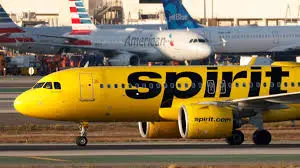
For a low-cost carrier, the number at the center of the dispute is enormous: $500 million. That is the scale of the bailout the Trump administration has been considering for Spirit Airlines, and it has triggered an unusually sharp backlash from conservatives who normally line up behind the White House. The question is not just whether Spirit should be rescued, but what it means when Republicans who built their political identity around opposing bailouts now confront one.
Verified fact: President Trump first floated the idea on Tuesday when reports surfaced that the administration was weighing a $500 million bailout for Spirit. A lawyer for the airline confirmed that it is in talks with the government on how to finance going forward. Informed analysis: The political problem is larger than the company itself. If the White House intervenes, it risks turning a narrow airline rescue into a symbol of government reach that many conservatives spent years fighting.
What is being said inside the Republican coalition about the low-cost carrier rescue?
The criticism has come quickly and from prominent Trump supporters. Sen. Ted Cruz of Texas called the plan “a terrible idea” in a post on social platform X. Sen. Tom Cotton of Arkansas said it was “not the best use of taxpayer dollars. ” Sen. Mike Lee of Utah echoed the broader conservative argument, saying that “competition among airlines suffers when government bails them out. ” Sen. Ted Budd of North Carolina added that “Americans shouldn’t be on the hook for another failing business as its competition thrives. ”
Verified fact: These are not marginal voices. Cruz, Cotton, Lee, and Budd are all Republican figures with national profiles, and several are associated with the party’s anti-bailout tradition. Informed analysis: Their response signals that the administration is not simply facing disagreement over one airline, but a test of whether the party’s long-standing skepticism toward public rescues still holds when the beneficiary is a politically sensitive company.
Why does the bailout revive old Republican wounds?
Some conservatives have privately compared the idea to the Troubled Asset Relief Program, the financial-sector rescue enacted during the 2007-08 crisis. That comparison matters because TARP became a defining grievance for conservative activists who argued that Washington protected powerful interests while ordinary taxpayers absorbed the cost. The backlash to that episode helped shape the Tea Party movement, which later fed into the broader Republican coalition that elevated many of the same figures now objecting to a Spirit rescue.
Verified fact: A memo from former Vice President Mike Pence’s group, Advancing American Freedom, asked why Washington is not bailing out companies struggling because of the administration’s tariffs. Marc Short, chair of the group and a former legislative affairs director under the first Trump administration, said, “The Tea Party Patriots were the precursor to MAGA, and I think there’s a lot of members that know that. ” Informed analysis: The message is clear: for these conservatives, the issue is not only Spirit Airlines, but whether the administration is breaking with the anti-bailout politics that helped build its own base.
Who benefits if the government steps in?
The administration’s critics argue that a rescue could shield a struggling company while shifting risk to taxpayers. One Republican strategist warned that opposition in the Senate could open a fracture between some members and the White House. The strategist also said the move would be a poor political look for Republicans heading into the midterms, especially when inflation is high and confidence in government is low.
Verified fact: Transportation Secretary Sean Duffy was said not to favor the plan, and he questioned it in an interview with on Wednesday. He said, “There’s been a lot of money thrown at Spirit, and they haven’t found their way into profitability, ” then asked, “If no one else wants to buy them, why would we buy them?” Informed analysis: That line of questioning cuts to the core of the debate: whether public money should prevent an outcome the market has already signaled, or whether intervention only delays the inevitable.
Is the real issue Spirit Airlines or the precedent it sets?
On its face, the dispute is about one low-cost carrier and a single bailout package. In practice, it is about precedent. Critics inside the Republican Party are not only asking whether Spirit deserves help; they are warning that a rescue could normalize government involvement in companies that cannot sustain themselves. That concern becomes more acute because the airline industry is competitive, and one airline industry source called the administration’s potential bailout “spectacularly bad judgment. ”
Verified fact: The source also suggested that if a business is not viable in a competitive landscape, public money may merely postpone the final outcome. Informed analysis: That is the hidden tension inside the debate over low-cost carrier policy: preserving competition may sound like a justification for intervention, but conservatives are arguing that rescuing one player can distort competition more than losing it.
What happens next for the White House and the party?
The immediate future depends on whether the administration presses ahead or recalibrates in response to internal resistance. The opposition is already broad enough to matter, reaching senators, a Cabinet-level official, and Republican-aligned outside voices. It also arrives at a politically sensitive moment, because the White House must weigh the costs of appearing to rescue a company against the costs of abandoning it.
Verified fact: The administration has not yet finalized the plan, and the airline remains in discussions over financing. Informed analysis: That uncertainty gives both sides room to shape the narrative. If the rescue moves forward, Republicans who opposed bailouts may face a credibility test. If it collapses, the episode may reinforce the idea that conservative resistance can still constrain a president from helping a failing low-cost carrier. Either way, the fight over low-cost carrier policy now carries consequences far beyond Spirit Airlines.