Anzac Day in Torquay was marked by a large dawn gathering at Point Danger, where veterans marched just before 6am and a 100-year-old veteran spoke to the crowd through a pre-recorded interview. The service unfolded in a tone of remembrance and restraint, even as isolated heckling at some services was condemned as out of step with the day’s purpose.
What happened at Point Danger before sunrise?
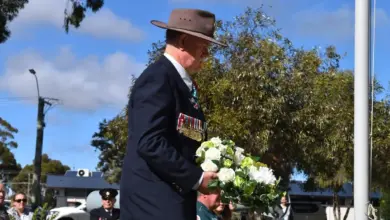
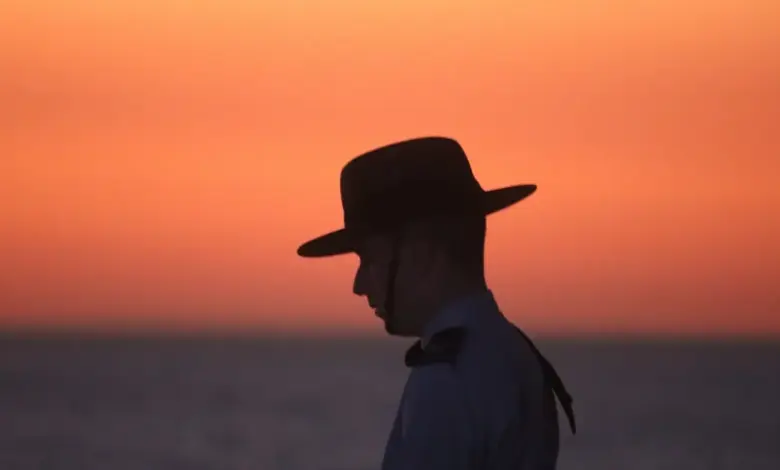
Verified fact: The Torquay RSL held its annual dawn service at Point Danger, described as the largest Anzac Day dawn service in Victoria outside the Shrine of Remembrance. Veterans marched in just before 6am. Paul Barker, president of Torquay RSL, delivered the Anzac Requiem. Students from Surf Coast Secondary College then told the story of two diggers from the Torquay area: Mount Duneed’s Chas Harold Gogoll and Connewarre East’s Percy George Graham.
Verified fact: The guest speaker was Cliff Dunstone, a veteran aged 100, who addressed the crowd through a pre-recorded interview. He had worked as a telegraph messenger with the Postmaster General before enlisting in the Royal Australian Air Force at 18 in 1943. His initial flight training took place in Tasmania and later in Canada. He qualified as a bomber pilot on 29 March 1945.
Informed analysis: The sequence of the service mattered. The veteran march, the Requiem, and the student-led local wartime stories turned the gathering into something more than a ceremonial checkpoint. It linked national remembrance to two named men from the district and to a living veteran who had made it to 100. That combination gave the service both scale and intimacy.
Why did Cliff Dunstone’s account resonate so strongly?
Verified fact: Dunstone said he was pleased to see people still gathering on Anzac Day. He reflected on “the sacrifices people made, for the ones who didn’t return, and even people like myself who left their job, came back and started all over again. ” He also said he had moved to Jan Juc in 1984 and attended the Point Danger dawn service for many years, recalling that he used to walk from Jan Juc at half past five and see car lines arriving from Geelong and the western district.
Verified fact: Dunstone’s wartime timeline was narrow but clear: enlistment in 1943, bomber-pilot qualification in March 1945, and a return to Australia later that year after the war’s end in Europe. His remarks framed service as disruption, not abstraction. For this Anzac Day, that mattered more than ceremony alone.
Informed analysis: A 100-year-old witness speaking through recorded words gave the event a quiet authority. It anchored Anzac Day in a life that stretched across the century, while also reminding listeners that remembrance is sustained by repeated attendance, not just official language. The crowd was not simply observing history; it was meeting it through one person who had lived it.
What did the federal message add to the day?
Verified fact: Corangamite federal member Libby Coker presented a message from the prime minister and spoke about her recent trip to the Kokoda Track in Papua New Guinea. She described the terrain as muddy and steep, and said that for World War 2 soldiers it was a “bitter, relentless battle” in densely forested country, with heavy packs, weapons, and wounded comrades on stretchers. She said they did it for each other and stressed “the humanity” and the determination to never leave a mate behind.
Verified fact: Coker also said the graves at Port Moresby left a lasting impression on her. She said the visit brought home “how close the war came to our shores” and how much was at stake. She said those who served in PNG and in conflict throughout history believed in values still held today: democracy, freedom, compassion and the dignity of others.
Informed analysis: Her remarks connected the local service at Point Danger to the New Guinea campaign and to broader wartime sacrifice in the region. The political message was not presented as ceremony alone; it was tied to terrain, loss, and memory. That made the day’s tone less about patriotic display and more about shared burden and historical proximity. The exact phrase Anzac Day carried weight because it sat beside a concrete reminder of Papua New Guinea’s battlefields and graves.
How did the day end, and what does that say about remembrance?
Verified fact: The dawn service was followed by a gunfire breakfast and then a veterans’ reunion at Bells Beach Brewing. The flow from formal ceremony to breakfast and reunion suggests a familiar pattern of communal remembrance in which veterans and residents continue the day together after the public address has ended.
Informed analysis: That transition is important. It shows that Anzac Day in Torquay was not treated as a one-off spectacle. It moved from silence to conversation, from formal words to shared space. The condemned heckling at some services only sharpened the contrast: at Point Danger, the emphasis remained on respect, continuity, and the names and lives attached to the occasion.
Accountability conclusion: The evidence from Point Danger points to a clear public expectation: Anzac Day should remain a place for remembrance, not disruption. The service brought together veterans, students, a federal representative, and a century-old veteran’s testimony in a way that was grounded, local, and specific. If the day is to retain that meaning, the standard is simple: protect the dignity of the service, keep the focus on the fallen and the living witnesses, and treat the exact phrase anzac day as a solemn commitment rather than a slogan.