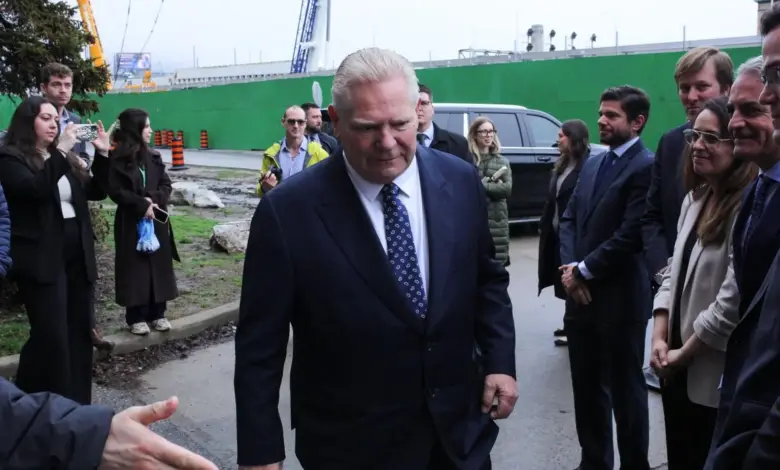
At Exhibition Station on Thursday morning, the first signs of the ontario line’s downtown tunnelling marked a new phase for a project that has already reshaped streets, routines and expectations. Premier Doug Ford, Mayor Olivia Chow and Transportation Minister Prabmeet Sarkaria stood together as the province said work had officially begun on the line’s downtown segment.
What started beneath Exhibition Station on Thursday?
The start of tunnelling means two tunnel boring machines, named Libby and Corkie, will dig six kilometres beneath the city from Exhibition Place to the Eglinton Crosstown LRT stop at Don Mills Road. The downtown stretch is part of a 15. 6-kilometre line running from Exhibition Station to the Don Valley.
Ford said the tunnelling “will be the first subway tunnels dug under the downtown core — think of this — in over 60 years, ” adding that “the engineering that we do here is second to none. ” The line is one of Toronto’s largest transit undertakings, but the work now entering this phase has been years in the making.
How is the Ontario Line changing the city before it opens?
Even before the tunnels are complete, the ontario line has already changed daily life along its route. Residents have faced intersection closures, property expropriations, noise complaints and even rat infestations, all while construction continues through the downtown core. The scale of disruption reflects the scale of the project itself.
At the same time, the province unveiled new station names for three stops: Chinatown, formerly Queen/Spadina; Distillery District, formerly Corktown; and Leslieville, formerly Riverdale/Leslieville. The naming changes were presented alongside renderings meant to mark the beginning of tunnelling and to frame the project as a line tied closely to Toronto neighbourhoods.
What does the timeline say about the project’s future?
The line was announced in 2019 and was initially expected to be built by 2027. That timeline has been pushed back by the COVID-19 pandemic and other delays, first to 2030 and then to 2031. Metrolinx CEO Michael Lindsay said in February that the agency is trending toward an “early-2030s” deadline for construction to finish, after which rigorous testing would follow.
The province says the line will support almost 390, 000 daily boardings and reduce travel time from Thorncliffe Park to downtown Toronto from 40 to 25 minutes. It also estimates the project will reduce crowding between Bloor-Yonge and Wellesley stations on the TTC’s Line 1 by 15 per cent during peak times.
What happens next for commuters and neighbourhoods?
Construction is also continuing at Exhibition Station, which is expected to connect commuters to GO Transit and to Exhibition Place, while providing subway service to Liberty Village. The province says the station is estimated to serve 12, 000 people daily during rush hour. Excavation is already complete at King West, Distillery District in Corktown and Moss Park, while excavation at Chinatown is nearly complete.
For people living near the route, the ontario line is still a project measured as much by inconvenience as by promise. Yet the sight of the two boring machines beginning their work also gives the line its most tangible momentum so far. What happens underground over the coming months will shape how Toronto moves above it.