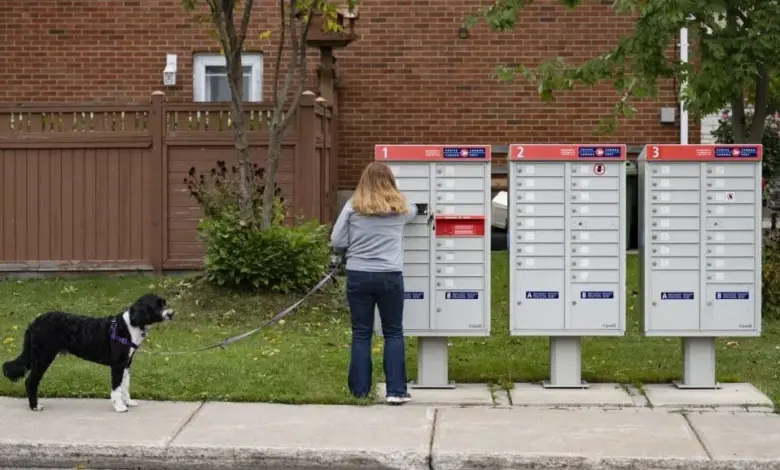
The post office network in Canada is changing in a way that reaches far beyond mail slots and front porches: 30, 000 Ottawa addresses will lose door-to-door service and move to community mailboxes in late 2026 and early 2027. That number is not isolated. It sits inside a broader plan that will reshape how mail is delivered across the country, while Canada Post says it must do so without becoming a burden on taxpayers.
What is changing first in Ottawa and why does it matter?
Verified fact: Canada Post will begin converting thousands of addresses to community mailboxes under its new plan to restore postal service. In Ottawa, the first areas affected will include postal codes beginning with K1B, K1G, K1H, K1J, and K1K. The change covers 30, 000 addresses in the nation’s capital, and it will begin in late 2026 and early 2027.
Informed analysis: The scale matters because Ottawa has the largest number of impacted addresses among the communities identified in the current phase. The move is not framed as a one-off local adjustment; it is presented as part of a national conversion strategy. That makes the city a test case for how quickly the post office system can move residents away from direct home delivery.
How far does the home delivery cut go beyond Ottawa?
Verified fact: Canada Post plans to convert 136, 000 homes across the country to community mailboxes later this year, including 18, 000 addresses in Etobicoke. The corporation also says it expects to convert the remaining four million homes getting home delivery to community mailboxes within five years.
The same plan includes communities in Vancouver, Winnipeg, Etobicoke, Sept-Îles, and Moncton, among others. Canada Post says nearly three out of four Canadian addresses already receive mail through some form of centralized delivery. It also says the conversion of an address from door-to-door delivery to a community mailbox typically takes months and will require engagement with communities while suitable sites are identified.
Informed analysis: The language is important. Canada Post is not presenting the shift as a temporary patch, but as a structural redesign of delivery. In practical terms, the post office model is moving toward centralized access points as the default, with home delivery becoming the exception rather than the rule.
Who is exempt, and what does the corporation say about responsibility?
Verified fact: Canada Post says it will still provide home delivery for people who need it, including seniors or people with mobility issues. The delivery accommodation program will require supporting documentation as part of any application.
The Crown corporation says the transformation will strengthen the postal service, support businesses, enable national commerce, and help it meet its mandate of delivering for all Canadians without being a recurring burden on taxpayers. It also says it will notify residents, businesses, unions, and employees as the changes proceed.
Informed analysis: The accommodation promise is the clearest signal that Canada Post knows the shift cannot be treated as purely administrative. But the requirement for supporting documentation introduces another layer between residents and service. That means the post office change is not just about where mail is picked up; it is also about who must prove they still qualify for the old model.
What does this mean for the future of post offices?
Verified fact: Canada Post will also begin “market reviews” of post offices across the country as it considers which locations to close. The federal government previously approved broader restructuring measures, including increased use of community mailboxes and shuttering of some rural post offices. the changes were necessary to address a financially strained business model.
Informed analysis: Taken together, the mailbox conversion and post office reviews point to a larger retrenchment. The central question is not only how mail gets delivered, but what kind of postal network will remain once the transition is complete. Ottawa’s 30, 000 affected addresses show the public face of a wider redesign that is already underway.
Canada Post says the transformation is meant to secure a financially sustainable future. Residents, however, are being asked to absorb the immediate reality: longer walks to collect mail, a different relationship with the post office, and a system that is moving steadily away from the doorstep.
What remains unresolved is how this plan will balance cost, access, and service in practice. For now, the clearest fact is that the post office model Canadians have known is being replaced, address by address, beginning with Ottawa.