The red sea has suddenly become part of a wider message from Tehran: if the U. S. naval blockade of Iranian ports continues, Iran says it may expand pressure beyond the Strait of Hormuz. That warning matters because it links maritime security, ceasefire politics and nuclear diplomacy in one move. The signal is not just about one waterway. It is about whether trade routes can stay open while Washington and Tehran still speak of talks, even as each side frames the situation in sharply different terms.
Background: Why the shipping warning matters now
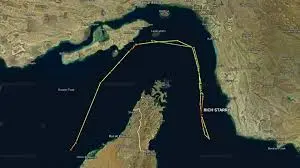
Iran’s operational headquarters said the blockade would be treated as a breach of the ceasefire if it creates insecurity for merchant and oil tanker vessels. In that case, the Iranian armed forces said it would not allow exports or imports to continue in the Persian Gulf, the Sea of Oman or the red sea. That statement pushes the dispute beyond a narrow military question and into the global economy, where shipping interruptions can quickly affect energy flows, insurance costs and market confidence.
The timing is also important because Washington and Tehran are still signaling engagement. A senior U. S. official said there is continued engagement between the two sides to reach a deal, while the U. S. has not formally agreed to extend its ceasefire with Iran. At the same time, Iranian foreign ministry spokesman Esmaeil Baqaei reiterated that Iran’s right to enrich uranium is “indisputable, ” even if the level of enrichment remains negotiable. The red sea warning therefore sits inside a larger, unsettled diplomatic picture rather than standing alone as a purely military threat.
Deep analysis: What the warning reveals about leverage
The language from Maj Gen Ali Abdollahi, commander of the Khatam al-Anbiya Central Headquarters, suggests that Tehran is using maritime disruption as leverage. By naming the Persian Gulf, the Sea of Oman and the red sea, Iran widened the possible impact zone and increased the pressure on Washington without announcing actual action. That distinction matters. It shows an attempt to shape behavior through deterrence, not yet through execution.
For analysts, the key issue is that shipping threats are rarely confined to the first waterway named. Once a state signals that commerce itself may be treated as part of the conflict, commercial actors begin to price in uncertainty across multiple routes. Even without a shutdown, the mere possibility of disruption can affect tanker movements and trade planning. In that sense, the red sea reference is not rhetorical decoration; it is a strategic signal aimed at widening the cost of continued pressure.
Iran’s parallel nuclear message reinforces that reading. Baqaei said the right to peaceful nuclear energy cannot be taken away under pressure or through war, while enrichment levels remain open to negotiation. That combination suggests Tehran is trying to separate principle from bargaining room: the right is non-negotiable, but the details may still be used as a diplomatic trade-off. The threat to shipping strengthens that posture by reminding opponents that the dispute is not isolated to one file.
Expert perspectives and regional implications
Donald Trump said the war was “close to over” and suggested another round of peace talks could take place in Pakistan in the coming days. He also said he had exchanged letters with Chinese president Xi Jinping urging him not to supply weapons to Iran. Those comments matter because they point to multiple tracks of diplomacy and pressure happening at once. Yet the same remarks were paired with a warning tone, leaving the status of any breakthrough unclear.
From a regional perspective, the impact could extend well beyond Iran and the United States. If commercial actors believe the red sea and adjacent waters may become part of the confrontation, the ripple effects could reach energy exporters, import-dependent economies and shipping firms that already operate under tight margins. Pakistan’s prime minister Shehbaz Sharif leaving for official visits to Saudi Arabia, Turkey and Qatar further underlines how the diplomatic environment remains fluid, even as the operational risk at sea rises.
The broader consequence is that maritime security and nuclear diplomacy are now moving together. Each new warning at sea increases the urgency of talks; each stall in talks raises the risk of maritime escalation. That cycle is what makes the present moment more fragile than a standard ceasefire dispute.
For now, the central question is whether the red sea warning is a temporary bargaining signal or the first step toward a wider maritime confrontation that neither side can easily control.