Sudan is entering its fourth year of war with a grim arithmetic that few emergency systems can absorb: mass displacement, rising hunger and a shrinking pool of international attention. On Wednesday, Canada announced $120-million in new assistance for Sudan and neighbouring countries, placing fresh support into a crisis that officials and aid groups describe as increasingly severe. The timing matters. Global leaders are gathering in Berlin, but the wider humanitarian response remains under strain, and the people displaced by the war continue to face a future defined less by recovery than by endurance.
Why the new pledge matters now
The Canadian announcement came on the third anniversary of the war, which has devastated Sudan, killed hundreds of thousands, forced nearly 12 million people to flee their homes and left two-thirds of the population in urgent need of aid. Global Affairs Canada said the emergency has grown in scale and severity over the past three years. That wording reflects a hard reality: the crisis is no longer confined to battlefield damage, but has become a broad collapse of protection, services and survival pathways.
The new funding is an increase from last year, when Canada provided $107-million for Sudan and neighbouring countries that have sheltered 4. 5 million Sudanese refugees since the war began. It is also smaller than the $132-million Canada provided for the crisis in 2024. In other words, the pledge is significant, but it does not signal a wholesale scaling up at the level humanitarian needs now require.
Sudan and the pressure on humanitarian funding
Berlin’s donor conference is aiming to raise about US$1-billion for Sudan and its neighbours, a figure roughly equal to the amount raised at a donor conference in London last year, but less than half of the US$2. 4-billion pledged at the first conference in Paris in 2024. That gap is important because the money coming in has not kept pace with the crisis itself, even as the need has expanded.
Relief agencies have struggled to keep Sudan on the global agenda. The conflict has been overshadowed first by the war in Ukraine, then the Gaza war and most recently by the Iran conflict. At the same time, budget shortfalls have forced the United Nations to cut food assistance in Sudan by 14 per cent this year, while the UN has raised only 16 per cent of its appeal for US$2. 8-billion in aid this year. The result is a widening mismatch between humanitarian need and available resources. In that environment, every pledge is meaningful, but none is sufficient on its own.
What the crisis looks like on the ground
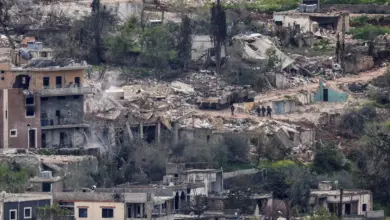
Global Affairs Canada said the conflict has resulted in war crimes, the largest human displacement crisis in the world, widespread sexual violence, famine, the longest nationwide school closures globally and the collapse of basic services critical for safety, health, protection and dignity. Those are not isolated symptoms. Together, they point to a crisis in which civilians are bearing the full weight of state failure, insecurity and displacement.
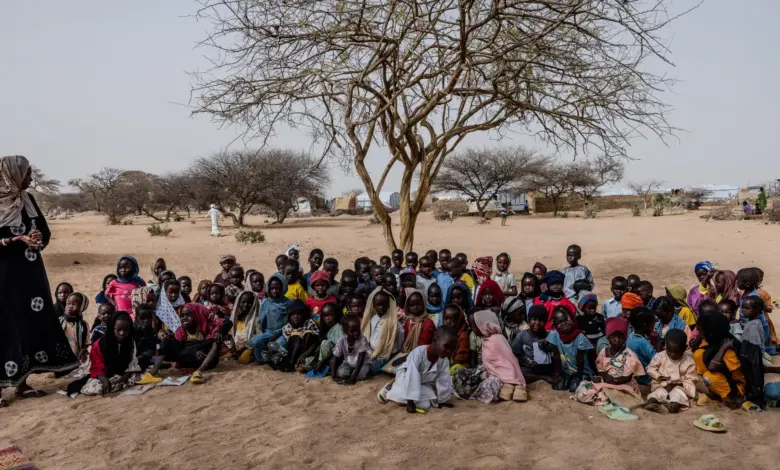
The consequences are echoed in survey findings from the Norwegian Refugee Council. A recent survey of 1, 293 displaced households across Sudan, Chad and South Sudan found that about 90 per cent had lost their homes, nearly three-quarters had no income, and more than 80 per cent of households in Sudan regularly skipped meals. Inside Sudan, more than nine million people remain displaced, while nearly 29 million face acute hunger. By their fourth displacement, nearly two-thirds of people reported complete exhaustion and depleted resources. The scale of attrition is as telling as the numbers themselves.
Expert warnings and the limits of aid alone
Randeep Sarai, Secretary of State for International Development, described the crisis as reaching “catastrophic levels” disclosing the new aid. That assessment is consistent with the broader picture: a war that has become chronic enough to outlast attention, but destructive enough to keep intensifying in the lives of ordinary families.
Mutasim Ali, senior legal advisor at the Montreal-based Raoul Wallenberg Centre for Human Rights, said the new Canadian aid “only scratches the surface, given the magnitude of the catastrophe. ” His organization is calling for a broader Canadian response, including more sanctions on Sudanese military leaders, closing loopholes that allow Canadian-made weapons to reach Sudan, recognizing the massacres in Darfur as genocide, pursuing war-crimes cases in international courts at The Hague and expanding immigration pathways to reunite Sudanese-Canadian families. The proposal underscores a central debate: whether Sudan should be treated purely as a humanitarian emergency, or also as a case demanding sharper political and legal action.
Regional and global consequences for Sudan
The burden does not stop at Sudan’s borders. The 4. 5 million refugees hosted by neighbouring countries have turned the conflict into a regional strain that affects food systems, services and aid planning well beyond the country itself. The longer the war continues, the more displacement becomes a permanent condition rather than a temporary emergency.
Families remain trapped in a cycle where each move destroys what little stability they have left. Schools are closed, incomes are gone and food is scarce. The question now is not only how much aid can be raised, but whether the international system can still mobilize enough attention to match the scale of Sudan before the crisis hardens into something even harder to reverse.
As donor conferences come and go, the deeper issue remains unresolved: how long can Sudan endure when the world keeps responding, but not yet at the scale the war demands?