The latest Trump Iran news does not read like a routine diplomatic exchange. It places a naval blockade, a fragile ceasefire, and regional security anxieties into the same frame. President Donald Trump says Iran has asked Washington to lift the blockade on Iranian ports and reopen the Strait of Hormuz, while Gulf leaders meet in Jeddah to assess the threat from Iranian missiles and drones. That combination suggests the conflict is shifting from battlefield escalation to economic leverage, where access to shipping lanes may matter as much as military strikes.
Why the Strait of Hormuz has become the pressure point
The immediate focus is the Strait of Hormuz, the narrow waterway through which almost every Gulf country depends on moving hydrocarbons, gas, ammonia, helium, and other critical exports. In the current standoff, that chokepoint has become a test of endurance. Trump Iran news is now inseparable from the blockade dispute because Trump says Iran wants relief from the maritime restrictions, while Iranian officials have signaled that shipping remains part of any broader settlement.
That makes the issue more than a bilateral argument. Gulf leaders gathered for an extraordinary meeting of the GCC in Jeddah, their first in-person meeting since the war began, to discuss how to respond to missile and drone threats fired at GCC states since February 28. The setting matters: it shows the conflict is being read in the Gulf not just as an Iran issue, but as a regional security emergency with direct consequences for trade, energy flows, and state resilience.
Trump Iran News and the battle over sequencing
The deepest fault line is not simply whether talks continue, but what comes first. Trump has said Iran is in a “state of collapse” and is “figuring out its leadership situation, ” while Iranian officials have said the war is not over. One side is presenting pressure as leverage; the other is signaling that pressure has not yet produced surrender. In this version of Trump Iran news, the argument is over sequencing: whether the blockade and Strait of Hormuz are addressed before nuclear issues, or whether nuclear questions must be tackled from the outset.
That distinction is critical because it defines what each side believes victory looks like. U. S. pressure has intensified through financial measures aimed at shadow banking, crypto access, the shadow fleet, and weapons procurement networks. U. S. Treasury Secretary Scott Bessent said those steps have disrupted tens of billions of dollars in revenue and contributed to inflation and currency depreciation in Iran. The analysis is straightforward: Washington is trying to compress Iran’s options, while Tehran appears to be insisting that economic relief and shipping access cannot be separated from the rest of the agenda.
Expert assessments on energy, leverage, and uncertainty
Scott Bessent, U. S. Treasury Secretary, has framed the campaign as a direct strike on the networks that sustain Iran’s economy. He said the Treasury Department has targeted Iran’s international shadow banking infrastructure, access to crypto, shadow fleet, weapons procurement networks, and refineries that support Iran’s oil trade. His message is clear: financial isolation is intended to translate into strategic pressure.
At the same time, the Gulf meeting in Jeddah indicates that regional governments see the risk extending beyond sanctions and sea lanes. The extraordinary gathering shows concern about the military spillover from ballistic missiles and drones, but also about how a closure or partial disruption of the Strait of Hormuz could affect global markets. In practical terms, even limited uncertainty in this corridor can ripple through energy pricing, freight costs, and the availability of key industrial materials.
Qatar’s Foreign Ministry has also reiterated that a comprehensive deal is needed to end the conflict, reinforcing the view that partial measures may not stabilize the situation. That stance reflects the wider problem: a blockade can apply pressure, but it can also harden negotiating positions if neither side wants to appear to concede first.
Regional fallout and the wider balance of power
Trump Iran news is now shaping a broader regional calculation. The UAE’s decision to leave OPEC in May, coupled with its plan to gradually raise production from about 3. 6 million barrels per day to 5 million by 2027, adds another layer to a market already facing instability. While that move is not directly tied to the conflict, it underscores how energy policy in the Gulf is being reassessed in an environment of military uncertainty and strategic competition.
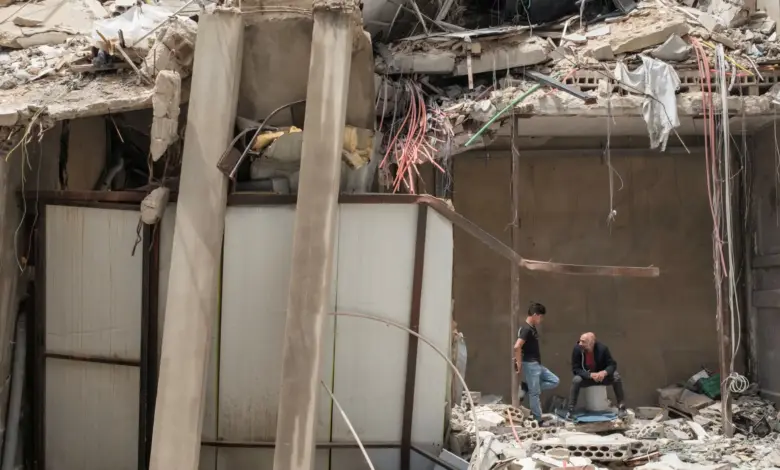
There is also an unresolved humanitarian and military dimension. The context includes the reported killing of three medics and continued strikes in the wider region. That detail matters because it shows the war’s consequences are not limited to diplomacy or trade routes; civilian risk remains embedded in the conflict’s trajectory. For governments in the Gulf, the question is whether pressure on Iran will create a controlled opening for talks or a longer period of instability around the Strait of Hormuz.
For now, the key fact is that Trump Iran news has moved into a phase where economics, leadership uncertainty, and maritime security are all being used as instruments of leverage. If neither side blinks, can the region avoid a deeper rupture in trade and security?