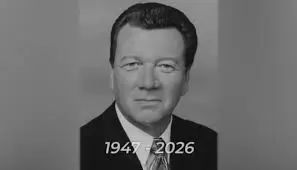
Hugh De Kretser and Australia’s racism warning: 5 revelations behind a new human rights scorecard


Australia’s rising racism problem is about to move from a warning to a formal national assessment, and Hugh De Kretser is at the center of that moment. The Australian Human Rights Commission president will deliver the first annual human rights scorecard in Canberra on Wednesday, placing racism and anti-Semitism alongside democratic standards and other measures of national performance. The timing matters: the assessment arrives after a sharp rise in reported abuse, growing pressure on social cohesion, and renewed debate over how far the country has drifted from basic protections.
Why the Hugh De Kretser assessment matters now
The new scorecard is designed to do more than mark out problems. It is intended to show where Australia is advancing and where it is slipping. In this case, Hugh De Kretser says there is “no escaping the threat to social cohesion” that racism presents. He links the rise in abuse to a wider period of tension following the failed Voice referendum and the events of 7 October, as well as the war in Gaza. That framing places racism not as an isolated issue, but as part of a broader stress test for public life.
The context is reinforced by the Australian Human Rights Commission’s “Seen and Heard” report, published earlier this month, which documents a “sharp rise” in “terrifying” racism from October 2023. The report records everyday abuse that has moved beyond online hostility and into direct personal targeting, including a Jewish community member being called a “baby-killer” and Islamic Australians questioning whether they can call the country their home.
A national scorecard built around warning signs
The assessment is expected to examine a wide range of fields, including democratic standards. That matters because the point is not only to count incidents of racism, but to measure how institutions and public norms respond when pressure builds. The decision to launch a national scorecard also suggests a shift in tone: the issue is being treated as systemic enough to warrant annual scrutiny, not simply reactive commentary.
Hugh De Kretser is also likely to use the platform to renew his call for the federal government to adopt the Australian Human Rights Commission’s national anti-racism framework. That framework was funded by Anthony Albanese’s government and backed by the special envoys against anti-Semitism and Islamophobia, yet it has still not been implemented. The delay gives the warning added weight: the policy response exists, but the political follow-through remains incomplete.
What the data narrative reveals about Australia’s human rights climate
The deeper significance of the assessment lies in its balance of regression and progress. Hugh De Kretser sees a “range of areas” where Australia has been backsliding and says there has been “regress on human rights where we urgently need to do better. ” He names protest rights, the treatment of people in aged care, and the treatment of disabled people in institutional care as areas of concern. That matters because it broadens the conversation well beyond racism alone and suggests the commission is looking at multiple pressure points in rights protection.
At the same time, the scorecard is not framed as wholly negative. It is meant to acknowledge advances, including new federal laws on hate speech, improved whistleblower protections, and the scrapping of some secrecy laws. That mixture of progress and setback is important: it indicates that Australia’s human rights picture is neither collapsed nor secure, but unsettled.
Expert perspectives on social cohesion and reform
The clearest expert perspective in the material comes from Hugh De Kretser, president of the Australian Human Rights Commission, who says the rise in racism is threatening social cohesion. His comments draw a direct line between public events, community harm, and the need for policy action.
The Australian Human Rights Commission’s own “Seen and Heard” report strengthens that view by documenting lived experience rather than abstract trends. Its findings suggest the problem is not only that abuse is more visible, but that it has become more frightening and more frequent for affected communities. In that sense, Hugh De Kretser is not simply introducing a report; he is using the assessment to argue that the country’s rights framework must match the scale of the challenge.
Regional and global implications beyond the Canberra stage
Although the assessment is being launched in Canberra, the implications extend well beyond one city or one institution. A public reckoning with racism and anti-Semitism can influence how communities judge the credibility of democratic standards and whether national institutions are responding quickly enough. It also places Australia within a wider international debate about how societies handle polarization, identity-based abuse, and the erosion of trust.
If the first annual scorecard becomes a recurring measure, it could shape how human rights are discussed across government, civil society, and affected communities. But the immediate question is whether the warning will lead to implementation, especially on the anti-racism framework that has already been funded and endorsed yet remains waiting in practice. Hugh De Kretser’s message is clear: the assessment is not just a snapshot, but a test of whether Australia is prepared to confront the reality it has been warned about.
In that sense, the most important question is still ahead: will the next year show that Australia heard the warning, or that Hugh De Kretser was right to demand a much stronger response?