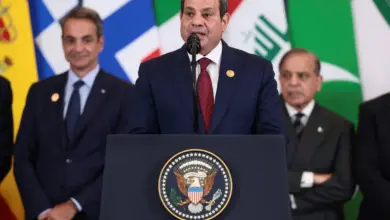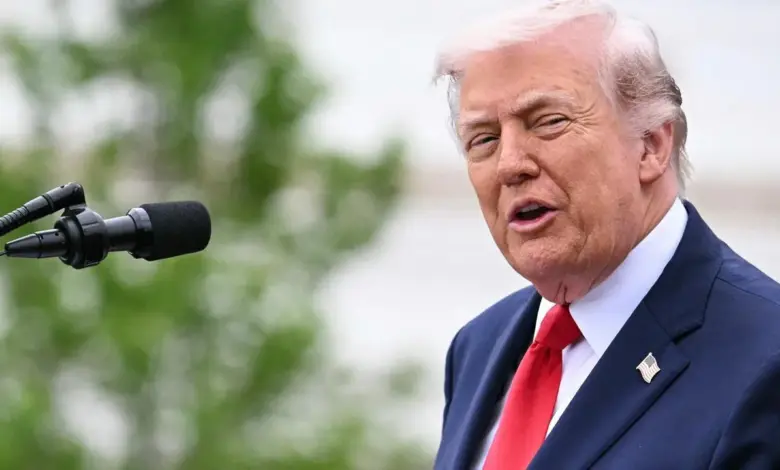
friedrich merz is facing a sharp public attack from US President Donald Trump after criticizing Washington’s handling of the Iran conflict. Trump said on Truth Social that the German chancellor does not know what he is talking about when it comes to Iran. The exchange followed Merz’s own criticism of the US approach and comes as fighting linked to the wider regional conflict continues.
Trump’s rebuke lands after Merz’s Iran remarks
Trump wrote that Friedrich Merz believes it is acceptable for Iran to have nuclear weapons and added: “He does not know what he is talking about!” The message marked a direct escalation in a dispute that had already moved from criticism of policy into a personal attack on the German chancellor.
The timing is notable: Trump’s comments came one day after Merz sharply criticized the US handling of the conflict. The language used by both sides left little room for diplomatic softness, and the dispute has now become a public test of how far the two leaders are willing to push their disagreement.
Friedrich Merz and the wider regional fallout
The argument is unfolding against a broader regional backdrop. Israel’s foreign minister, Gideon Saar, said Israel has no territorial ambitions in Lebanon and said its presence there serves only the protection of its citizens. Saar made the comments at a press conference and repeated the same message in remarks tied to a meeting with Serbia’s foreign minister, Marko Djuric.
At the same time, top officials from the Gulf region met in Saudi Arabia for a crisis summit on the consequences of the Iran war. Saudi Crown Prince Mohammed bin Salman received the guests in Jeddah, while Qatar’s Emir Sheikh Tamim bin Hamad al-Thani said the gathering showed a united Gulf position and the need for stronger coordination and consultation. Those meetings underline how quickly the conflict is widening beyond the immediate battlefield.
Immediate reactions from officials
Trump’s attack drew attention because it was unusually blunt, even by the standards of his public messaging. The US president framed his criticism as a rejection of Merz’s judgment on Iran, turning a policy dispute into a direct challenge to the German leader’s credibility.
On the other side, Merz’s earlier criticism focused on the consequences of the conflict and on what he described as the humiliation of an entire nation by the Iranian leadership, especially the Revolutionary Guards. His remarks also questioned whether the Americans had a convincing strategy in the talks, which helped trigger the latest clash.
As the exchange intensified, the political cost for Friedrich Merz became harder to ignore. The question now is whether this public confrontation will remain a one-off burst of anger or become a longer dispute between Washington and Berlin over Iran.
What happens next for Friedrich Merz
For now, the immediate next step is watching whether either side softens its tone or doubles down. The conflict over Iran remains active, the regional response is still taking shape, and the personal attack on Friedrich Merz has added another layer of tension to an already volatile moment.
What happens next will depend on whether the rhetoric stays at the level of social media and public statements or spills into broader diplomatic friction. For Merz, the issue is no longer only about Iran; it is also about how the relationship with Trump holds up after this public break. friedrich merz remains at the center of that test.