On a cold platform, a person can be told to keep moving even when moving is the hardest thing left to do. In the métro de montréal, that tension is now set to continue until April 30, 2027, after the Société de transport de Montréal renewed its obligation to circulate for another year.
What does the renewed rule mean in the métro de montréal?
The STM says the measure, first put in place in March 2025, is meant to limit unwanted behavior in stations and improve the sense of safety for riders and employees. It gives special constables an added tool to ask people not to remain in one place inside the network.
The transit authority says the rule was applied nearly 2, 500 times a month during the last winter period. It also says the policy has helped reduce service interruptions linked to vandalism and other incidents, while making it easier to close stations at the end of the day because more people are escorted out earlier in the day.
For the STM, that is the central argument: the métro de montréal should feel safer, and the rule is one part of a broader set of measures. Aref Salem, president of the STM board, said the transit agency recognizes that the obligation to circulate cannot be the only tool and that it remains one measure among several aimed at improving safety and the feeling of safety in the network.
Why has the policy drawn criticism from community groups?
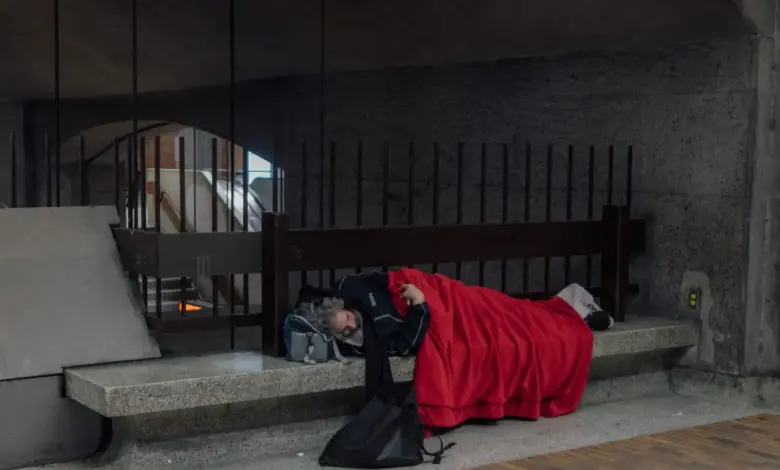
The renewal lands in a city where homelessness is visible in transit spaces and where every move to clear a station has a human cost. The rule is explicitly aimed at preventing people in unstable situations from spending time in stations, including sleeping on platforms and in corridors. That is exactly why it has been criticized since its introduction.
Community workers in Montreal have argued that the measure can push people out of sight without solving the underlying problem. Annie Savage, executive director of the Réseau d’aide aux personnes seules et itinérantes de Montréal, warned that hundreds of people are expelled from the metro each week without a real alternative. She said the deeper question remains unchanged: where are they supposed to go?
That concern is not only about immediate shelter. It is also about continuity of care. Savage said the situation is more troubling because several organizations have recently reduced their opening hours and capacity. In her view, fewer resources and more expulsions create a contradiction that leaves people moving from one place to another without a stable destination.
What changes has the STM said it sees so far?
The transit authority points to several signs that the policy is working. It says service interruptions of five minutes or more caused by incidents fell by 22 percent between November 2025 and March 2026 compared with the previous year. Over the same period, escorts out of the system at closing time dropped by 36 percent, and constable interventions for incivility declined by 2 percent.
At the same time, the number of assaults against employees remained stable, which the STM presents as an important contrast with recent years. In 2024, assaults against its staff rose by 6 percent, a development that pushed the organization to launch an awareness campaign calling for more respect.
The transit authority has also acted on the edges of the network. In early April, it closed several entrances to stations, including Belmont at Square-Victoria, Maisonneuve at McGill, and the north entrance at De Castelnau, citing daily use of those access points for unwanted behavior. The decision shows that the debate around the métro de montréal is not limited to one rule but extends to how the network is managed at street level.
What response is being promised next?
From City Hall, the message is that work continues with the STM, the Montreal police service, and community organizations to accompany people in homelessness toward resources and, ultimately, out of the street. That approach reflects the political reality around the métro de montréal: safety measures are now being paired, at least in principle, with outreach and support.
Still, the unresolved question remains whether those parallel efforts are enough to match the scale of the need. The rule will stay in place until at least April 30, 2027, and the STM says it will keep refining the broader package around it. For now, the stations remain the place where public order and human precarity meet, one day and one request to keep moving at a time.
Image alt text: métro de montréal platform scene reflecting the renewed obligation to circulate and the debate over safety and homelessness