servus is now more than a greeting in Austrian football coverage; it is becoming a marker of how the World Cup will be presented across two broadcasters. With ServusTV and the ORF dividing the tournament evenly, the latest expert-team announcements show how both sides are building a large, personality-driven broadcast around a shared event.
The exact moment matters because this is not just another tournament package. It is a joint setup for a major World Cup held across Canada, Mexico and the USA, and the broadcast design is already revealing how the two partners intend to balance reach, analysis and entertainment. In that sense, servus is part of a wider shift in how live sport is packaged: less single-broadcaster certainty, more collaboration, more specialization, and more visible use of recognizable names.
What Happens When the coverage is split?
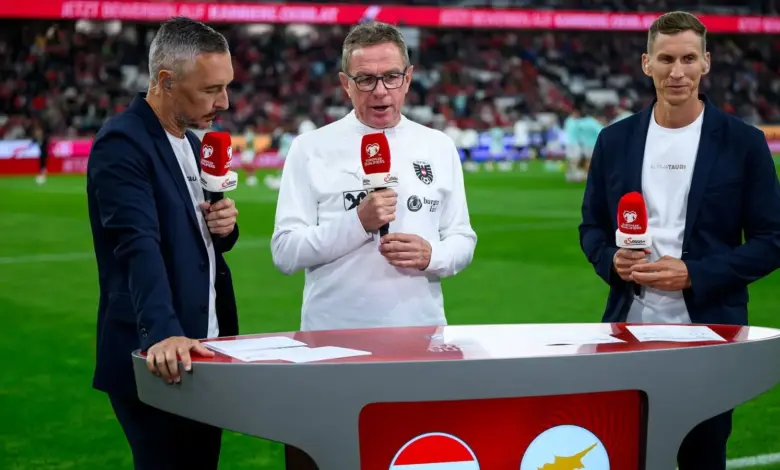
ServusTV will carry half of the World Cup matches live through its cooperation with the ORF, including Austria against Argentina. The sender has now announced its expert team for the event, and the lineup blends familiar faces with a few notable additions.
Florian Klein, Martin Harnik and Sebastian Prödl are set to analyze the action in the studio. Marc Janko is also joining the team and will travel in the USA with reporter Julia Kienast. Steffen Freund and Jan Åge Fjørtoft complete the expert group, while Christian Nehiba will appear both as a sport executive voice and as moderator alongside Alina Marzi and Christian Beier. The commentators listed for the coverage are Michael Wanits, Christian Brugger, Philipp Krummholz, Kevin Piticev and Sebastian Aster.
This structure suggests that the broadcaster is aiming for breadth: studio analysis, on-site reporting, and multiple commentary voices rather than a single, narrow presentation. For viewers, that usually means more variation in tone and perspective across the tournament.
What If the ORF and ServusTV models keep converging?
The ORF is building a similarly expanded team. Andreas Ivanschitz has joined an already crowded expert group that includes Herbert Prohaska, Peter Stöger, Andreas Herzog, Roman Mählich, Helge Payer and Viktoria, with Jasmin Eder also added. Ivanschitz has described his approach as wanting to be authentic and entertaining rather than overcomplicated, which fits a broadcast environment that is leaning into personality as much as tactical detail.
That matters because the two broadcasters are not working in isolation. The ORF will show 150 live hours and is cooperating with ServusTV in production and technology. That arrangement leaves more room for experts and for an optimized studio setup. In practical terms, the shared model is creating a larger broadcasting footprint than either side would likely build alone.
For the audience, the current state of play is simple: both sides are investing in recognizable analysis teams, and both are treating the World Cup as a premium live-event product. servus sits at the center of that strategy through the half-and-half split and the larger cross-broadcast framework.
What If the key driver is not just football, but presentation?
| Force of change | What it means here |
|---|---|
| Cooperation | ServusTV and ORF share matches, production, and technology. |
| Expert branding | Both broadcasters are stacking recognizable names to strengthen identity. |
| Event scale | The tournament spans Canada, Mexico and the USA, raising the demands on coverage. |
| Viewer expectation | Analysis and entertainment are now both part of the value proposition. |
The most important driver is the way the broadcast itself is becoming part of the story. A shared rights model would not matter much if the presentation were standard. But here the staffing choices show a deliberate effort to differentiate without losing consistency. ServusTV is leaning on former ÖFB players, a former national-team figure in Marc Janko, and international experience through Freund and Fjørtoft. The ORF is doing something similar by expanding an already established expert bench.
There is also a scheduling reality built into the package. The ORF’s two transmitted group games for the ÖFB team are set to begin at 6 a. m. ET and 4 a. m. ET respectively, which makes the viewing experience less about convenience and more about commitment. That is one reason a strong expert presentation matters: when the timing is difficult, the broadcast has to justify the effort.
What Happens When the dust settles?
Best case: the cooperation produces a cleaner, richer World Cup experience, with the two broadcasters complementing each other instead of duplicating effort. Viewers get strong analysis, well-run studios, and clear editorial identities.
Most likely: the split coverage works efficiently, and both sides win by using familiar experts to create a sense of trust and continuity. The event feels broad, polished, and heavily customized for football fans.
Most challenging: the overlap of teams, timing pressure, and production complexity makes consistency harder to maintain. In that case, the size of the event could expose any weakness in coordination.
What should viewers and industry watchers take from this?
The main signal is that major live sport is increasingly a test of coordination, not just rights ownership. The announcement of the ServusTV team, together with the ORF’s expanding expert bench, shows that the value now lies in how a broadcaster packages access, insight and tone around the match itself. For viewers, that means a more competitive and possibly more interesting World Cup presentation. For the industry, it shows that cooperation can be a growth strategy when scale, staffing and studio quality all matter at once.
For now, the story is not about a single match or a single pundit. It is about how the 50: 50 split is being turned into a broader editorial concept. And as the tournament approaches, servus will remain one of the clearest markers of that shift.