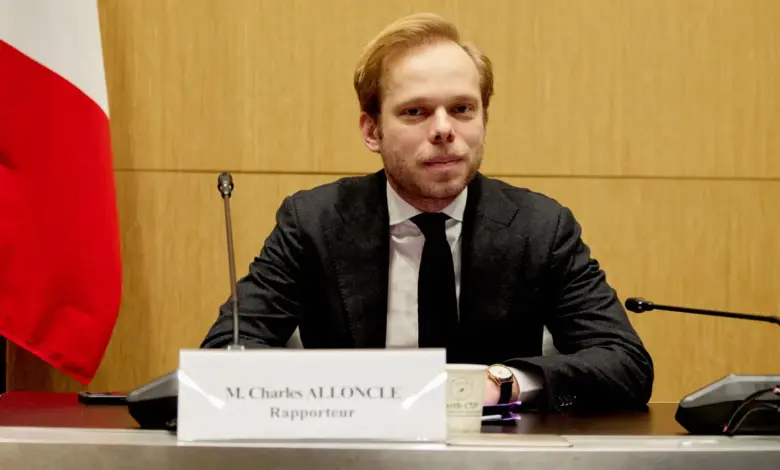
PARIS — enquête on the neutrality, operation, and financing of public audiovisual media is entering its final stretch, with deputies set to decide whether Charles Alloncle’s report can be made public. The 30 members of the commission meet on Monday, April 27, at 2: 30 p. m. ET, after more than four months of work marked by repeated controversy. If the vote goes through, the report is due to be published on May 4 ET; if it is rejected, all hearing videos will be removed from the National Assembly site and archived.
Enquête reaches a decisive vote
The report at the center of the dispute was written by Charles Alloncle, the UDR deputy linked to Eric Ciotti’s party. It contains 80 proposals, and some of them have already leaked, intensifying tensions inside the commission. The process itself has become part of the story: lawmakers are under silence rules between the presentation of the report and the vote, while the publication decision now hangs on the outcome of this afternoon’s meeting ET.
Alloncle, speaking Monday on RMC, said the leaks are undermining the document and pointed the finger at deputies from the left and from the pro-Macron camp. He said that over the past three days, “a number of recommendations” and “a lot of false information, fake news” have circulated in an effort, in his view, to discredit the report. He added that if the vote turns against publication, “we will not be able to say what was really in the report. ”
What the leaked proposals suggest
Among the measures mentioned in the leaks is a claim that Alloncle would seek to save one billion euros by abolishing France 4, merging France 5 with France 2, and bringing franceinfo together with France 24. The leaked outline also points to ending France TV Slash, merging France 3 with the ICI radio network, and combining the INA with the BnF. Another reported proposal would be to return to a system, in place before 2013, where the president of the Republic appoints public audiovisual executives.
Alloncle rejected some of the strongest interpretations of the leaks. He said he does not want the end of the Tour de France, the Six Nations, or Roland Garros on public television. In his words, those events are “quasi-national monuments” that stand out as sporting and cultural exceptions and should be protected.
Reaction inside Parliament
Members of the commission remain split. Some say the Assembly cannot put its seal on the document, describing its content as having a “conspiracy rhetoric” and as “a torrent of mud. ” Another deputy said the rapporteur had acted in “great bad faith” and called the process “a simulacrum. ” Others, however, want the report published even if they do not endorse its conclusions, saying that would avoid giving Alloncle grounds to accuse Parliament of censorship.
Alloncle also questioned the very functioning of inquiry commissions, saying he had written a report of nearly 400 pages and that he was surprised publication should require a vote. He argued that in a democracy, recommendations are meant to feed reflection and debate.
What happens next
The vote at 2: 30 p. m. ET will determine whether the report becomes public on May 4 ET or disappears into the archive with the hearing videos. For now, the outcome remains uncertain, but the stakes are clear: the fate of this enquête will shape both the document itself and the political battle around it.