Golf’s Quiet Truth: The Cadillac Championship Exposes a Tour Too Big to Schedule Cleanly

The most revealing number in golf this week is not the $20 million purse or the limited field. It is the fact that two sponsor exemptions are still not finalized for the Cadillac Championship, even as the event is already locked into the PGA Tour calendar. That delay matters because it exposes a system built to look orderly while remaining, in practice, highly fluid.
Verified fact: the Cadillac Championship is the latest Signature Event, part of a limited-field series designed to attract the game’s biggest names. Informed analysis: the unresolved exemptions are not a minor administrative detail; they are a sign that the field is being shaped by scarcity, timing, and star availability at the same time.
What is not being told about the Cadillac Championship field?
The central question is simple: what is the public not seeing when a Signature Event still has open exemption slots this close to the start? The field structure is supposed to be predictable. The top 50 from the previous year, a group of season winners, the best performers from this season, and recent form qualifiers are all part of the formula. Four sponsor exemptions are also part of the formula, but the final choices are often left until the last minute.
That is where the contradiction begins. These events are supposed to project certainty and prestige, yet the final field can remain unsettled because some players may qualify on merit at the last moment. In one earlier example, Max Homa was listed internally as a sponsor exemption, then played well enough to qualify on his own. That cleared the way for another sponsor choice. The process works, but it also shows how much of the field is driven by shifting outcomes rather than fixed planning.
Why are major names skipping next week’s golf event?
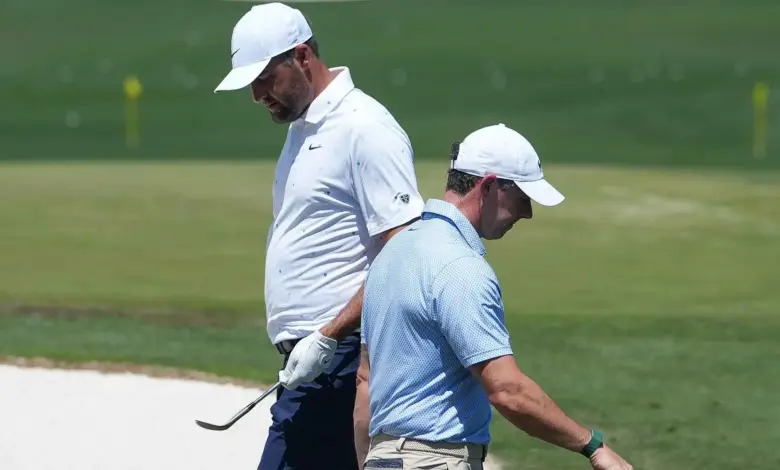
The biggest development is not who is in the field, but who is not. Rory McIlroy, Xander Schauffele, Bob MacIntyre, Ludvig Aberg and Matt Fitzpatrick are all set to skip the Miami event. McIlroy’s absence is especially notable because it is his second Signature Event skip this season. This is the most significant voluntary departure of talent these events have seen so far.
Verified fact: the Cadillac Championship sits directly before the Truist Championship at Quail Hollow, which sits directly before the PGA Championship in Philadelphia. Informed analysis: that sequence helps explain why some top players are declining the week in Miami. Playing three events in a row is one thing; doing so when the third week is followed by a major championship creates a sharper calculation.
Next week’s golf schedule is not failing in one obvious way. It is producing a more subtle problem: a concentration of elite events that makes each individual stop harder to defend as essential. The new Signature Event exists because the Tour secured a major sponsor commitment, but that same success appears to have made the broader calendar less flexible.
Who benefits from the new structure, and who is left exposed?
There are clear winners. The sponsor gains a high-profile event. Players who qualify on their own gain better optics than those using an exemption. The sponsor also benefits when an exempt player later qualifies independently, opening room for another invited player. That is why the exemption process is not merely administrative; it is part of the event’s competitive and commercial architecture.
At the same time, the structure leaves the Tour exposed to criticism when top names opt out. The field still includes Scottie Scheffler, the world No. 1, and Doral is described by the Tour’s own field context as a stern test. Yet the absence of several other top-ranked players weakens the sense that this is an unavoidable gathering of the sport’s best.
The Trump National Doral setting adds another layer, but the factual issue is not the ownership itself. The factual issue is the combination of venue, timing, and limited-field pressure. The event was on the calendar for nearly a year, yet the story around it is now dominated by the unresolved field, the skipped starts, and the unusually heavy clustering of major events.
What does this say about golf’s Signature Event experiment?
Viewed together, the facts point to a Tour that has solved one problem by creating another. Signature Events are meant to concentrate interest, reward performance, and make the calendar feel more premium. But limited fields can also make absence more visible, and that is exactly what is happening here. When several elite players choose not to show up, the prestige model starts to depend less on structural certainty and more on who feels compelled to play.
There is also a timing issue that cannot be ignored. This week’s event leads directly into another Signature Event, and that leads directly into the PGA Championship. The sequence compresses decision-making for players who are trying to manage form, fatigue, and championship preparation. In that sense, the Cadillac Championship is not just another event. It is a stress test for golf’s newest scheduling logic.
The public should not be asked to pretend this is simple. The evidence shows a system with valuable incentives, unresolved exemptions, and top-player absences all at once. That does not make the event illegitimate. It does make the structure more fragile than its branding suggests. If golf wants these Signature Events to feel essential, the calendar, the field rules, and the exemption process will need to withstand more scrutiny than they are getting now. Until then, the real story of golf is not just who is playing in Miami, but why the biggest names are increasingly comfortable staying away.