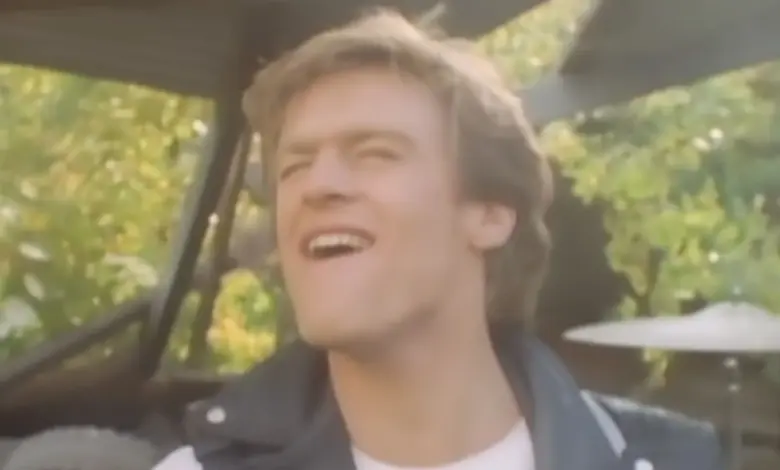
In the glow of a studio session that was meant to capture energy, Bryan Adams found himself circling back to a song that had already begun to define him. The story of bryan adams and Summer Of ’69 is now being framed through the music that lit the fuse: Bob Seger’s Night Moves.
Adams has described Night Moves as “such a brilliant song, ” adding that it “always pissed me off that I didn’t write it. ” That comment helps explain the shape of Summer Of ’69, a song that began under a different title and ended up as one of the most recognizable tracks on Reckless.
What inspired Bryan Adams to write Summer Of ’69?
The song was originally titled Those Were The Best Days Of My Life, and Adams has said it was inspired by Bob Seger’s 1976 hit Night Moves. In his telling, the appeal was not just the melody or the era, but the emotional detail: “It’s a nostalgic song, ” he said. “Romantic. Teenage blues, that awkwardness of trying to figure out sexuality – it’s all there. ”
That influence shows up in the opening image of Summer Of ’69, where the singer recalls a first real guitar, a cheap purchase, and long hours of playing until his fingers bled. Adams has said, “I still think it’s a great lyric. Probably the best I’ve ever written. Those first four lines are probably the most memorable in my entire catalogue. ”
For bryan adams, that confidence is not just nostalgia talking. It is a statement about the power of a few plain details to carry an entire memory. The lyric works because it feels specific, yet broad enough to become a shared experience for listeners who recognize the ache of youth, ambition, and the urge to hold on to a moment before it disappears.
How did Reckless shape the sound of the song?
Reckless did not arrive as a polished certainty. Adams had already seen a setback when his debut album flopped, and in 1981 he joked about calling his second album Bryan Adams Hasn’t Heard Of You Either. Four years later, Reckless became one of the biggest-selling albums of the ’80s, and Summer Of ’69 became one of its defining singles.
The recording process reflected Adams’s desire for urgency. Work began in March 1984 at Little Mountain studios in Vancouver, where he cut most of the tracks “as live” with his touring band: lead guitarist Keith Scott, bassist Dave Taylor and keyboard player Tommy Mandel, with session drummer Mickey Curry. When the project moved to New York City and The Power Station on West 53rd Street in Manhattan, Adams felt something was missing.
He played a few tracks for his manager Bruce Allen, whose response was blunt: “Where’s the rock?” That question changed the direction of the record. Adams flew back to Vancouver the next day and worked with Jim Vallance, the co-writer of every track on Reckless and nearly every other song Adams had recorded up to that point. His instruction was direct: “We need to pump up the volume on this. ”
Why does the song still feel so immediate?
The answer may lie in the balance between memory and motion. Summer Of ’69 is built from recollection, but it sounds like it is moving forward at full speed. That tension made it fit the bigger shape of Reckless, a record Adams wanted to feel like a live performance rather than a distant studio construction.
Adams and Vallance toughened up Summer Of ’69 and another song, One Night Love Affair, before writing a new track from scratch to answer Allen’s challenge in the clearest way possible. That song was Kids Wanna Rock, shaped after Adams and Vallance attended a concert by synth-pop musician Thomas Dolby. The impulse was not subtle; it was a direct response to the need for more force, more volume, and more rock.
The result is that Summer Of ’69 still carries two stories at once: the private story of a teenager with a first guitar, and the professional story of an artist sharpening his craft under pressure. In the language of bryan adams, the song’s title was “a rude joke that stuck, ” and that hard edge helped make the track unforgettable.
What does this reveal about Bryan Adams as a songwriter?
It shows an artist who listens closely to the songs that move him and then turns that feeling into his own material. Adams did not hide the influence of Night Moves; he elevated it into a lesson about atmosphere, character, and emotional truth. The takeaway is not imitation but translation, with a distinctly personal voice at the center.
For listeners, that makes Summer Of ’69 more than a hit from a famous album. It becomes a reminder that even the most familiar songs often begin with admiration, frustration, and a clear-eyed response to another artist’s example. More than four decades after those opening lines were first heard, bryan adams still treats them as a high point in his catalog — and that is part of why they endure.
In the end, the scene shifts back to the studio: a song being tightened, pushed harder, made louder because someone in the room knew it could hit more forcefully. The memory of a first guitar may be fixed in time, but the energy around it remains alive.