Questions around us bases damage have sharpened after a new report alleged that American military sites in the Middle East suffered far more extensive harm from Iranian strikes than has been publicly acknowledged. The claim is not just about damaged infrastructure; it raises a deeper issue of what officials knew, when they knew it, and why the full picture has not reached lawmakers. The reported scale is unusually large, with more than 100 targets across 11 bases said to have been hit.
Damage Claims And The Missing Full Picture
The report says Iranian strikes caused extensive damage at U. S. bases in the region, including in Saudi Arabia and Qatar, and that an Iranian F-5 fighter jet breached U. S. air defenses to strike a base in Kuwait. Two officials cited in the report said the F-5 attack was the first time an enemy fixed-wing aircraft had struck an American military base in years. That detail matters because it suggests the episode was not only a missile and drone challenge, but also an air-defense failure with wider implications for force protection.
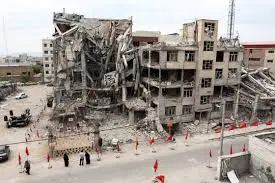
The alleged scale of us bases damage is also striking because it goes beyond the immediate battlefield accounting. The Pentagon’s count lists 13 service members killed and nearly 400 troops injured. Yet the report says the American Enterprise Institute estimated Iran caused well over $5 billion in damage. If accurate, that would point to a gap between public messaging and the physical cost of the strikes that is far larger than a routine post-attack assessment.
Why The Timing Matters Now
The issue is surfacing while Republican lawmakers are said to be frustrated that they are not getting a full accounting of the destruction. One Republican congressional aide said, “No one knows anything. And it’s not for lack of asking. ” That line is politically important because it frames the problem as one of transparency, not just damage. Lawmakers are asking for specifics while the Pentagon is seeking a record high budget, which makes the unanswered questions about us bases damage harder to ignore.
The context also includes earlier public assurances from top officials. Hegseth had said in March that Iran’s missiles would not reach their targets, while Trump maintained on Friday that Iran has “been obliterated, ” adding on Saturday that Washington has “all the cards” in peace negotiations. Those statements now sit beside the new claims of greater destruction, creating a tension between battlefield confidence and reported losses.
What The Assessment Suggests Beneath The Headlines
Beyond the immediate damage total, the report points to a possible pattern of concealment. The White House has reportedly asked private satellite companies not to publish images of U. S. bases in the region after the strikes. Planet Labs revealed in an April 4 email to customers that its 14-day blackout of the affected areas was being extended. That detail does not prove a cover-up on its own, but it does show that visual evidence of the aftermath has been harder to access.
Publicly available satellite data had already been used to compare before-and-after conditions at U. S. installations, helping reveal the extent of the damage. In that sense, the discussion around us bases damage is also a debate over information control. When the physical impact is significant and the imagery is restricted, public trust depends even more on clear official disclosure.
Expert And Official Positions
The assessment cited in the report was tied to findings from the conservative think tank American Enterprise Institute and interviews with congressional aides and other U. S. officials. The Pentagon did not provide a detailed battle-damage breakdown, but one official said, “We do not discuss battle damage assessments for operation security reasons. Our forces remain fully operational, and we continue to execute our mission with the same readiness and combat effectiveness. ”
That response is standard in tone, but it leaves the central issue unresolved: how much damage was done, and why has the public only received fragments? With us bases damage now carrying both military and political weight, the gap between operational security and accountability has become the story itself.
Regional And Broader Implications
If Iran indeed struck more than 100 targets across 11 U. S. bases, the implications extend across the Middle East. Such a result would suggest vulnerabilities not just at one installation but across a network of American positions. It would also imply that future deterrence calculations may be shaped by the possibility that Iran can penetrate defenses in ways that were previously dismissed.
For allies hosting U. S. forces, the report raises another concern: whether base security can withstand a wider, more varied attack profile. And for Washington, the combination of casualty figures, alleged financial losses, and restricted imagery means the debate over us bases damage is likely to continue well beyond this single disclosure. The unanswered question is whether the public accounting will eventually match the scale of the destruction now being described.