Salaire Minimum Au Québec rises to 16.60 on May 1: 5 numbers that show where the province stands

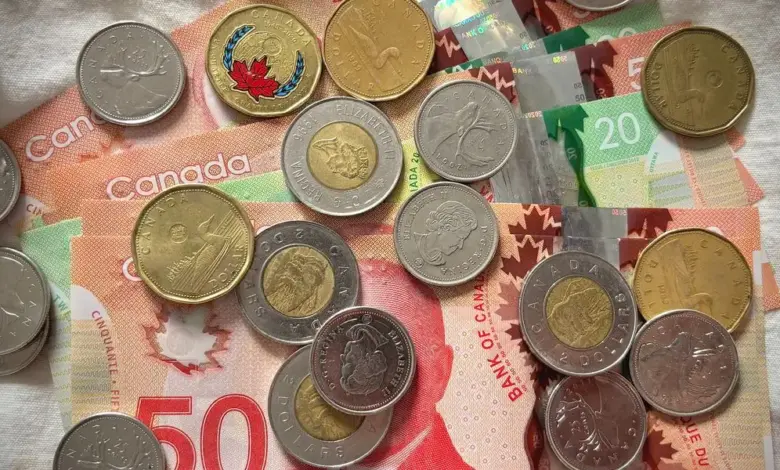
The next change to salaire minimum au québec is set for May 1, and the comparison with the rest of Canada is more revealing than the increase itself. The base hourly rate will move from 16. 10 to 16. 60 dollars, a 3. 11% rise that will directly affect about 258, 900 workers in the province. On paper, the increase is modest. In practice, it lands in a national landscape where Quebec is not at the bottom, but also not close to the top.
What changes on May 1
The Quebec government made the 50-cent hourly increase official in January. For a full-time worker, the change can add up to 687 dollars a year in disposable income, a figure that matters more in a tight cost-of-living environment than the percentage alone suggests. The province also keeps a separate minimum wage for tipped employees, a distinctive rule in Canada. That rate will rise from 12. 90 to 13. 30 dollars an hour on May 1, a 40-cent increase of 3. 10%.
The policy choice reflects a balancing act. Jean Boulet, the minister of Labour, has defended the measure by stressing the need to protect purchasing power without weakening businesses. That framing is important because the change is not being presented as a symbolic adjustment. It is meant to support low-wage earners while remaining manageable for employers. In that sense, salaire minimum au québec is being treated as both an income floor and an economic signal.
How salaire minimum au québec compares across Canada
The comparison becomes sharper when placed beside other jurisdictions. Since April 1, the federal minimum wage for federally regulated sectors has stood at 18. 15 dollars an hour. Among provinces and territories, Nunavut leads at 19. 75 dollars, followed by Yukon at 17. 94 dollars, British Columbia at 17. 85 dollars and Ontario at 17. 60 dollars. Quebec’s new rate of 16. 60 dollars keeps it below those leaders, but still above the lowest end of the national range.
At the other extreme, Alberta has the lowest general minimum wage in the country at 15. 00 dollars an hour, unchanged since 2018. Alberta also has a lower rate of 13. 00 dollars for students under 18 during the first 28 weekly hours. That gap matters because it shows Canada’s wage floor is not converging around a single standard. Instead, the country remains a patchwork of regional choices, with salaire minimum au québec positioned in the middle rather than the margins.
Why the timing matters now
The timing of the increase gives the measure more weight than a routine wage adjustment might normally have. Quebec’s minimum wage has climbed from 12. 00 dollars in May 2018 to 16. 60 dollars this spring, a gain of 4. 60 dollars or 38. 33% in less than a decade. That long-term rise shows a steady policy direction rather than a one-off correction. It also helps explain why the province can be described as doing better than some, but not all, of its peers.
What stands out is the middle-ground nature of the outcome. Quebec is not among the lowest jurisdictions, but it is also not near the top tier. That positioning can be read in two ways: as evidence of cautious wage policy, or as a sign that the province is keeping pace without trying to lead nationally. Either way, the numbers suggest that salaire minimum au québec remains shaped by the tension between affordability for employers and purchasing power for workers.
Regional impact and what to watch next
The direct beneficiaries, nearly 258, 900 workers, are central to the story. But the wider significance extends beyond those paycheques. Because Quebec is the only province in Canada with two distinct minimum wage rates, its structure differs from the rest of the country even before the May 1 increase takes effect. That makes the province a useful test case for how wage policy can be tailored to different types of work.
The broader Canadian picture suggests no simple national benchmark is emerging. Some provinces are moving higher, some remain below Quebec, and the federal rate sits above all provincial minimums cited here. In that context, salaire minimum au québec is not just a local labor update. It is part of a larger debate about how much room governments have to raise wages without creating new pressure elsewhere in the economy. The open question is whether this 50-cent increase will be seen as a measured compromise, or as only another step in a race that is still far from settled.