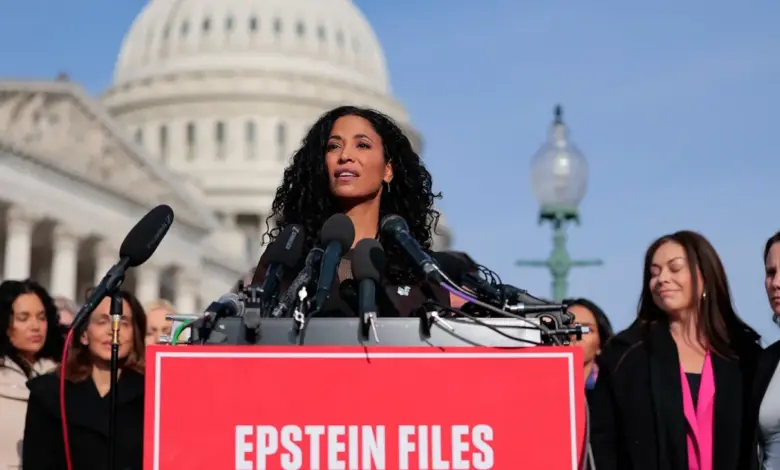
The epstein files are back at the center of a new internal review, but the immediate reaction has been less celebration than guarded relief. After the Justice Department said its Office of the Inspector General intends to audit the department’s response to the Epstein Files Transparency Act, survivors and their lawyers welcomed the move while still questioning whether it goes far enough. The timing adds another layer of uncertainty: President Donald Trump has already nominated a permanent inspector general, raising questions about who will oversee the audit and how far it can go.
What the DOJ Watchdog Plans to Examine
The Office of the Inspector General said its preliminary objective is to evaluate the Justice Department’s processes for identifying, redacting, and releasing records, and to assess how the department responded to post-release publication concerns. In practical terms, the review places the department’s handling of the epstein files under an internal lens just as criticism of the rollout continues to linger.
That scrutiny matters because the law at issue required the department to release nearly all of its files tied to sex trafficking investigations involving Jeffrey Epstein and former associate Ghislaine Maxwell. The audit is likely to prolong attention on how those records were managed, especially after lawmakers from both parties criticized the release process for exposing some victims’ identities and for redactions that appeared to exceed limited exemptions allowed under the law.
Why the Review Is Drawing Cautious Reaction
For survivors and their attorneys, the audit is being treated as a partial step rather than a full answer. Brittany Henderson, who with her partner Brad Edwards represents more than 100 Epstein survivors, said the review should have begun much sooner, but added that it may bring temporary relief to victims. Her emphasis on “meaningful” conduct and “real accountability” captures the central tension around the epstein files: whether internal oversight can produce more than a limited accounting.
That skepticism is reinforced by former Justice Department Inspector General Michael Bromwich, who said the audit is “the next best thing” if no internal oversight is the administration’s best-case scenario. But he also warned that an audit alone is not enough. In his view, the epstein files episode is significant enough to require a more probing approach than the Audit Division is typically built to handle.
Epstein Files and the Limits of an Audit
Bromwich drew a sharp distinction between audits and investigations, arguing that the difference matters because the Epstein matter is not a routine paperwork review. He said the department’s handling of the files has become one of the most public scandals in recent Justice Department history, and that serious review would normally include interviews with former Attorney General Pam Bondi, current acting Attorney General Todd Blanche, and FBI Director Kash Patel.
That is where the epstein files audit may face its biggest limitation. The Office of the Inspector General’s audit framework is designed to assess process, not necessarily to reconstruct decision-making at the highest levels. Bromwich said those interviews are not within the Audit Division’s wheelhouse, suggesting the review may be structurally unable to reach the most sensitive questions now surrounding the department’s response.
Leadership Questions Add Another Layer of Uncertainty
The audit is also unfolding against a personnel backdrop that could shape its scope and pace. William Blier, a longtime Justice Department employee and acting inspector general, currently leads the office. But Trump recently nominated Don Berthiaume, a former acting inspector general, to hold the post permanently. Whether the audit will be finished before Berthiaume is confirmed, and how it would continue afterward, remains unclear.
That uncertainty matters because the epstein files review is not only about records handling; it is also about institutional credibility. If the office conducting the audit is itself in transition, the review could become a test of continuity as much as accountability. For survivors and lawmakers who have criticized the department’s handling of the release, the question is no longer simply whether a review exists, but whether it can withstand political and administrative pressure.
Broader Fallout for the Justice Department
The broader impact reaches beyond one law or one records release. The audit will likely keep the Justice Department under sustained scrutiny at a time when leadership has already faced criticism over how it managed the files. Department officials have defended the rollout, saying the administration has been more transparent than its predecessors and that any identification of victims was inadvertent, with lawyers working under a compressed timetable to review millions of pages.
Even so, the episode has become a measure of whether the department can balance disclosure with protection of victims. In that sense, the epstein files are no longer just a records issue; they are a test of institutional judgment, compliance, and public trust. The audit may answer some process questions, but it is far from clear whether it will resolve the deeper concerns now hanging over the department.
For survivors hoping for accountability and lawmakers seeking a fuller explanation, the central question remains: can an audit of the epstein files uncover enough to satisfy demands for transparency, or will it end up documenting only part of a much larger failure?