Brisbane Airport is moving to test the market for two new hotel sites, a sign that the airport precinct is being shaped for more than just transit. The brisbane airport plan is tied to rising business, leisure and event-driven travel, but its timing also reflects a bigger shift: the airport is no longer treating accommodation as a side service. With three existing hotels already at capacity, the new proposals point to a precinct trying to capture overnight demand before the 2032 Olympic and Paralympic Games.
Two sites, two different roles in the airport precinct
The expressions of interest process is aimed at experienced hotel operators, with proposals due on 15 May. One site is planned beside the International Terminal and next to a new multi-level carpark. The second sits in the Skygate retail and entertainment precinct, close to DFO Brisbane, the expanded 16-hectare Lander’s Pocket entertainment hub and Queensland’s only 24-hour Woolworths supermarket.
Both developments are being positioned as architecturally designed hotels. The International Terminal site is being marketed as a mid to upper tier property and would be the first hotel to directly service international arrivals and departures at the airport. The Skygate location is intended as a mid-tier select service hotel.
Why Brisbane Airport is pushing now
The business case rests on a mix of current strain and future growth. Brisbane Airport says its three existing hotels are consistently at capacity, which suggests the precinct already has more demand than supply. That matters because the airport recorded its busiest year on record in 2025, handling 25 million passengers across its domestic and international terminals.
The airport is also framing the expansion around the 2032 Olympic and Paralympic Games. In practical terms, the argument is that Brisbane requires thousands of additional hotel rooms ahead of that event, and the airport believes it can support five hotels in total. For the brisbane airport estate, that would turn accommodation into a core part of the passenger and visitor experience rather than an added amenity.
What the hotel plan signals about airport economics
The proposed hotel mix reveals how airport real estate is being used to capture different types of demand. The International Terminal site appears designed for travelers who want immediate access to flights, while the Skygate project is built around retail and leisure traffic. That dual approach spreads risk: one hotel leans on terminal-linked convenience, the other on footfall from shopping and entertainment.
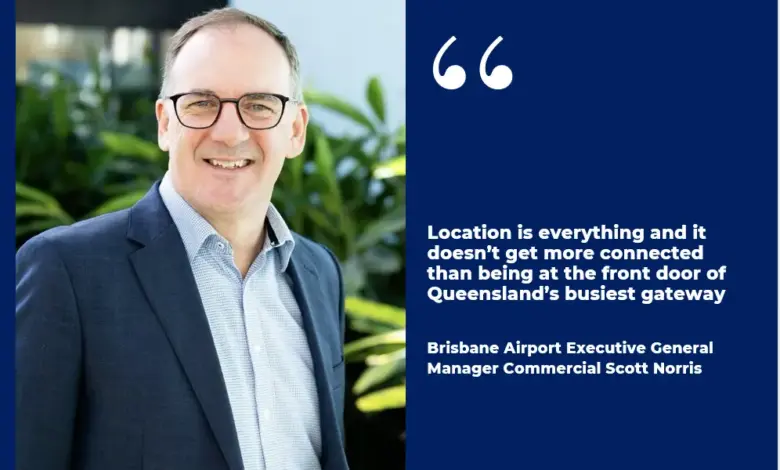
Scott Norris, Executive General Manager Commercial at Brisbane Airport, said each location offers distinct advantages for operators seeking a presence at the airport. He said the airport’s current hotels are full, and added that the broader Brisbane market will need thousands of new rooms before 2032. He also pointed to the airport’s role as a hub where hundreds of people transit each night, as well as its domestic reach across more destinations than any other airport in Australia. Those points underline a simple commercial logic: if the precinct already moves large numbers of passengers, then accommodation can be monetized more efficiently than at a more isolated airport.
Expert signals and market implications
The existing hotel performance gives the proposal added weight. Pullman Brisbane Airport has been named Best Airport Hotel in Australia and Pacific in the 2026 Skytrax World Airport Awards, its fifth win in six years. That result suggests the airport hotel segment already has a strong operating benchmark, which may help attract serious bidders.
JLL Hotels and Hospitality is managing the selection process for the hotel operator opportunity. For operators, the decision will likely turn on whether the precinct can sustain premium pricing at the terminal site and steady occupancy at Skygate. The wider question is whether the brisbane airport estate can continue to pull in both travelers in motion and local visitors looking for convenience.
Regional impact and the road to 2032
The implications reach beyond the airport boundary. Brisbane Airport provides access to Brisbane CBD, Port of Brisbane, Gold Coast, Sunshine Coast and other destinations, so new hotel stock could support travel flows across southeast Queensland. If the airport succeeds in adding two hotels, it would reinforce the precinct as a lodging hub for both short stays and overnight connections.
At the same time, the plan reflects the pressure that major events can place on urban infrastructure. The 2032 Games are still years away, but the accommodation market is already being asked to adjust. For now, Brisbane Airport is signaling that it sees hotel capacity as a strategic asset, not just a commercial add-on. The key question is whether the market will agree that the brisbane airport story still has room to expand.