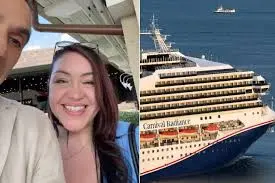
The carnival cruise ship case now sits at the center of a broader debate about passenger responsibility, crew duty, and how alcohol service is managed at sea. A Miami jury awarded $300, 000 after a cruise passenger said she was over-served alcohol and later suffered a serious fall during a January 2024 voyage.
What Happens When Alcohol Service Becomes the Legal Question?
The passenger, Diana Sanders, a nurse from Vacaville, California, traveled on the Carnival Radiance with two friends on a cruise from Los Angeles. Her lawsuit said she had at least 14 tequila shots on board and that her intoxication was caused by over-service of alcohol by staff. The incident happened in January 2024, and the complaint said the fall led to severe injuries, including concussion, headaches, a possible traumatic brain injury, back injuries, tailbone injuries, bruising, and other injuries.
The case turned on whether crew members should have stopped serving her. Her legal team said she drank between 2: 58 p. m. and 11: 37 p. m. at four different bars on the ship. The lawsuit claimed she was swaying, stammering, slurring her speech, had alcohol on her breath, and was acting belligerent while in plain view of the crew members serving her drinks.
What If the Crew Saw Signs of Intoxication?
Carnival argued that Sanders did not identify a specific staff member who over-served her, and said the over-service claim should be dismissed because no negligent employee had been sufficiently identified. The company also said she did not vomit, stumble, sway, or sleep at any of the bars and did not appear as if she was going to pass out at the casino bar.
The jury disagreed. It accepted the argument that Carnival’s crew members had a duty to exercise reasonable care for the safety of passengers. The award totaled $300, 000, more than the $250, 000 requested in the lawsuit. Carnival said it respectfully disagrees with the verdict and plans to appeal.
What Forces Are Shaping Cases Like This?
The dispute highlights three forces now colliding on the carnival cruise ship and beyond:
| Force | What it means in this case |
|---|---|
| Alcohol packages | The “Cheers!” package allowed 15 alcoholic drinks in a 24-hour period, and the lawsuit said such offers can encourage consumption. |
| Crew judgment | The case hinged on whether visible intoxication should have triggered a stop in service. |
| Passenger behavior | The defense narrative emphasized personal responsibility and the passenger’s own choices. |
The lawsuit also said Carnival deliberately designs its vessels to ensure alcohol serving stations are placed throughout the ship and to encourage and facilitate alcohol consumption aboard its vessels. That allegation speaks to a wider commercial tension: cruise lines sell experience and convenience, but those same features can become evidence in court when a passenger is hurt after heavy drinking.
What If This Becomes a Pattern?
Best case: cruise companies tighten service protocols, staff identify risk earlier, and passengers receive clearer boundaries around alcohol consumption. That could reduce injuries without changing the vacation product.
Most likely: the verdict becomes a reference point in future disputes, but each case still turns on the facts, the visible condition of the passenger, and whether crew members acted reasonably.
Most challenging: the industry faces more lawsuits built around over-service claims, with sharper arguments over package design, duty of care, and where responsibility ends for the passenger and begins for the operator.
Who Wins, Who Loses, and What Should Readers Watch?
Sanders won a financial award and a jury finding in her favor. Her attorneys also gained a decision that could influence how similar claims are framed. Carnival, meanwhile, faces reputational pressure and the possibility that the appeal extends the story rather than closes it.
Passengers may see more attention on alcohol service standards, while cruise operators may come under greater scrutiny over package incentives and staff oversight. The broader lesson is not that every drinking case will end the same way, but that courts can view alcohol service as a safety issue, not only a sales decision.
The open question is how far that reasoning travels. For now, the message is clear: when alcohol, injury, and visible impairment intersect, the legal risk rises quickly. That is the central signal from the carnival cruise ship verdict, and it is likely to shape how both travelers and cruise lines behave next.