“Hors de prix. ” That is the reaction many buyers still have when they think about a vehicle, especially a fully electric one. Yet the gap between a vehicle powered by electricity and its gasoline equivalent is narrowing, and these new arrivals are part of that shift.
Why is the price conversation changing now?
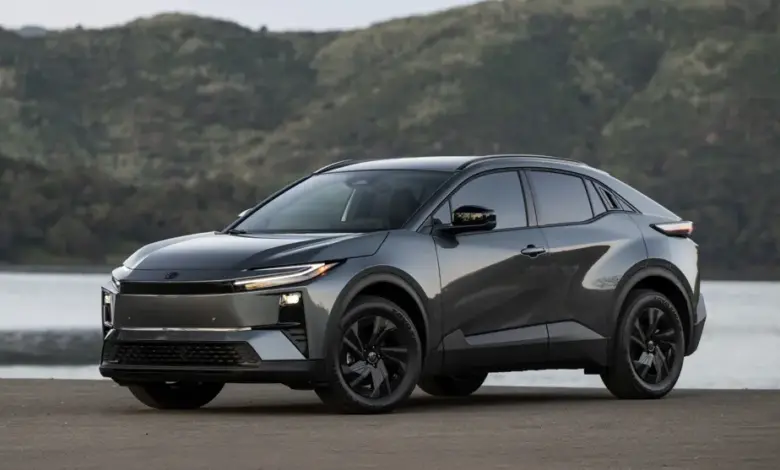
The latest examples show a market moving in a more accessible direction. Toyota is launching the C-HR this spring at prices below $50, 000, a notable step for a brand that has been cautious in the 100% electric space. In its front-wheel-drive version, the model promises nearly 500 km of range. It also offers an all-wheel-drive setup with two motors and a combined output of 338 horsepower, while the front-wheel-drive version delivers 221. Both use a 77 kWh battery, which can recharge from 10% to 80% in about 30 minutes on a fast charger, helped by preconditioning.
That matters because affordability is no longer only about the sticker price. Buyers are also weighing charging speed, usable range, and whether a vehicle can fit daily life without forcing compromises. In that sense, the vehicle conversation is becoming more practical, and less abstract, than it was even a short time ago.
Which models are broadening the choices for shoppers?
Subaru’s Uncharted closely mirrors Toyota’s C-HR, though it differs in one important way: its entry-level front-wheel-drive version uses a smaller 57. 7 kWh battery and offers just under 400 km of range. Other versions use the same 77 kWh battery found in Toyota’s model.
Kia is also pushing harder. Following the EV4, the EV3 is expected this summer and is being presented as a more utilitarian version built on the same technical base. It will offer a choice between a 58. 3 kWh battery and an 81. 4 kWh battery. Kia says the smaller battery will provide 354 km of range, while the larger one will go beyond 500 km on a single charge. Buyers will also be able to choose between front-wheel drive and all-wheel drive, and that option will later be offered on the EV4 as well.
These additions join recent introductions such as the Fiat 500e, Nissan Leaf, Volvo EX30 Cross Country, and Chevrolet Bolt. The pattern is clear: the market is filling with more options at different price points, which gives shoppers more room to compare rather than settle.
What do buyers gain beyond range and range numbers?
The appeal of these models is not only technical. It is also social and economic. A lower entry price can change whether a household considers an electric car at all. A range near or above 500 km can also reduce the anxiety that comes with planning longer trips or depending on public charging.
Ford is another name in the mix, working on an electric pickup with a target price of about $30, 000 US. To reach that goal, the company plans to limit variants and the number of parts, with two pieces enough to assemble the chassis and body. It also plans to rely on a battery using prismatic cells with lithium iron phosphate chemistry. That approach suggests a broader industry search for simpler, less costly production.
How do these changes affect the consumer’s choice?
For shoppers, the question is no longer whether an electric vehicle can be technically impressive. The question is whether a vehicle can be both attainable and useful. The latest models show that manufacturers are trying to answer both at once, with clearer attention to value, charging time, and everyday range.
At the same time, the growing presence of lower-priced models may reshape expectations. As more choices arrive, the comparison point is no longer a luxury electric car, but the practical family vehicle, one that must justify itself in the driveway, at the charger, and in the budget. The market is not solved yet, but it is moving.
And that is what makes the current moment feel different: the word vehicle no longer has to signal a painful trade-off. For more buyers, it is beginning to signal an option that is within reach.