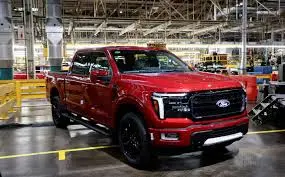
Ford Recalls have moved from a routine safety notice to a broader warning about transmission reliability in some F-150 pickup trucks. The recall now covers nearly 1. 4 million vehicles in North America, including approximately 144, 000 in Canada, after federal regulators identified a gearshift issue that can trigger an unexpected downshift while the vehicle is moving.
What exactly is driving Ford Recalls this time?
Verified fact: Ford Motor Company is recalling F-150 vehicles equipped with six-speed automatic transmissions. In Canada, the recall affects approximately 144, 000 vehicles from the 2015 through 2017 model years. In the larger U. S. recall, the affected vehicles were produced between March 12, 2014, and Aug. 18, 2017.
The central problem is a loss of signal between the transmission range sensor and the powertrain control module transmission. A Ford spokesperson said degradation of the electrical connections in the internal transmission lead frame can cause an intermittent signal from the transmission range sensor. That may lead to an unexpected downshift into a lower gear while the vehicle is in motion.
Informed analysis: That is not a minor drivability complaint. A sudden downshift can unsettle the vehicle at speed, and the federal safety concern is serious enough to place the issue in the same category as a crash-risk defect. The recall shows how a single electrical connection inside the transmission can become a public-safety problem once it interrupts the signal chain.
How serious is the safety risk behind Ford Recalls?
Verified fact: The National Highway Traffic Safety Administration said the gearshift issue can increase the risk of a crash. Federal regulators also said certain F-150 trucks could unexpectedly downshift into second gear, which could result in a loss of vehicle control.
The recall report adds another warning sign: some vehicle owners may notice an illuminated malfunction indicator light or wrench light on the dashboard if there is an issue with the transmission range sensor. Ford is aware of two injuries and one accident potentially related to the gearshift issue, under the federal notice.
Informed analysis: Those details matter because they move the issue beyond a mechanical defect and into a pattern of known consequences. In safety terms, the presence of injuries and an accident suggests the defect has already crossed from theoretical risk to real-world harm. The exact number of affected trucks is large, but the more important point is that the failure mode can affect control while the truck is moving.
Who is affected, and what happens next?
Verified fact: Ford plans to send letters to vehicle owners beginning April 27. Owners can take their vehicle to a Ford or Lincoln dealer to have affected components of their F-150 updated or replaced. In Canada, drivers can check whether their vehicles are included by entering their VIN on the company’s webpage.
This recall spans a long production window and two model-year groups cited in the context. The Canada notice applies to 2015-17 vehicles, while the broader U. S. action includes trucks built from March 12, 2014, through Aug. 18, 2017. That overlap indicates the issue is tied to a specific transmission configuration rather than a narrow batch of isolated vehicles.
Informed analysis: The size of the recall raises a practical question about detection. If owners only learn of the issue when a warning light appears, many may continue driving without realizing a transmission signal problem exists. That makes the mailing schedule and VIN lookup process central to the response, not peripheral.
What do these Ford Recalls reveal about accountability?
Verified fact: Ford Motor Company has acknowledged the recall, federal regulators have identified the safety concern, and the company has set a repair path through dealers. The affected vehicles are F-150 pickups equipped with six-speed automatic transmissions, and the issue involves electrical degradation inside the transmission lead frame.
Informed analysis: Taken together, the record shows a defect that is not cosmetic or isolated. It is tied to signal loss, unexpected downshifting, possible loss of control, and a documented injury and accident link in the federal notice. The public question is not whether the company is responding, but whether owners will be reached quickly enough to prevent additional incidents before the repair campaign is complete.
For drivers, the immediate issue is verification. For regulators, it is oversight. For Ford, it is whether a known transmission-related hazard can be contained before more vehicles experience the same failure pattern. Ford Recalls are therefore about more than a part replacement; they are about whether safety warnings reach owners before the defect reaches the road again.