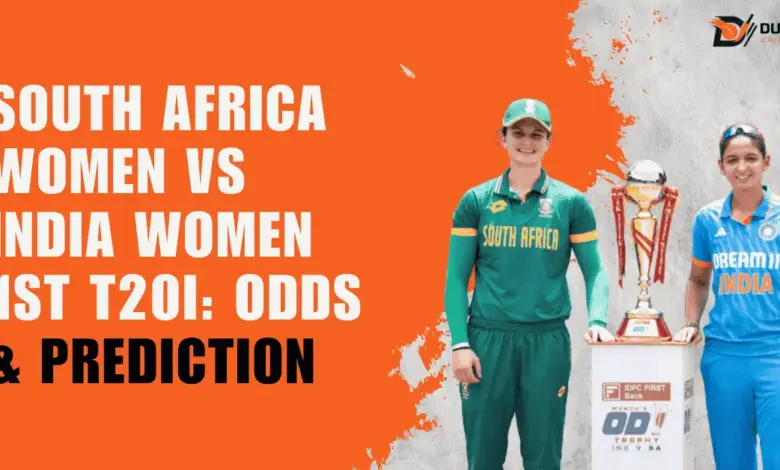
The sa-w vs indw series begins with more than a contest for early momentum; it opens a pressure test for two teams using the same match as preparation for the ICC Women’s T20 World Cup in June 2026. At Kingsmead in Durban on April 17, 2026, India Women arrive with stronger recent results and a sharper sense of rhythm, while South Africa Women must respond after a difficult March. The numbers, the rankings and the surface all point toward a tense start rather than a routine one.
Why sa-w vs indw matters before the World Cup
This five-match series is significant because it gives both sides a direct chance to sharpen combinations before a global event that sits only weeks away. India Women are ranked third in the world, South Africa Women fifth, and the gap is reflected in the market as well as in recent results. India’s run includes seven wins in their last eight T20Is, plus a 2-1 series victory over Australia. South Africa, by contrast, are coming off a 1-4 defeat to New Zealand in March 2026.
That contrast makes the opener less about surprise and more about execution. India’s recent consistency gives them a higher baseline, while South Africa need to find a faster reset. In a match that opens a five-game set, the early signal matters: whichever side settles first can shape the tone for the rest of the series.
Conditions at Kingsmead could sharpen the contest
Kingsmead is expected to offer a seamer-friendly surface, and that is one reason the sa-w vs indw opener may stay closer than the form book suggests. The pitch traditionally provides bounce and movement, especially with the new ball, and the coastal humidity could help swing bowlers early. Overcast spells are also possible, which would further support seam movement across the innings.
That context matters because the venue does not reward blind aggression from the first ball. Batters are likely to need patience before accelerating, and the team bowling first may gain a small edge if it extracts early movement. Pleasant evening conditions are expected, with low rain probability, so the match should reach a full contest unless the weather shifts unexpectedly.
Bookmakers have India around 1. 50 and South Africa at 2. 56, a pricing gap that reflects form, rankings and head-to-head strength. Yet South Africa’s recent edge in completed matches between the two teams means the visitors cannot afford a flat start. The matchup is therefore not just about quality; it is about who handles the conditions better in the first six overs.
Selection calls and the form lines behind the odds
India’s case is strengthened by their top-order output. Smriti Mandhana and Shafali Verma have scored more than 650 runs combined in the last two T20I series, giving the side a strong opening platform. Mandhana’s rivalry record also stands out: she leads the run charts in this matchup with 406 runs in 17 innings at a strike rate of 121. 55, underlining her control against South Africa’s attack.
South Africa, meanwhile, will be without Marizanne Kapp because of illness, a notable absence in a match already shaped by marginal conditions. Captain Laura Wolvaardt must anchor the response, while Ayabonga Khaka and Nonkululeko Mlaba are expected to lead the bowling effort. Shabnim Ismail’s 17 wickets in 14 matches against India remain a major threat, especially if the surface keeps assisting seam and movement.
India’s pace attack also carries a fresh dimension. Arundhati Reddy, who recently took eight wickets against Australia, is set to lead the seam unit. That gives India a clear tactical pathway: attack early, stay patient with the bat, and force South Africa into a chase built under pressure.
Expert perspective and the wider series implications
From an analytical standpoint, the opening match appears to reward discipline more than flash. The conditions suggest a contest where new-ball control, batting patience and fielding precision may decide the first result. South Africa’s task is not only to halt India’s momentum but also to prove they can absorb the pressure of a strong favorite away from the comfort of narrative optimism.
The broader impact extends beyond the scoreline. This series offers both camps a live test of depth, adaptability and role clarity before the World Cup. For India, maintaining momentum would reinforce the sense that their current structure is stable. For South Africa, a competitive opener could reset confidence after the New Zealand setback. In that sense, sa-w vs indw is not just a series headline; it is a measure of readiness.
As the first ball is bowled in Durban, the question is whether India’s form can overpower the setting, or whether South Africa can turn home conditions and tactical patience into a statement result in sa-w vs indw.