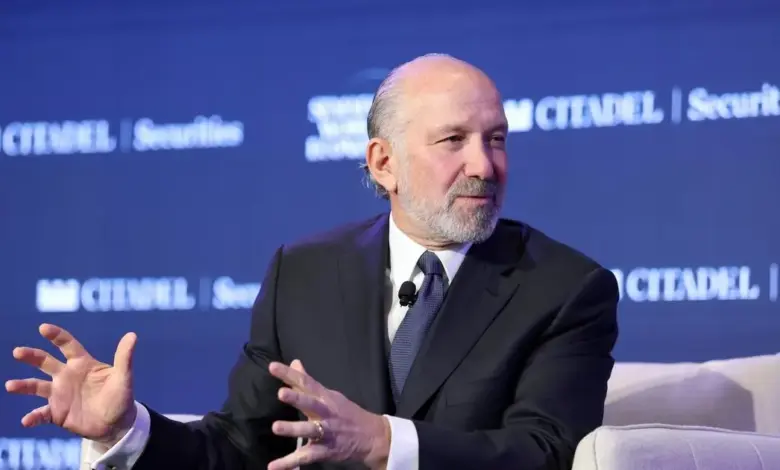
Howard Lutnick used a Friday appearance in Washington, DC, to sharpen the pressure on Canada just as negotiators prepare to review the US-Mexico-Canada Agreement this year. His remarks suggest the coming months may not be a routine technical check-in, but a more political fight over the future of the pact, the balance of trade, and the terms the United States is willing to accept.
What Happens When the Review Becomes a Political Test?
The latest comments matter because they came ahead of a formal moment in the calendar: US Trade Representative Jamieson Greer said he plans to reveal the US position on USMCA on June 1, one month before officials must agree to extend the deal. That creates a narrow window in which signals from Washington can shape expectations on both sides of the border. In that setting, Howard Lutnick framed Canada’s approach as strategically weak and argued that the agreement should be reconsidered.
He also tied the issue to broader political and economic themes already surrounding the White House. Donald Trump, he said, sees USMCA as “a bad deal, ” and Lutnick added that it “needs to be reconsidered and reimagined correctly. ” That language points to more than a routine review. It suggests a possible attempt to reset the terms of trade rather than simply preserve them.
What If the Current Deal Is Reopened?
The immediate pressure comes from the way the review period is colliding with public statements from both US and Canadian officials. Lutnick criticized a former Canadian trade chief’s view that time is on Canada’s side, and he dismissed that posture as ineffective. He also singled out Prime Minister Mark Carney’s travel to China and questioned whether Beijing would buy Canadian goods in the way Ottawa might hope.
Those remarks signal two things. First, Washington appears to be preparing for a tougher bargaining posture. Second, the conversation is no longer only about tariffs or market access; it is also about strategic alignment, industrial location, and the politics of North American manufacturing. Lutnick’s comments about auto plants moving from Ohio and Michigan to Mexico show how the debate is being framed in domestic political terms.
A Commerce Department spokesperson later said Lutnick was misquoted on one point, while also explaining that he was describing what the department sees as an unfair trade imbalance with Canada. That clarification does not change the underlying message: the administration wants the issue interpreted through the lens of leverage, not compromise.
What Forces Are Driving the Shift?
Several pressures are shaping the direction of the talks:
- Negotiating leverage: The June 1 disclosure of the US position creates a focal point for pressure.
- Domestic politics: Nearly 40 senators from both parties urged Greer to fully enforce the existing terms so the process reinforces stability for farmers, ranchers, and rural communities.
- Industrial policy: Lutnick’s remarks about autos and manufacturing reflect concern over where production happens and who benefits.
- Geopolitical framing: His comments about China show that trade is being linked to broader questions of alignment and market dependence.
Howard Lutnick also said Chinese automakers such as BYD would not be on the table for factories in the United States when Trump visits Beijing later this year. That adds another layer: the trade debate is extending beyond Canada into the administration’s wider view of foreign manufacturing, competition, and strategic control.
What Are the Most Likely Outcomes?
| Scenario | What it would mean |
|---|---|
| Best case | The review becomes a hard but contained negotiation, with the existing framework extended and key sectors kept stable. |
| Most likely | The United States pushes for tougher terms and more enforcement, while Canada and Mexico try to defend the current structure. |
| Most challenging | The review turns into a broader confrontation over whether USMCA should be extended at all, creating uncertainty for business planning. |
The middle path appears most plausible from the available signals. The administration is clearly signaling dissatisfaction, but there is also institutional pressure to preserve stability. That tension may shape the outcome more than any single statement.
What Should Readers Watch Next?
For businesses and policymakers, the key question is whether the review becomes a limited enforcement exercise or a broader renegotiation. The answer will affect sectors tied to North American supply chains, especially where production, labor, and energy are central. It will also test how much room exists between political rhetoric and practical deal-making.
Howard Lutnick’s remarks show that the tone is already hardening before the formal process fully begins. That makes the period around June 1 especially important. If the United States sets a confrontational opening position, the rest of the review may be defined by how aggressively Canada and Mexico respond, and by whether Washington is seeking adjustment or reinvention. For now, the clear signal is that the next phase of trade talks will not be calm, and Howard Lutnick has made that unmistakable.