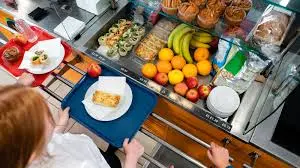
In school meals across England, the government is proposing a major shift: deep-fried food would be banned, high-sugar items restricted, and fruit would replace sugar-laden treats for most of the week. The stated aim is healthier meals. The unresolved question is whether schools can deliver that change without extra money.
What is being changed in school food?
Verified fact: The Department for Education says the new plans would overhaul school dinners by removing deep-fried food from menus and limiting high-sugar items. Sweetened desserts would be limited to once a week, while more fruit, vegetables and wholegrains would need to appear in menus. Schools would also no longer be allowed to offer unhealthy grab-and-go options such as sausage rolls and pizza every day.
Verified fact: The proposals apply to primary and secondary schools in England. The government says these are the first changes to the school food standards in a decade, after revisions were delayed because of the pandemic.
Analysis: The details point to a broad reset rather than a narrow menu tweak. The policy reaches beyond one item or one age group. It changes the balance of what school children can be served, and it signals that the government wants school meals to do more than fill a lunch break.
Why does the government say this is necessary?
Verified fact: The Department for Education says millions of children will get healthier and more nutritious meals each day under the proposals. The department also says more than one in three children leave primary school overweight or obese, and that tooth decay from high-sugar diets is the leading cause of hospital admissions for children aged between five and nine.
Verified fact: Education Secretary Bridget Phillipson called the plan “the most ambitious overhaul of school food in a generation. ” She said every child deserves delicious, nutritious food at school that gives them the energy to concentrate, learn and thrive. Early Education Minister Olivia Bailey said the government hopes to “reduce sugar, increase fibre, and get rid of some of the really unhealthy foods like deep-fat-fried food. ”
Analysis: The public-health logic is clear: the government is linking menu standards with childhood obesity, dental health and classroom concentration. In that framing, school food is being treated as a health policy tool, not just a catering issue.
Who says the plan could fail without more funding?
Verified fact: The Association of School and College Leaders supports improving the quality of school food, but says additional funding to pay for the changes would be “essential. ” Brad Pearce, national chair of the School Food People, welcomed the review but said the standards should be “monitored and funded appropriately. ”
Verified fact: The Liberal Democrats said funding for school meals needs to match rising costs. Reform UK accused the government of “trying to micromanage people’s lives. ” The Green Party said cutting unhealthy food from school menus was “welcome and long overdue. ”
Verified fact: When asked whether schools could manage the changes within existing budgets, Prime Minister Keir Starmer said: “I think they can. ” Early Education Minister Olivia Bailey also said healthier food does not have to be more expensive food for schools.
Analysis: This is the central tension. The government is promising better food while insisting current budgets may be enough. School leaders are not rejecting the policy itself; they are warning that standards without funding may become another unfunded expectation placed on already stretched institutions. That makes financing the practical test of the entire plan for school dinners.
What happens next in the consultation?
Verified fact: The government has announced a nine-week consultation on the proposals. Schools will be told to publish menus online, which the government presents as part of the wider push for transparency and healthier standards.
Analysis: The consultation period matters because it will show whether ministers are testing the policy’s direction or simply refining the delivery. If the rules are adopted as described, school kitchens will need to adjust menus, ingredients and daily offerings. If funding does not match that ambition, the gap between policy and practice could become the story.
Accountability question: The government has made a strong case for change, but it still has to answer a simpler one: who pays for the transformation of school food, and how will success be measured once the new standards arrive?