In montana, a 357-acre legacy estate has surfaced with a price tag of $16. 3 million, and the headline is bigger than the listing itself. Two Feathers Ranch in Darby is not just a ranch for sale; it is a property that appeared briefly in the Yellowstone universe, in a single scene lasting just over two minutes, while sitting next to the real-life filming site used for the fictional Dutton family compound. That combination has turned one ranch into a symbol of how entertainment, land value, and Western myth now overlap.
What is really being sold at Two Feathers Ranch?
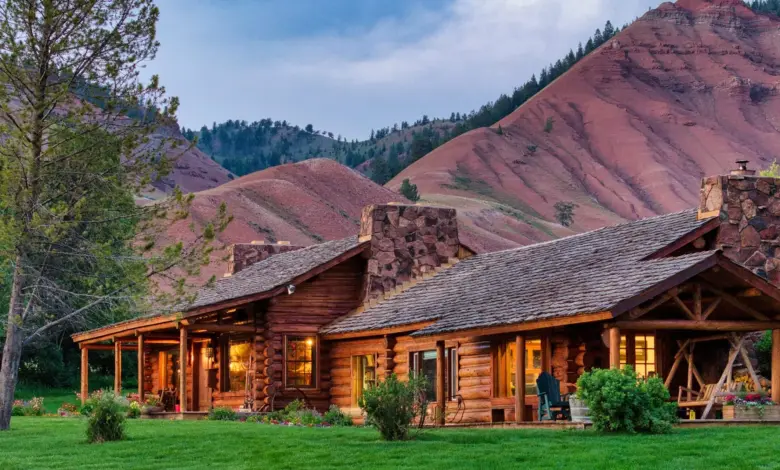
Verified fact: Two Feathers Ranch is a 357-acre estate in Darby, montana, and it has hit the market for $16. 3 million. The property was once part of the historic Chief Joseph Ranch and includes a 7, 180-square-foot owner’s residence with three bedrooms and five bathrooms, plus a guest home, a manager’s residence, and roughly 2, 500 feet of Tin Cup Creek frontage. It also has irrigated pasture supporting a Black Angus cattle operation, along with equestrian and ranching infrastructure.
Verified fact: The ranch appears briefly in Yellowstone in a single scene lasting just over two minutes. It is adjacent to the real-life filming site used for the fictional Dutton family compound. That detail matters because the listing is not being sold purely as land, housing, or agricultural utility. It is being sold with a screen-credit aura that gives the property a second identity.
Why does a brief Yellowstone appearance matter so much?
Informed analysis: The key question is not whether the ranch is attractive; it is why a short appearance in a television drama has become part of the property’s market value story. Yellowstone concluded its five-season run in December 2024 after Kevin Costner’s exit from the series, and his character John Dutton was later written out. The show began in 2018 with Costner playing a Montana rancher fighting to protect his family’s land, a role that helped reshape interest in Western living.
That cultural pull is part of the larger backdrop around montana ranch listings. The series did more than entertain viewers. It made multigenerational cattle ranching look aspirational, and that image now follows the real estates connected to it. In this case, the aesthetic is reinforced by the property itself: sweeping mountain backdrops, rolling pastures, and a creekside setting in the Bitterroot Valley.
Verified fact: The ranch is represented by listing agent Deke Tidwell of Hall and Hall. The main residence sits on manicured grounds with panoramic views of the surrounding valley. The property also features a private pond and the visual setting that helped make the ranch recognizable to viewers.
Who benefits from the Yellowstone effect — and what does it leave out?
Verified fact: A brokerage specializing in ranches reported a 250 percent surge in listing inventory last year. Another ranch property bigger than the state of Rhode Island sold in January after hitting the market for $79. 5 million. These figures show that the Yellowstone effect is not just a pop-culture phrase; it has been associated with a sharp shift in the ranching real estate market.
Informed analysis: The beneficiaries are easy to identify. Sellers gain attention. Agents gain a ready-made narrative. Buyers gain a property with celebrity-adjacent cachet. What is less visible is the distance between the romantic image of ranch life and the practical realities of owning and operating a large estate. On paper, Two Feathers Ranch is still a Black Angus cattle ranch with irrigated pasture and ranching infrastructure. In the market, it is also a lifestyle asset shaped by screen time and cultural memory.
That dual identity is the story underneath the asking price. The ranch’s value is not only in acreage, water frontage, or buildings. It is also in association. The brief Yellowstone cameo, the adjacency to the filming site, and the legacy-ranch framing create a premium that goes beyond land use alone.
What does this tell the public about ranchland, image, and value?
Informed analysis: The combination of a television franchise and real estate has turned montana into more than a location. It has become a brand environment where a ranch can be marketed as both working land and cultural artifact. That is why the headline figure matters: $16. 3 million is not simply a price for acreage. It is a measure of how visibility, narrative, and place can converge in a single asset.
Verified fact: Yellowstone ended its run in December 2024, and Costner said he was not in any future episodes. His departure marked a turning point that reshaped the series’ direction. Yet the market effects remain visible in properties tied to the show’s universe.
The public should understand that the story is not just about one ranch in Darby. It is about a larger market in which screen identity has become a selling point. The result is a new kind of premium: not merely for land in montana, but for land that can be seen as part of a cultural myth.
That is the hidden truth behind montana today: the ranch is real, the cattle operation is real, and the asking price is real, but the marketing power comes from something less tangible — a television-made idea of the West that now shapes what people are willing to pay.
For buyers, sellers, and observers alike, montana is no longer just a place on the map. In this case, it is a case study in how a legacy estate becomes a symbol, and how a symbol becomes a market.