jason day is heading into the 2026 Masters with a wardrobe that is once again drawing attention before a shot is struck. The latest Malbon design leans into bird print, bird sounds, and Augusta’s natural setting, but the reaction has already shown the tension at the center of this story: fashion ambition versus club tradition. What makes this more than a style stunt is the way the outfit has already met resistance, including a request to simplify the pants and a broader pattern of scrutiny around what Day wears at Augusta National.
Bird print meets Augusta protocol
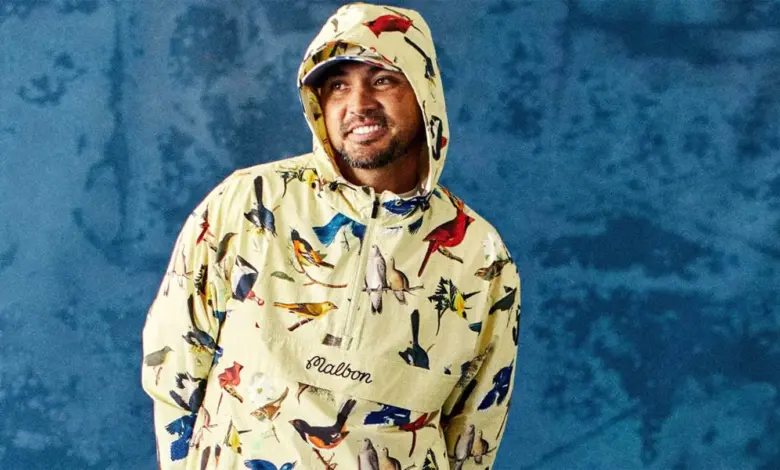
The 2026 collection is built around birds linked to Augusta National Golf Club, including scarlet tanagers, orioles, eastern bluebirds, cardinals, blue jays, golden finch, and the red-headed woodpecker. Stephen Malbon said he has been sending Jason Day audio files of bird sounds for the last six months, framing the design as a way to connect with nature and, in his view, make more birdies.
That idea has not landed quietly. Day was supposed to wear matching pants with the bird print, but the club requested a solid print instead. The vest he will wear on Wednesday is modeled after birding jackets and includes a pocket for binoculars, which makes the look more functional in concept than many of the louder golf outfits that have fueled criticism in the past.
The immediate issue is not whether jason day can carry the look, but whether Augusta is again setting the boundaries. In 2024, Day was asked to remove a vest during the event, and in later seasons the club also pushed back on his planned designs. The 2026 update suggests the same pattern: Malbon pushes, Augusta filters, and the final result becomes a compromise that still invites debate.
Why the outfit matters now
This is not only a clothing story. Malbon has openly positioned itself as a brand trying to lower golf’s entry bar by mixing cultural touchstones with the sport. Stephen Malbon’s comments about golf being historically exclusive, costly, and difficult to enter show that the brand sees fashion as part of a broader cultural strategy.
That strategy matters because Day has become one of the most visible test cases for it. Since embracing Malbon’s oversized graphics, baggy silhouettes, and loud patterns, he has helped turn golf attire into a recurring talking point. The bird print extends that approach, but it does so at Augusta, where tradition is not just part of the setting; it is part of the product.
The timing also matters. The 38-year-old has been practicing at Augusta for several hours each day, pushing through high temperatures as he prepares for the opening round. That focus suggests the clothing conversation is unfolding alongside serious competitive intent, which gives the story more weight than a simple fashion controversy.
What the reaction says about Jason Day and Malbon
Malbon’s approach has always depended on a split response. Supporters see creativity and energy. Critics see bad taste, awkward proportions, and designs that overpower the golfer. The 2026 Masters outfit is already being read through that same divide, but the bird motif adds a new layer because it pulls in nature, symbolism, and Augusta’s own environment.
Stephen Malbon’s comments about Native American beliefs and the meaning attached to birds make the collection sound intentional rather than random. Still, the practical outcome is easier to measure: the club rejected the full matching pant design, and that alone signals where the line remains. jason day may wear the most discussed outfit on the range, but the final product is still shaped by Augusta’s standards.
That tension is central to Malbon’s larger project. It wants golf to feel less exclusive and more expressive, yet the sport’s most traditional stage keeps insisting on restraint. The result is a look that sells disruption while being edited by the very institution it is meant to challenge.
The broader impact beyond one week in April
Jason Day’s clothing choices have become part of the Masters narrative, but they also reflect a larger shift in golf’s identity. The sport is no longer insulated from style culture, social reaction, and branding strategy. In that sense, the bird print is more than a print; it is a marker of how modern golf is being packaged.
For Augusta, the message appears consistent: bold ideas can exist, but only inside clear limits. For Malbon, the message is more complicated. Each rejection or revision can be framed as proof that the brand is challenging the establishment, yet repeated pushback also shows how difficult it is to turn disruption into acceptance.
For jason day, the calculation is equally sharp. He remains a top-level player preparing seriously for the tournament, but his image now carries a second storyline that cannot be separated from his golf. The result is a Masters week where the clothes may be discussed almost as much as the scorecard, and that may be exactly the kind of attention Malbon wants, even if Augusta does not.
So the question going forward is simple: if the bird print is already being trimmed before Thursday’s opening round, how much room is left for Malbon’s version of golf fashion at Augusta?