China’s polar icebreaker Xuelong returned to Shanghai, China, on Thursday after a 160-day voyage tied to the country’s 42nd Antarctic expedition, marking the end of a mission that delivered fruitful scientific research outcomes. The expedition brought home 550 researchers after work across Antarctica and inland areas, with the voyage beginning from Shanghai on Nov. 1, 2025. The return comes as the team closes a season that set new records in personnel scale and workload.
Record work in Antarctica
The expedition covered more than 3, 600 tonnes of routine supplies and 104 days of inland exploration, while also supporting China’s Antarctic field operations through two icebreakers, Xuelong and Xuelong 2. the scale of the mission pushed the country’s 42nd Antarctic expedition into record territory, even before the science results were counted.
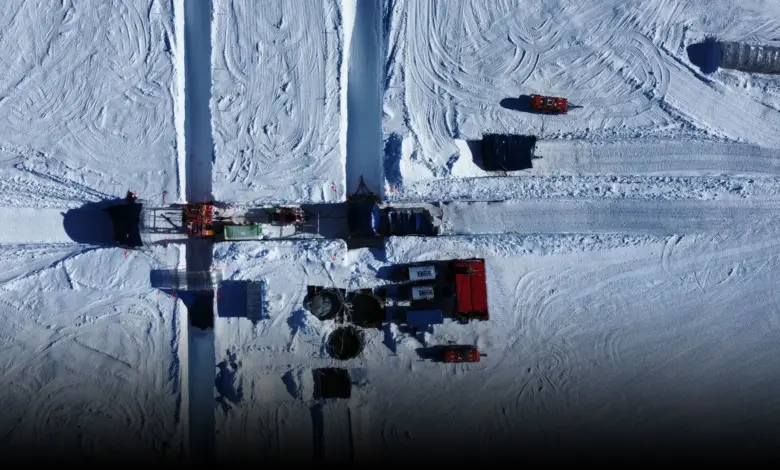
One of the clearest milestones was China’s first hot-water drilling experiment on the Antarctic ice sheet, which reached a depth of 3, 413 meters and exceeded the previous global mark of 2, 540 meters. The expedition team said the work could support study of life under the ice, ancient climate records and Earth’s evolutionary history. That result gave the Antarctica mission a technical headline well beyond routine logistics and station support.
What the expedition found
Wei Fuhai, the expedition’s lead and chief scientist, said Qinling Station has “come of age” in routine operation capability, with foundational systems improved and scientific facilities for weather observation, upper-atmospheric physics observation and marine environment monitoring now in use. The station began operations in February 2024 and is China’s fifth Antarctic base.
The team also completed ecological surveys in key sea areas including the Cosmonaut Sea and the Amundsen Sea. Researchers established an air-ground monitoring system for penguin habitats, carried out aerial photography surveys of penguin populations, and collected samples related to krill and ice lakes. In all, the expedition’s fieldwork added to a broader picture of Antarctic conditions while strengthening China’s research footprint on the continent.
Immediate reactions from the field
“Before drilling began, we didn’t dare set a goal of reaching beyond 3, 000 meters. But our team was determined. If there was even a 1% chance, we would give 100% effort, ” Guo Jingxue, leader of the expedition’s subglacial lake research team, said in remarks to domestic media. Her comments captured the pressure and ambition behind the drilling effort, which was carried out near the Qilin Subglacial Lake area.
Sun Youhong, an academician of the Chinese Academy of Engineering, helped plan and guide the drilling mission, which was organized with the Polar Research Institute of China, Jilin University and the China University of Geosciences in collaboration with multiple institutions. The expedition also included researchers from more than 10 countries and regions, among them Thailand, Chile and Portugal.
Antarctica cooperation and rescue work
Beyond science, the expedition carried out an international humanitarian rescue using domestic aircraft to help Russia evacuate sick and stranded personnel. China’s Great Wall Station supported four Portuguese researchers, provided medical assistance to injured personnel from Russia, the Czech Republic and Uruguay, and Xuelong was invited to help transport 23 expedition members from the Republic of Korea.
China’s three Antarctic research stations, together with two icebreakers, also received more than 400 visits from researchers from 11 countries and organized more than 130 visits to neighboring stations during the journey. The expedition further included academic conferences on Antarctic science jointly hosted with Russia and India, plus a Chinese film festival.
What happens next
The team’s return closes a mission that began in Shanghai in November and was anticipated to end in May, with the latest phase now complete. The Antarctica work leaves China with new drilling data, expanded station capability and a deeper set of samples and surveys to process in the months ahead, even as the country’s polar program continues to build on the 42nd Antarctic expedition.