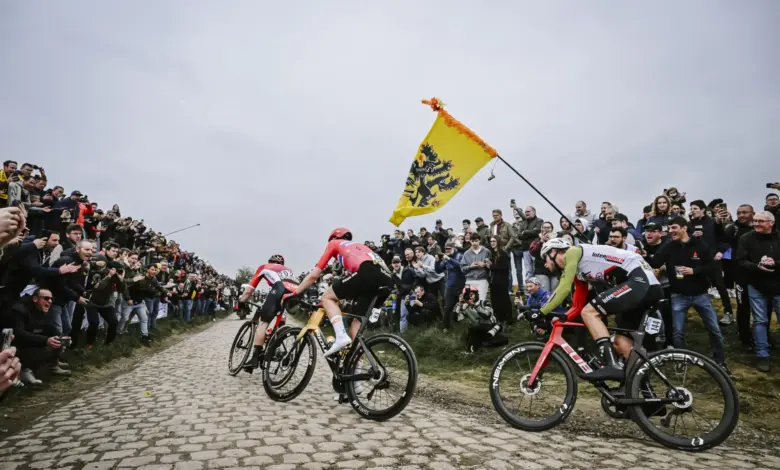
Visma–lease A Bike enters the Paris-Roubaix conversation as organisers test whether small route changes can shift the shape of the race. In February, ASO announced adjustments to the 258. 3-kilometre men’s course for the 2026 edition, and the changes are meant to make the racing faster from the start.
Race director Thierry Gouvenou said the opening gravel sectors have been altered to bring back the fast early rhythm first seen in 2024, with the first four pavé sectors arriving in quick succession and little asphalt between them. The revised route also adds Sector 26, a rarely used section featuring an 800-metre climb, while the race still keeps its final 20 cobbled sectors unchanged.
Visma–lease A Bike and the early pressure point
The biggest shift is at the front end of the race, where organisers want an early pre-selection to form before the decisive moments. Gouvenou said the opening sequence should “accelerate the racing, ” and described it as creating “an unmatched density of cobbles. ”
That matters because the new pattern may force teams to commit earlier, before the race settles into its usual long stretch of attrition. For Visma–lease A Bike, and for every other contender, that could mean less room to recover after a poor positioning moment in the first part of the day.
The added climb is the other talking point, but its actual impact is uncertain. The sector is not new to the race, having appeared before in 2017, and the context remains the same: more than 140 kilometres still separate the riders from the Roubaix velodrome after that point.
What the climb could mean, and what it probably will not
The course tweak is small in scale, and the story may be more about intent than transformation. The added ramp is reasonably moderate, and the race still has 30 brutal cobbled sectors covering 54. 8 kilometres in total.
That is why the main effect may be tactical rather than decisive. The climb may open the door for an unexpected move, but the race still appears set up to be decided later, where the hardest cobbles and the familiar pressure points will matter most.
The final 20 cobbled sectors, including the Trouée d’Arenberg and the chicane that now comes before it, remain unchanged. That means the race still carries the same reputation for chaos, even if the opening script is being rewritten.
Paris-Roubaix changes, familiar contenders
When the peloton rolls out of Compiègne on Sunday evening, Mathieu Van Der Poel will be trying to become the first rider to win four consecutive Paris-Roubaix titles. Standing in his way is last year’s runner-up Tadej Pogačar, who is aiming to become only the fourth man to win all five Monuments and the first to do so consecutively.
The race will also carry a new official name in 2026: Paris-Roubaix Hauts-de-France, reflecting the naming rights partnership with the Hauts-de-France regional government. The course may look only slightly different, but the stakes remain large, and the question for Visma–lease A Bike is whether these changes alter the race enough to matter when the pressure rises in Paris-Roubaix.