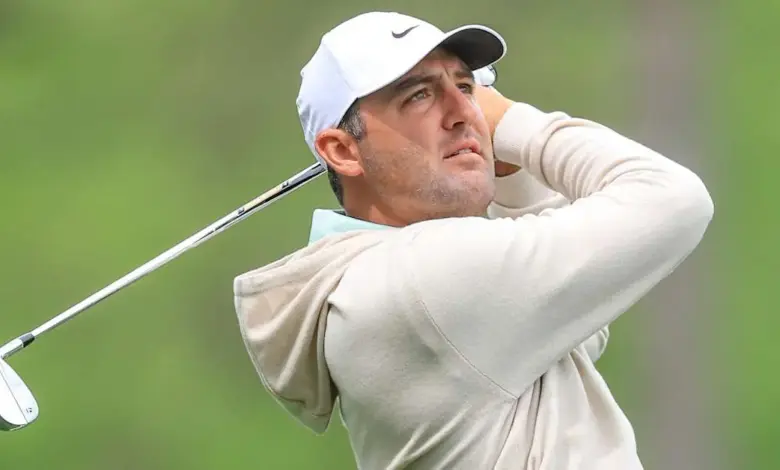
Masters Golf has entered a fresh turning point after Rory McIlroy’s long-awaited triumph completed the career Grand Slam and reset the conversation around Augusta. With that pressure lifted, the focus now moves to who can step into the next Green Jacket storyline this week.
What If Augusta Becomes a Test of Depth Rather Than Stars?
The field’s most immediate storyline is not one name but a cluster of challengers with different paths into the tournament. Eleven British players are in the mix, giving this week a wider cast than a simple head-to-head race. Some arrive as proven winners, others as first-timers, and others as players still searching for a breakthrough that matches their reputation.
That mix matters because Augusta rewards players who can handle both expectation and disruption. The present state of play suggests the event is less about who has the loudest profile and more about who can convert recent form into four composed rounds. In that sense, Masters Golf is being shaped by a broad and unsettled contender pool rather than a single dominant favorite.
What Happens When Form, Experience, and Opportunity Collide?
Among the notable names, Danny Willett remains the clearest reminder that Augusta can still produce an unexpected champion. He won on his second visit in 2016 and remains the first Englishman since Nick Faldo in 1996 to claim the title. But the record since then has been uneven: the Masters remains his only PGA Tour win, and he has had only three other notable victories on the DP World Tour since, with the latest coming five years ago. Even so, his recent Augusta record has been steadier than his broader career results, with only two missed cuts in his last six starts and two top-25 finishes.
Tom McKibbin arrives with a different profile. Touted early as a potential successor in the Rory mold, he has not yet turned that label into a full breakout. His move to LIV Golf has added more scrutiny, and his 2025 results have been modest, with a best finish of T17 and a ranking of 38th of 61 golfers. Still, a win at the Link Hong Kong Open last year earned him his place, and he has made the cut in three of his previous four major appearances.
Laurie Canter is another British player with a route built on steady progress. He has been consistent enough to earn a PGA Tour card and now has a Masters debut in front of him. Matt Wallace, meanwhile, has shown a different kind of resilience, making the cut in all seven of his most recent major appearances, even if none has yet lifted him into the top tier of the conversation.
Who Wins, Who Loses, and What Does Masters Golf Reward?
| Stakeholder | Likely position this week |
|---|---|
| Proven veterans | Benefit from experience if they avoid early mistakes |
| Debutants | Gain exposure and credibility if they make the cut |
| Players with recent consistency | Have the clearest route to weekend contention |
| Players needing a breakthrough | Face the greatest pressure to convert opportunity |
That balance creates three plausible outcomes. In the best case, a seasoned player like Willett or a steady operator like Wallace turns form into a deep run. In the most likely case, the week produces a mix of made cuts, solid finishes, and one or two surprise runs from names the wider public has not fully settled on yet. In the most challenging case, the pressure of Augusta exposes the gap between reputation and current level, leaving the field with plenty of storylines but no clear new heir to McIlroy’s moment.
For readers, the key lesson is that Masters Golf is no longer only about a single chase for a legacy-defining win. It is also about which kind of player can now own the next chapter at Augusta: the comeback veteran, the steady debutant, or the hyped prospect still trying to become the real thing. The uncertainty is genuine, but so is the opportunity. Masters Golf now belongs to the players who can turn this opening into a result.