The word octopus has now shifted from a record-breaking label to a test case for how science revises its own history. A 300-million-year-old fossil once treated as the oldest known octopus has been reidentified, and the change matters because it resets expectations about when octopuses actually first appeared on Earth.
What Happens When a Famous Fossil Is Rechecked?
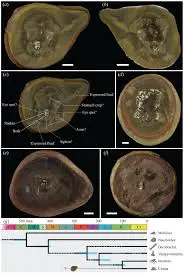
The fossil, Pohlsepia mazonensis, was first described 25 years ago and later entered the Guinness Book of Records as the earliest known octopus. That interpretation is now overturned after researchers used synchrotron imaging to scan inside the rock and identify tiny teeth that point to a different animal altogether.
Dr Thomas Clements, lead author and Lecturer in Invertebrate Zoology at the University of Reading, said the fossil was never an octopus at all, but a nautilus relative that had decomposed for weeks before burial and fossilisation. That decay blurred the anatomy so strongly that it appeared octopus-like for decades. The study now supports a much clearer timeline in which octopuses emerged during the Jurassic period, rather than hundreds of millions of years earlier.
What Does the New Scan Show?
The most important shift is not simply that the fossil was misread. It is that modern imaging exposed features that earlier analysis could not resolve. Researchers found a radula, a ribbon-like feeding structure with rows of microscopic teeth, preserved inside the fossil. Those teeth matched a fossil nautiloid from the same site in Illinois, which helped close the case.
That result matters because the fossil had been used in studies of octopus evolution. The new finding suggests the split between octopuses and their 10-armed relatives happened in the Mesozoic era, not far deeper in time as once thought. It also provides what the researchers describe as the oldest soft tissue evidence of a nautiloid ever found.
| Possible reading of the fossil | What the scan indicates now |
|---|---|
| Oldest known octopus | Related to a modern Nautilus |
| Eight-arm octopus anatomy | Ambiguous soft tissue shaped by decay |
| Evidence pushing octopus history back by around 150 million years | Evidence supporting a later appearance during the Jurassic period |
What Forces Are Driving This Shift?
The change comes from improved technology and a willingness to revisit old assumptions. Synchrotron imaging, described as using beams of light brighter than the sun, allowed the team to examine structures hidden beneath the rock surface. That kind of forensic approach is now reshaping fossils that were once considered settled.
The case also shows how preservation can distort evolutionary evidence. Zoologists believe the animal decayed for weeks before fossilisation, which left the soft tissues ambiguous. In practical terms, the fossil was not misleading because science failed; it was misleading because the body itself had already changed before it was preserved. That is why the keyword octopus belongs in a broader conversation about how classification can shift when evidence improves.
Who Wins, Who Loses, and What Happens Next?
Winners include researchers studying cephalopod evolution, because the revision removes a major outlier from the timeline and gives them a cleaner framework for future work. The University of Reading team also strengthens the case for re-examining controversial specimens held in museum collections.
Losers are not people, but a long-standing record and a popular storyline. The Guinness World Records title for the oldest octopus will need to be retired, and the fossil’s old identity will no longer support claims about early octopus evolution. The bigger takeaway is that scientific history can change when better tools expose hidden anatomy.
For readers, the lesson is straightforward: a famous label is not always the final word. The next phase of octopus research will likely depend on whether other disputed fossils can be tested with similar methods. The clearest signal is that the timeline is becoming more conservative, not more dramatic. That makes the new octopus story less sensational, but more reliable.