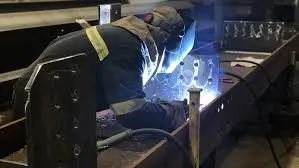
In an industrial corner of Saguenay–Lac-Saint-Jean, the sound of machinery and the promise of new automation now sit beside a more unsettled reality: the workforce is still fragile. The gouvernement du canada is providing more than $2. 4 million to four small and medium-sized businesses in the steel and manufacturing sectors, but local leaders say the money does not erase the pressure of finding enough workers to keep production moving.
What is the support going to?
The funding is being delivered through Développement économique Canada pour les régions du Québec, within the Regional Tariff Response Initiative. Its purpose is to help companies affected by U. S. tariffs. Across Quebec, nearly 100 businesses are sharing just under $64 million.
In Saguenay–Lac-Saint-Jean, the recipients include JAMEC in Normandin, which specializes in handling equipment for the industrial sector and will receive $425, 000; Groupe Alco-TMI in Alma, an industrial mechanical, boiler-making and piping contractor, which will receive $672, 700; Pedno in Saguenay, which makes traction chains, tracks and mining accessories, and will receive $335, 000; and Groupe Proco, whose main plant is in La Baie and which specializes in coatings and metal structures, receiving the largest share at $1 million.
Why does the help still leave questions about labour?
For Groupe Proco, the money will support upgrades to automated production equipment. Jean-Denis Toupin, general manager of Groupe Proco, said the company is adding robots with greater capabilities to help maintain production capacity in a context of labour scarcity. He added that automation can raise output without necessarily reducing the need for workers.
That point matters because the company’s concern is not only machinery, but also the people needed to run it. Toupin was part of a regional business delegation that travelled to Ottawa at the end of March to press for the importance of temporary foreign workers. The group returned without firm commitments. He said the company is glad to receive the support from the gouvernement du canada, but still needs workers to operate its machines and factories.
The company once counted 54 temporary foreign workers and has already seen eight leave since restrictions to the program were announced. That loss makes the funding look less like a final answer than a partial one: helpful, but not enough to settle the labour question that remains at the center of day-to-day operations.
What does the government say this support is meant to do?
Mélanie Joly, Minister of Industry and minister responsible for Développement économique Canada pour les régions du Québec, said that the gouvernement du canada is acting concretely to support Quebec SMEs facing unjustified and unjustifiable tariffs hitting Canadian businesses hard. She said the goal is to strengthen productivity, innovation and market diversification so companies can reinforce supply chains and remain competitive in an uncertain commercial environment.
That framing links the regional aid to a broader economic challenge. The tariffs are one pressure point; labour availability is another. For the companies named in this package, the immediate relief is financial, but the longer-term test remains whether they can keep people in place while modernizing production.
At the plant level, that tension is visible in the simplest terms: new robots on one side, an uncertain workforce on the other. For now, the gouvernement du canada has opened one door for investment. The unanswered question is whether enough workers will still be there to walk through it.