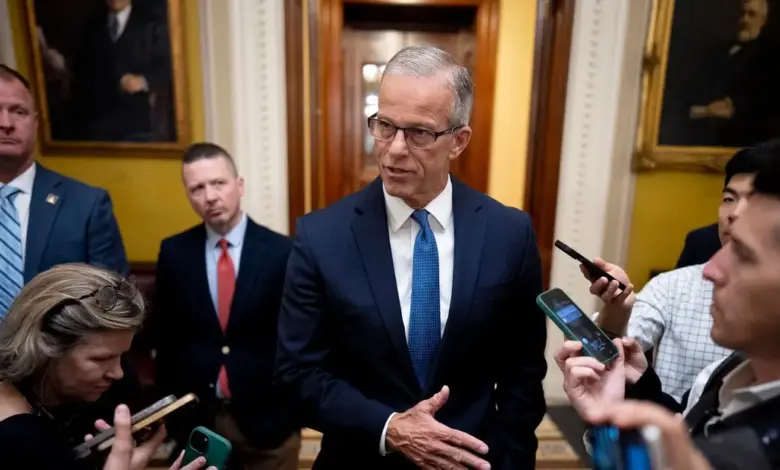
WASHINGTON — The filibuster is back at the center of a sharp Republican split as Senate Majority Leader John Thune, R-S. D., faces renewed pressure over whether the Senate should change its rules to help pass President Donald Trump’s SAVE America Act. On the Senate floor and in private political debate, the question is no longer abstract: it is whether the filibuster matters more than Trump’s push to stop what he calls illegal voting by noncitizens.
That tension was captured when Thune was recently confronted by a conservative journalist who asked, “Why is the filibuster more important than stopping illegals from voting?” The exchange put a bright light on a broader fight inside the Republican Party over whether to preserve the filibuster or set it aside for a simple majority vote. Trump has described the legislation as his number one priority and has repeatedly urged Thune to nuke the filibuster.
Trump’s pressure meets Senate rules
The debate is unfolding around the SAVE America Act, which Trump has tied closely to his political agenda. Supporters of the bill have called for the Republican majority to force a talking filibuster to move the measure forward, but the mechanics of that approach remain central to the dispute. The filibuster is the Senate’s traditional tool for extending debate, and cloture is the vote that ends that debate and breaks the filibuster.
The rules questions are not just procedural; they shape whether the bill can advance at all. Interest in Senate procedure has grown because the SAVE America Act has become a test case for how far Republicans are willing to go to deliver on Trump’s demands. In that sense, the filibuster is not simply a rulebook issue. It is the obstacle standing between the party’s current Senate majority and a fast-track path to legislation.
Why the filibuster now carries so much weight
Senate procedures are often treated as opaque, and that opacity can work to the advantage of leaders trying to keep control of the chamber. Deb Fischer, R-Neb., is one of the examples raised in the discussion of how lawmakers learn these rules through statehouse and Senate politics. The result is a system where the public may hear the word filibuster often, but the practical implications of cloture and debate limits stay buried inside Senate strategy.
That is why the current clash matters. Trump wants the Republican majority to use its power to clear the filibuster out of the way, while Thune is being pushed to defend why the filibuster still deserves protection. The disagreement is now a live measure of how much leverage Senate rules retain when a president demands speed.
Immediate pressure, limited answers
No final decision is laid out in the available record, but the political pressure is unmistakable. Trump has framed the SAVE America Act as a top priority, and his allies are pressing for a Senate process that would make it easier to pass. Thune, meanwhile, is being forced to explain why the filibuster should not simply be discarded in the name of that agenda.
For now, the filibuster remains the core point of conflict, and it is likely to stay there as Republicans weigh rules against strategy. The next move will show whether the party chooses Senate tradition or Trump’s demand for action, with the filibuster still at the center of the fight.