Naturopathie and the Amélie Champagne case: a $15,000 penalty exposes a warning the public was not given

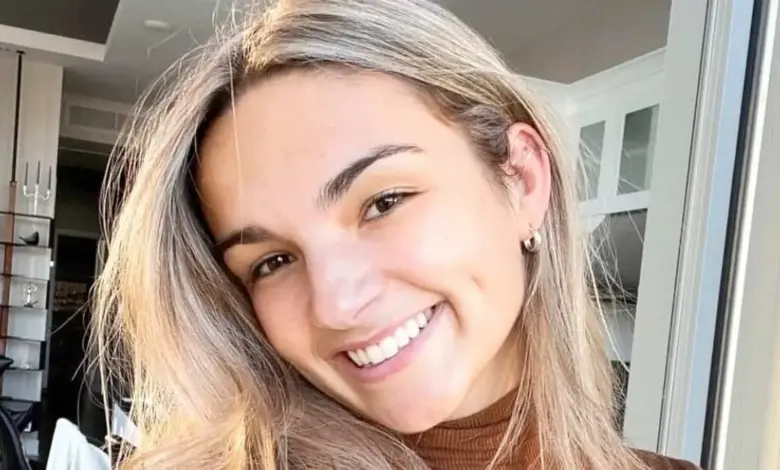
In the case linked to Amélie Champagne, naturopathie did not remain a benign label for wellness advice. It became the center of a legal finding that ended with a $15, 000 penalty after Kadeja Lefebvre admitted she had carried out acts reserved for physicians. That detail matters because the public story is not only about one practitioner; it is about how far a non-physician can go when medical uncertainty, distress, and trust collide.
What was actually proven in court?
Verified fact: Kadeja Lefebvre was recognized as guilty of practicing medicine illegally and was ordered to pay a total of $15, 000, with $5, 000 tied to each of three counts. The agreed facts state that she diagnosed a disease or diseases in Amélie Champagne and prescribed medications or substances even though she was not authorized by the College of Physicians on February 24, 2022. The same record says she proposed a treatment plan linked to Lyme disease that included a specific diet and several naturopathic products.
Verified fact: The record also states that Champagne began the naturopathie treatment and experienced several adverse effects. That is the first key point the public should not miss: the issue is not merely terminology, but the practical impact of advice that crossed into medical territory.
Why does the Amélie Champagne case raise a broader public question?
Verified fact: Amélie Champagne was 22 when she died by suicide in September 2022 after years of symptoms resembling Lyme disease. A public inquiry followed, and coroner Julie-Kim Godin issued 19 recommendations in September 2024. Her report did not determine whether Champagne truly had Lyme disease, but it did state that the death was caused by a polytrauma resulting from a fall into the void.
Informed analysis: The central question is what a vulnerable patient hears when a person without a physician’s license presents a diagnosis as certainty. In this case, the answer appears to be that medical doubt was replaced by an explanation, then by a plan, then by products. That sequence is important because naturopathie often presents itself as supportive care, yet the facts here show it moving into diagnosis and treatment.
Verified fact: Champagne’s father, Alain Champagne, former president of Groupe Jean Coutu and now head of Groupe Maurice, has repeatedly spoken publicly about the system’s failure in his daughter’s case. His presence in the public debate underscores how deeply this file has cut beyond a single courtroom decision.
What did the disciplinary record show beyond one patient?
Verified fact: The College of Physicians sent a mystery patient to consult Lefebvre after the coroner’s recommendation. The man complained of abdominal pain and headaches. During the consultation, Lefebvre carried out several physical evaluations, suggested a possible vitamin deficiency, a possible bacterial or parasitic infection, and referred him to his doctor. She also made recommendations about diet and natural products.
Verified fact: The disciplinary record also says the College had already sent Lefebvre a warning letter in 2018 telling her to stop any reserved act linked to Lyme disease. That earlier warning matters because it shows the later case was not an isolated misunderstanding. It was preceded by explicit professional notice.
Who is implicated, and how have the institutions responded?
Verified fact: In the agreed statement of facts, Lefebvre admitted through her lawyer that she had diagnosed diseases after a physical exam and prescribed medications or other substances. The College of Physicians stated that illegal medical practice poses risks to the population and urged patients to be wary of miracle treatments and to question a person’s training and competence before using their treatments.
Verified fact: The public record also notes that the coroner could not determine whether Champagne truly had Lyme disease. That uncertainty is significant because it leaves open the question of whether the underlying suffering was ever correctly identified. What is clear is that the treatment she received caused adverse effects, while the search for answers continued until her death.
Informed analysis: The implication is not that naturopathie is identical to medicine, but that it can become dangerous when it is used as if it were medicine. That boundary is the core of this case. Once diagnosis, prescription, and treatment planning enter the picture, the public can no longer assume it is harmless wellness guidance.
What should change after this file?
Verified fact: The disciplinary penalty is fixed at $15, 000, and the legal record is now part of a wider public account that includes a coroner’s inquiry and 19 recommendations. That combination gives the case institutional weight. It is not a rumor, not a private disagreement, and not a simple debate over lifestyle choices.
Informed analysis: The deeper lesson is accountability. When someone without a physician’s authority diagnoses disease, recommends treatment, and prescribes substances, the harm can be compounded by delay, false confidence, and side effects. In that sense, the Amélie Champagne file is a warning about how naturopathie can become a pathway to harm when oversight is weak and the limits of practice are ignored.
The public deserves clearer boundaries, stronger enforcement, and a more honest message about what naturopathie can and cannot do. In this case, the evidence already shows what happens when those limits are breached, and the Amélie Champagne case should remain a reference point for reform, transparency, and public reckoning around naturopathie.