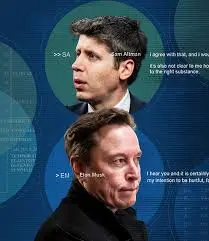
Elon Musk is entering court this week as his long-running dispute with OpenAI reaches a decisive stage in Oakland, California. The case puts the company’s founding promises, later restructuring, and the future of a major AI player under scrutiny at a moment when the industry is still racing to scale.
What Happens When a Founding Story Becomes a Legal Fight?
The trial begins with jury selection on Monday at a federal courthouse in Oakland, with opening arguments expected Tuesday. Judge Yvonne Gonzalez Rogers will oversee proceedings that are expected to last two to three weeks. The witness list includes Musk, OpenAI CEO Sam Altman, and Microsoft CEO Satya Nadella, underscoring how far the dispute has moved beyond a private feud and into a contest with industry-wide implications.
At the center of the case is Musk’s claim that Altman and others misled him about OpenAI’s direction. Musk says he backed the company in its early years on the understanding that it would remain a nonprofit focused on safety and open access to artificial intelligence. OpenAI and Altman reject that account, arguing that Musk knew the company would need to evolve and later broke ties when he could not shape that evolution to his liking.
What If the Court Sees OpenAI’s Shift Differently?
The dispute is not just about personalities. It is about whether the move away from a nonprofit structure amounted to a breach of the company’s founding agreement. Musk’s suit seeks major remedies, including the removal of Altman and OpenAI president Greg Brockman and more than $134 billion in damages. He says that money should be redirected to OpenAI’s nonprofit arm.
OpenAI, for its part, has denied the allegations and pointed to email and text exchanges meant to show Musk was aware of the restructuring path. The company says Musk supported the for-profit direction before tensions escalated. The record already filed in court includes emails, texts, and diary entries that are expected to be examined in full during the trial.
The stakes extend well beyond the immediate conflict. OpenAI is expected to go public later this year at roughly a $1 trillion valuation, and the case could influence how investors, regulators, and rivals interpret the company’s next phase.
What If the Verdict Reshapes the AI Race?
| Scenario | What it could mean |
|---|---|
| Best case | The trial clarifies the company’s history without disrupting its current trajectory, reducing uncertainty around OpenAI’s future. |
| Most likely | The case runs through the expected schedule, with the advisory jury verdict leaving Judge Yvonne Gonzalez Rogers to weigh any remedies later. |
| Most challenging | A ruling that forces a rollback of the for-profit transition or other remedies could complicate OpenAI’s future IPO plans and intensify pressure on the company. |
Because the jury’s verdict is advisory, the final decision rests with the judge. That creates a layered risk for both sides: even a courtroom win may not deliver an immediate end to the dispute, and any remedy phase could keep uncertainty alive well after the trial concludes.
What Happens When Power, Money, and Narrative Collide?
This fight has already become a broader story about who gets to define the origins of modern AI. Musk says he was drawn in by a mission-first promise and then pushed aside when the structure changed. OpenAI says he agreed to the need for change and later chose to compete. Both accounts cannot be fully right, which is why the trial matters: it will test not only legal claims, but the credibility of the stories that powerful founders tell about their own companies.
It also arrives after years of public hostility. The rivalry has played out in filings, public remarks, and competing narratives that have turned a corporate dispute into a high-stakes test of trust. With the case now in court, the next few weeks should reveal how much of that history can be proven, how much remains interpretation, and how much will still be unresolved when the trial ends.
For readers, the lesson is straightforward: watch the testimony, the documentary record, and the judge’s eventual view of remedy. The case could affect OpenAI’s path, its public-market ambitions, and the broader AI boom. However the courtroom story breaks, Elon Musk will remain central to how the market understands the risks of founder conflict in the age of AI. Elon Musk