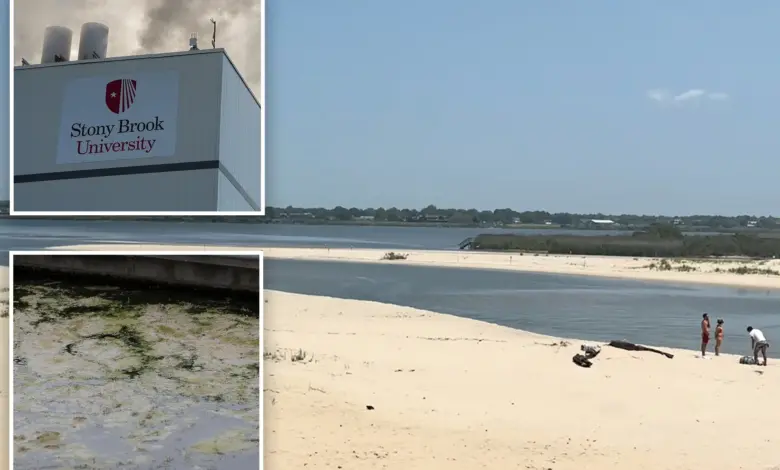
Bacteria tied to Long Island waters are no longer a distant warning. Researchers say the risk is now present in several ponds and bays, and the sharpest alarm is not only the infection itself but the way warming water, nitrogen runoff, and harmful blooms are reinforcing one another. The immediate danger is stark: victims infected with vibrio vulnificus face a 20% chance of dying within 48 hours.
What is the public not being told about the spread?
Verified fact: Stony Brook University professor Dr. Christopher Gobler, an ecologist in the School of Marine and Atmospheric Sciences, said his team found evidence of vibrio vulnificus hotspots in several ponds. He identified the bacteria as present and a risk in local waters, and warned that it can enter through open wounds. He also said the bacteria has now been found in Sagaponack Pond, Mecox Bay, and Georgica Pond on the South Fork.
Verified fact: Researchers have tracked the deadly bacteria since it was first detected in the Long Island Sound in 2023, when three people died from infections. No deaths have been reported on Long Island since then, but the risk is described as growing each summer as waters continue to warm.
Analysis: The important shift is geographic and seasonal. What was once framed as a limited threat tied to a single detection has expanded into multiple bodies of water. That expansion changes the public-health question from isolated exposure to a broader pattern that now demands routine attention.
How are warming waters and runoff feeding the problem?
Verified fact: Gobler linked the spread to a combination of nitrogen runoff, algae blooms, and climate change. He said nitrogen from Suffolk County’s roughly 360, 000 aging cesspools and septic systems is leaching into waterways and helping drive harmful algae blooms. He added that the nitrogen continues to feed blooms as water warms and oxygen levels fall.
Verified fact: Gobler also warned that East Quogue, Southold, and the entire western half of Shinnecock Bay are filled with algae that are pumping shellfish full of a poisonous neurotoxin described as 1, 000 times more poisonous than cyanide, causing major losses in the oyster industry.
Analysis: Taken together, the problem is not just a bacterium in water. It is a cascading environmental failure in which aging wastewater systems, heat, and nutrient pollution appear to create the conditions for dangerous growth. That makes the issue partly medical, partly ecological, and partly infrastructure-related.
Who is most exposed when the water warms?
Verified fact: Gobler said people who are immunocompromised or elderly and have open wounds in summer may want to stay out of the water. He also said dogs on Long Island have gotten sick and even died from drinking lake water.
Verified fact: Researchers warned that the infection can be extremely serious and move quickly once it enters the body. The earlier Long Island cases remain the clearest local marker of how severe the outcome can be.
Analysis: The exposure profile is wider than many beachgoers may assume. The risk is not limited to eating seafood. It can also come from contact with seawater or other contaminated water, which means ordinary summer behavior can become dangerous when conditions are right.
Who benefits from delay, and what should happen next?
Verified fact: Researchers at the University of Florida are developing a Vibrio early warning system for the eastern U. S. They say the goal is to help public health departments anticipate and respond to potential outbreaks.
Verified fact: The Centers for Disease Control and Prevention has identified vibrio vulnificus as a flesh-eating bacteria, and the broader pattern of Vibrio infections has been tied to rising sea temperatures and climate change.
Analysis: The stakes now extend beyond individual caution. If waters are changing in predictable ways, then public alerts, monitoring, and infrastructure decisions need to change as well. The evidence points toward a need for faster warnings, stronger wastewater management, and more transparent public communication about where the risk is highest.
The central issue is not whether the threat is real; the named institutions and researchers already show that it is. The harder question is whether local leaders will treat bacteria in Long Island waters as an isolated summer scare or as a signal that climate, runoff, and aging systems are converging into a recurring public-health hazard. If the pattern continues, the cost of inaction will be measured not only in water quality, but in avoidable illness, damaged fisheries, and more fear each summer around bacteria.