Turkish Airlines and the hidden scale of its pilot pipeline: 10 more Cessna Skyhawks signal a bigger bet

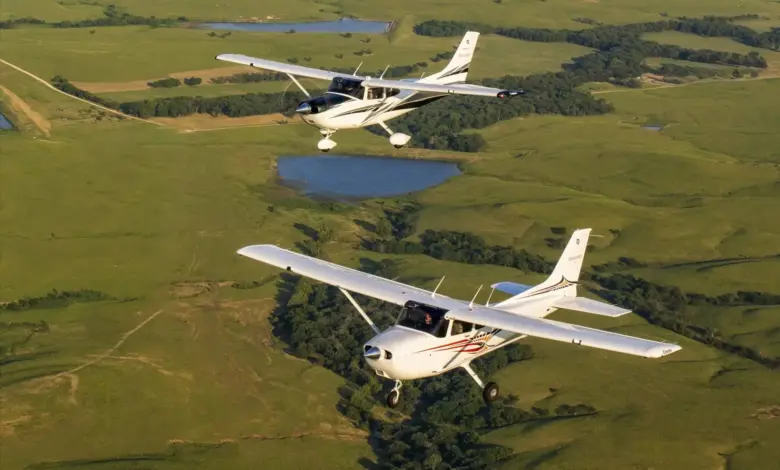
Turkish Airlines has placed an order for 10 more Cessna Skyhawks, a move that looks routine until the scale of the training fleet is considered. The latest purchase adds to a system that already operates 66 Cessna Skyhawk aircraft, making Turkish Airlines Flight Academy one of the largest Skyhawk training fleets in the region.
What is not being said about Turkish Airlines’ training expansion?
Verified fact: On April 23, 2026, Textron Aviation confirmed a signed purchase agreement from Turkish Airlines Flight Academy during the second day of AERO Friedrichshafen in Germany. The order is for 10 Cessna Skyhawk aircraft, with deliveries expected to begin this year. Turkish Airlines Flight Academy is based in Aydın, Türkiye, and was founded in 2013 as a wholly owned flight training organization of Turkish Airlines.
Informed analysis: The significance of the order is not the number alone. It is the message embedded in the academy’s fleet strategy. Turkish Airlines Flight Academy has already taken delivery of 51 aircraft over the past five years, and the new order extends a pattern of steady expansion. That suggests the carrier is not simply replacing aircraft; it is building depth into its pilot production line.
Why does the current fleet size matter?
Verified fact: Turkish Airlines Flight Academy trains pilots for Turkish Airlines and other regional carriers. It uses the Cessna Skyhawk alongside Diamond DA40 and DA42 aircraft. Textron Aviation said the academy’s existing 66 Skyhawks place it among the largest Skyhawk training fleets in the region.
Informed analysis: A fleet of that size implies a training operation designed for continuity, not short-term adjustment. The academy’s role is central to developing a long-term commercial pilot pipeline, and the latest order indicates that this pipeline remains a priority. In practical terms, the expansion is aimed at supporting growing airline pilot demand across Europe, which is the stated reason deliveries are expected to begin this year.
Who benefits from the order, and who is tied to the outcome?
Verified fact: Turkish Airlines Flight Academy is a wholly owned subsidiary of Turkish Airlines. Textron Aviation, owner of the Cessna brand, confirmed the agreement and framed the Skyhawk as a widely used training aircraft.
Informed analysis: The beneficiaries are clear. Turkish Airlines strengthens its control over pilot preparation, while Textron Aviation secures another fleet commitment from a major training operator. The broader implication is for the regional aviation labor pool: more aircraft in the academy mean more training capacity, and more training capacity means a stronger ability to feed pilots into airline operations over time. That makes the order more than a procurement notice; it is a capacity decision with long-range consequences.
What does the repeated expansion suggest for Turkish Airlines?
Verified fact: Textron Aviation said Turkish Airlines Flight Academy continues to scale its training capacity to meet long-term pilot demand. The academy has steadily expanded its Skyhawk fleet over several years and now combines that platform with other trainer types.
Informed analysis: The repeated expansion suggests an institution preparing for sustained demand rather than a temporary bump. The key detail is consistency: 51 aircraft delivered in the past five years, 66 Skyhawks already in service, and 10 more now on order. Read together, these figures point to a training ecosystem being built with industrial logic. The hidden truth is not that Turkish Airlines is buying airplanes for their own sake; it is that the airline is investing in a controlled supply chain for future pilots.
That matters because pilot training is often discussed as an operational back-office function, when in reality it is a strategic asset. The academy’s reach across Turkish Airlines and other regional carriers gives the expansion a wider footprint than a single airline’s staffing needs. In that sense, the order is a signal of confidence in sustained demand and in the academy’s ability to absorb it.
The clearest takeaway is this: Turkish Airlines is not merely adding aircraft to a training hangar. It is reinforcing the institutional machinery that produces future cockpit crews, and the latest order shows that the scale of that machine is still growing. For readers watching the aviation sector, Turkish Airlines is revealing its priorities through fleet expansion, and the real story is the long-term bet behind Turkish Airlines.