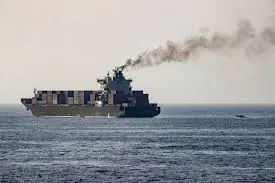
The latest boarding of a vessel linked to Iran shows how quickly the shadow fleet dispute has moved beyond a single chokepoint. On Thursday, the U. S. military said it boarded the sanctioned stateless tanker M/T Majestic X in the Indian Ocean, while Tehran’s forces had seized two commercial ships in the Strait of Hormuz just one day earlier.
Verified fact: the interdiction took place far from the Strait of Hormuz. Informed analysis: that distance matters because it suggests the contest is no longer just about one narrow waterway, but about enforcement across wider shipping lanes.
What is being told about the shadow fleet?
The central question is whether these ship boardings are isolated enforcement actions or signs of a broader maritime standoff. The Defense Department said U. S. forces carried out a “maritime interdiction and right-of-visit boarding” of the M/T Majestic X, describing it as a sanctioned stateless vessel transporting oil from Iran. The same statement said U. S. forces would continue global maritime enforcement to disrupt illicit networks and interdict vessels providing material support to Iran, wherever they operate.
Verified fact: the vessel was boarded in the Indian Ocean, and the military released video that appeared to show personnel descending from a helicopter and walking onto a large tanker. Informed analysis: the public message is not just about one tanker; it is about demonstrating reach.
Why does the timing matter?
The timing places this action inside a fast-moving exchange. A day before the Majestic X boarding, the Pentagon said U. S. forces had interdicted the Iran-linked stateless sanctioned M/T Tifani crude oil tanker in the Indo-Pacific Command’s area of responsibility, which includes the Indian Ocean. Then, on Wednesday, Tehran’s forces seized two commercial ships in the Strait of Hormuz.
The sequence matters because it suggests escalation in both directions. The shadow fleet is not being discussed in theory; it is being acted upon vessel by vessel. The U. S. military framing is that it is enforcing sanctions and disrupting illicit transport. Iran’s response, in the same period, has been to seize commercial ships and accuse the U. S. of a blockade violation.
Who is caught inside the standoff?
The human cost appears in the case of the two ships held by Iran. A Philippine government agency said 15 Filipino seafarers aboard the Epaminondas and the MSC Francesca were safe and unharmed, and that their families had been informed and were receiving government support. The Department of Migrant Workers said 10 Filipinos were onboard the Epaminondas and five were on the MSC Francesca.
Verified fact: the first confirmation from a non-Iranian entity that Iran’s Islamic Revolutionary Guard forces had seized the two ships came from that Philippine government agency. Informed analysis: the standoff is not limited to governments; it directly places seafarers and their families in the middle of a dispute over maritime control.
What do the competing claims reveal?
Iran’s side has portrayed the seizures as linked to a breach of its blockade of the Strait of Hormuz. The IRGC posted video Wednesday that appeared to show masked fighters moving toward the MSC-Francesca in a gunboat and climbing a ladder to the ship’s hull. It also showed another fast boat approaching the Epaminodes, followed by clips of fighters on board a ship opening a door and walking up stairs with rifles, though it remained unclear which vessel they were on.
On the U. S. side, the language is equally forceful. The Defense Department said it was targeting a “sanctioned stateless vessel” and vowed to continue maritime enforcement wherever such networks operate. The phrase shadow fleet fits that pattern: vessels described as stateless, sanctioned, or linked to Iran, operating across distant waters rather than in one fixed zone.
Verified fact: Iran has refused to reopen the Strait of Hormuz despite the U. S. -Iran ceasefire President Trump extended indefinitely this week. Verified fact: Iran has called the U. S. naval blockade of its ports and Iranian-linked ships a violation of the agreement. Those two claims create the core dispute now unfolding at sea.
Why does the shadow fleet matter beyond one tanker?
What emerges from the sequence is a maritime contest that is widening in geography and sharpening in tone. The Indian Ocean boarding shows the U. S. is not limiting enforcement to the Strait of Hormuz. The Iranian seizures show Tehran is willing to answer with commercial pressure of its own. Between them stand crews, cargoes, and shipping routes that depend on predictable rules the two sides now dispute.
The most important fact is not only that a tanker was boarded, but that both sides are treating merchant shipping as leverage. That raises the stakes for every operator moving through the region and for governments trying to keep trade lanes open while sanctions, seizures, and counter-seizures continue.
For now, the shadow fleet is no longer a hidden logistics problem. It is a visible front in an active confrontation, and the latest boarding suggests the next move may come far from the Strait of Hormuz, not only inside it.