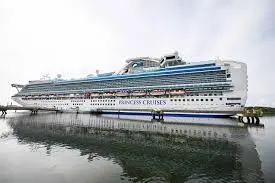
Princess Cruises found itself at the center of a somber maritime incident after Sapphire Princess recovered five bodies from the western Mediterranean while sailing toward Cartagena. The episode unfolded on April 21, when the crew spotted an orange inflatable lifejacket in the water and changed course to investigate. What followed was not a routine interruption, but a stark reminder that cruise travel can intersect with emergency response in open water.
What Happens When a Cruise Ship Encounters Distress at Sea?
The ship was on a voyage that had departed Civitavecchia, Italy, on April 19, with a route that later included Cagliari before continuing toward Cartagena. Once the distress sign was noticed, the crew deployed the Fast Rescue Boat and recovered the first body, then found four more about an hour later. The vessel then resumed its commercial voyage and delivered the bodies to authorities ashore.
The recovery was visible to passengers on board, and the atmosphere was described as somber. One passenger said the public dining and drinking decks were closed off and that people gathered to watch the commotion after an announcement over the speaker. Princess Cruises said it offered counseling to staff and passengers who wanted it, underscoring that the event affected more than the crew’s operational duties.
What If a Routine Route Becomes an Emergency Scene?
This case shows how quickly a standard sailing can shift into a search-and-recovery operation. The ship’s response mattered because the initial sign was limited: a lifejacket in the water, followed by bodies spotted in stages. That sequence left little room for uncertainty, but it did require immediate action, careful handling, and coordination with shore authorities.
Princess Cruises said the victims were not passengers or crewmembers of the vessel. Spain’s National Police are investigating whether the dead may be linked to a small boat discovered adrift off Cartagena. That boat had three bodies and two survivors aboard, and the survivors told investigators they had departed North Africa and had been at sea for as much as three weeks. The police are still examining how many people may have been on board, how many may have died, and whether violence was involved.
What Forces Are Reshaping the Story Beyond the Ship?
Although the incident happened aboard a cruise ship, its wider context is the western Mediterranean migration route. The UN International Organization for Migration said about 500 people died or disappeared on that route last year, out of roughly 8, 000 irregular arrivals by sea. That places the Sapphire Princess recovery inside a broader pattern of peril at sea, one that can surface unexpectedly in the path of commercial shipping.
Three forces stand out here:
- Operational readiness: The crew’s rapid turn and rescue deployment were decisive.
- Maritime visibility: Distress signs at sea can be subtle, making vigilance essential.
- Human vulnerability: The western Mediterranean remains a corridor where ship traffic and migration risk can overlap.
What Are the Most Likely Scenarios Ahead?
| Scenario | What it means |
|---|---|
| Best case | Authorities quickly identify the victims, the investigation clarifies the circumstances, and support for passengers and crew helps contain the emotional impact. |
| Most likely | The case remains under police review, with limited public details and continued emphasis on the crew’s response and the handoff to shore authorities. |
| Most challenging | Questions about the adrift boat, possible missing persons, and any violence at sea deepen the incident’s significance and extend the investigation. |
Who Wins, Who Loses, and What Should Readers Watch?
The clearest operational winner is the crew, whose fast decision-making appears to have brought the ship into a recovery role without delaying the voyage permanently. Authorities also benefit from the evidence trail that began with a sighting in the water and ended with bodies delivered ashore.
The losses are human first: unidentified victims, affected families, and the survivors and investigators trying to reconstruct what happened. Passengers and crew also absorbed the emotional cost of witnessing the recovery. For readers, the key point is that the maritime map is changing in real time, and commercial vessels may increasingly encounter situations that are humanitarian before they are logistical. The lesson is not panic, but preparedness, restraint, and attention to how quickly a routine sailing can become part of a larger crisis. That is the signal to watch as Princess Cruises.