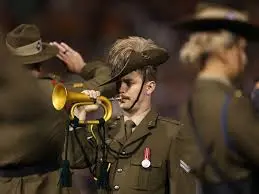
On Anzac Day, the familiar rituals of remembrance carry a weight that reaches far beyond ceremony. At dawn, Australians gather at war memorials across the country to honour those who served, those who fell, and those who continue to serve.
What does Anzac Day mean to Australians today?
For many, Anzac Day is not only a date on the calendar but a national moment of reflection shaped by sacrifice, endurance, and the idea of mateship. The story begins on April 25, 1915, when Australian and New Zealand soldiers landed at Gallipoli. The beaches there were part of a British military planning disaster, yet out of that deadly environment came a legacy that Australians still describe through the language of looking after one another.
That legacy is present in school assemblies, sporting clubs, and community events, where the Anzac spirit is remembered as something carried by men and women alike. In that sense, Anzac Day is both historic and living: it reaches back to the war dead while still shaping public life in the present.
How did war widen the meaning of remembrance?
The Gallipoli landing was only the beginning of a broader national memory formed by later conflicts. The context of the Second World War brought the war closer to home, with Japanese military power torpedoing ships in Sydney Harbour and bombing Darwin and Broome. The threat was not distant, and the fear it created shaped the way Australians understood their own vulnerability.
For one family, that history became deeply personal. A father, an uncle, and their cousins volunteered to defend what was described as a fledgling democracy. Their generation included schoolteachers, rugby coaches, and a family doctor, all of whom left ordinary lives to face the brutality of the Pacific War. In this telling, Anzac Day is not only about battlefield heroism. It is also about the interruption of normal life, and about the way a country asks its citizens to carry memory across generations.
One of the darkest examples from that war came on February 14, 1942, when the Vyner Brooke was sunk by Japanese aircraft. On Bangka Island in Indonesia, 22 Australian nurses and 60 injured soldiers who had survived were sheltering on Radji beach when Japanese soldiers found them. The nurses were raped before being machine-gunned on the water’s edge, and the injured soldiers were bayoneted to death. Lieutenant Vivian Bullwinkel survived and later gave witness to the atrocity. Her survival gave a human face to a crime that otherwise might have remained an abstraction.
Why does the Kokoda Trail still matter in Anzac Day memory?
The Kokoda Trail remains one of the most powerful symbols in this remembrance. It is a narrow path through the mountainous spine of Papua New Guinea’s Owen Stanley Range, and thousands of Australians make the pilgrimage to walk it each year. In peacetime, it is described as treacherous and taxing. In 1942, it was something far harsher: a battlefield where young, poorly trained soldiers were sent to slow the advance of the Japanese army.
Men who had been working in offices in Sydney’s eastern suburbs were rushed through training and sent into the mountains. The tactical decision to take the army over the terrain rather than attack Port Moresby by sea turned the trail into a slaughterhouse. Yet, even in that impossible setting, they delayed the advance long enough for reinforcements to arrive and for American military power to begin changing the course of the war.
One memory in the story is especially poignant: a photo of a father’s rugby team from his teenage years, smiling and full of hope, before several of those faces were later killed fighting in New Guinea. That contrast between youth and loss gives Anzac Day its emotional force.
What is the message of Anzac Day now?
At dawn, millions of Australians gather at war memorials across the country, and the ritual still asks the same hard question: how should a nation respond to sacrifice? The answer offered in this account is not grand or abstract. It is found in memory, in the recognition of suffering, and in the continued effort to preserve freedom to enjoy the sport and everyday life that war dead never returned to.
That is why Anzac Day remains more than commemoration. It is a reminder that the freedoms enjoyed in peacetime were carried forward by people who faced the worst of war and expected little in return. As the dawn light reaches the memorials, the old question lingers with new meaning: what does a country owe the generation that made its peace possible?