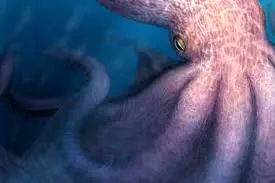
A giant octopus may have prowled the oceans about 100 million years ago, using powerful beaks to crush bone and shell, in a finding that is reshaping ideas about Cretaceous sea life. The research is based on fossilised beaks found in rocks dating from 72 million to 100 million years ago. Scientists involved in the study say the animal could have reached up to 19 metres in total length.
Fossil beaks point to a giant octopus
The work focused on dozens of newly identified fossils and a re-examination of 15 large fossil beaks that had previously been assigned to vampire squids. The latest analysis says those beaks belonged to a group of ancient octopus relatives known as Nanaimoteuthis, while digital imaging revealed an additional 12 octopus beaks hidden within Cretaceous rocks.
One species, Nanaimoteuthis haggarti, stood out because its beak was larger than that of the modern giant squid. Using the relationship between jaw size and body length in modern finned octopuses, the team estimated that the animal may have measured between 7 and 19 metres in total length. That estimate places the giant octopus among the largest invertebrates ever identified.
Wear on the jaws shows how the giant octopus fed
Distinct wear patterns on the fossilised beaks suggest the animals did not feed softly. The beaks showed blunted and rounded features, plus chips and scratches, which researchers linked to repeated handling of hard prey. Dr Yasuhiro Iba, a palaeontologist at Hokkaido University and lead author of the research, said the giant octopus likely used its long arms to seize prey and its powerful lower jaw to crush shells or bones. He said the strong wear indicated frequent processing of hard prey.
The study suggests the diet may have included bony fish, shelled animals and possibly giant marine reptiles such as mosasaurs. The paper also says the animals may have rivalled apex predators such as mosasaurs and plesiosaurs.
Experts say the giant octopus changes the picture of ancient seas
Dr Iba said the creatures were “giant predators at the very top of the Cretaceous marine food web, ” adding that the finding changes the view that Cretaceous seas were dominated only by large vertebrate predators. Dr Thomas Clements, a palaeobiologist at the University of Reading who was not involved in the research, said the beak size was “quite amazing” and called the animal “a massive one. ”
Christian Klug, a palaeontologist at the University of Zurich who reviewed the research, said the animals may have been able to hold onto prey with their tentacles and suckers. Dr Nick Longrich, a paleontologist at the University of Bath, said his hunch was that they were mainly preying on ammonites, while still behaving as opportunistic predators.
For decades, scientists had treated vertebrates such as fish and reptiles as the main ocean predators, with octopuses and squid in supporting roles. This giant octopus study pushes that picture further and suggests a far more competitive marine food web than once believed.
What remains unknown about the giant octopus
Several questions remain unanswered, including the exact body shape of the animals, the size of the fins and how quickly they could swim. No fossil has yet been found with stomach contents that would provide direct evidence of what they ate. Even so, the beaks, wear patterns and size estimates point to a giant octopus that was far from a minor player in the ancient oceans.
The next step will be further work on the fossil record to test how widespread these giant octopus relatives were and whether more specimens can sharpen the size estimates. For now, the study leaves one clear message: the giant octopus may have been one of the most formidable predators in the Cretaceous seas.