The northern territory long-drop toilet collapse is a reminder that remote travel can turn abruptly risky when basic infrastructure fails. A tourist visiting the Henbury Meteorite Crater near Alice Springs was left waist-deep in excrement for about three hours before a tradesman rescued her, and the incident is now under investigation.
What Happens When a Routine Stop Becomes a Rescue?
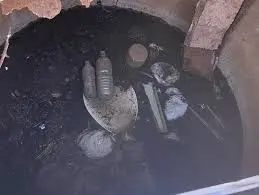
The woman was travelling with her husband and two children on a road trip through the Australian outback when she entered the pit toilet on Sunday afternoon. She did not emerge for three hours. NT WorkSafe said it had been notified of an incident at the Henbury Meteorites Conservation Zone, where initial inquiries indicated the toilet fell into the sewage pit and took the tourist with it.
A witness said the woman’s husband went up the highway to seek phone reception and help. A local tradesman then happened by, lowered a tow rope into the pit so she could stand on it, and used his car to lift her out. The rescue took about 45 minutes. The woman was described as shaken and was taken to hospital with only a few cuts and no serious injuries.
What Does the Current Picture Show?
The facts now on the table are narrow but important. NT WorkSafe has identified the collapse as a dangerous incident under work health and safety laws, and an investigation is ongoing. The conservation zone management notified the agency. Images of the outhouse showed the site cordoned off with caution tape after the event.
The setting matters because pit toilets remain common in remote areas, where infrastructure is basic and distances between help points can be large. Long-drop toilets use a deep pit to collect waste, unlike modern latrines. In this case, the location was about 120km south of Alice Springs, or roughly 145km south-west of Alice Springs, depending on the reference used in the available accounts. The key point is unchanged: the toilet was in a remote outback setting, and a structural failure created a prolonged rescue situation.
What If Remote Toilets Fail More Often Than People Expect?
The northern territory long-drop toilet collapse raises a practical question for remote tourism operators and visitors alike: what happens when basic amenities are not only inconvenient, but structurally unsafe? One comparative table captures the immediate risk profile.
| Factor | Observed in this case | Why it matters |
|---|---|---|
| Location | Remote conservation zone near Alice Springs | Delays access to help |
| Infrastructure type | Long-drop / pit toilet | Relies on a deep pit structure |
| Rescue trigger | Passing tradesman | Chance played a major role |
| Outcome | Shaken, minor cuts, hospital visit | Serious injury was avoided this time |
This does not prove a wider pattern from one event alone. It does show how quickly a routine stop can become a dangerous incident when a remote structure fails and communications are limited. The woman’s partner had to look for reception, the rescue depended on an unexpected passerby, and the extraction took far longer than anyone would consider acceptable in a normal facilities setting.
What If Tourists, Operators, and Inspectors Draw the Right Lesson?
There are three clear takeaways. First, visitors to remote sites should treat basic amenities as a safety issue, not just a comfort issue. Second, site managers need to treat the physical condition of pit toilets as part of core risk management, especially where families and tourists are involved. Third, investigators will need to determine whether the collapse was an isolated structural failure or something that should have been detected earlier.
The broader lesson is not panic, but caution. Remote travel always involves a thinner safety margin, and this incident shows how quickly that margin can disappear. Even without serious injury, three hours trapped in a sewage pit is a reminder that small facilities can carry outsized consequences when maintenance, design, or oversight falls short.
What readers should anticipate next is a factual assessment of the collapse, not speculation. If there is a weakness in the structure, it will matter for the site and for similar remote facilities. If it was a one-off failure, the case still underscores how fragile the response chain can be when a rescue depends on luck, distance, and one passing tradesman. The northern territory long-drop toilet collapse is therefore more than an odd headline: it is a practical warning about safety in remote places.