Father, teen son arrested after bomb squad destroys chemicals at Syosset home: 5 details that raise bigger questions

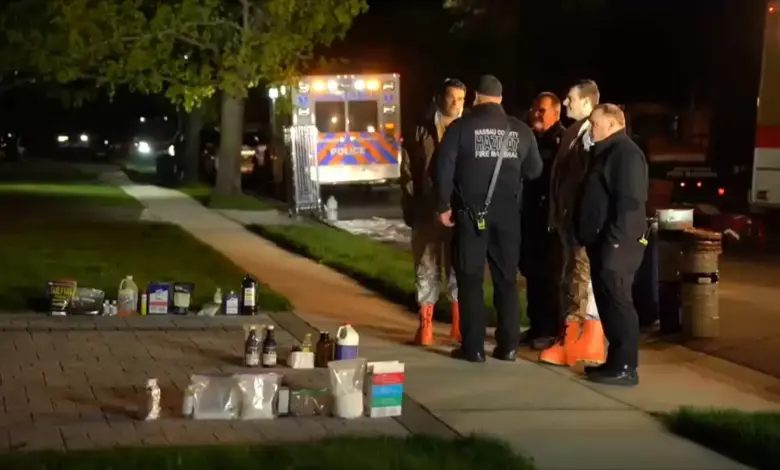
A father and his teenage son are facing multiple charges after investigators discovered chemicals at a Syosset home that had been combined into explosive materials. The case began with a bias incident at Syosset High School, but it widened fast once police reached Patricia Lane and found what officials described as highly unstable substances. The response shut down the neighborhood for hours and brought in specialized units that treated the scene as a serious hazard, not a routine domestic search.
How the investigation moved from school graffiti to a hazardous home search
Police say the inquiry started after a swastika was drawn in a boys’ bathroom at Syosset High School on Wednesday. The 15-year-old was identified as the person suspected of drawing the symbol, and the school district later told students and staff that the matter had become a criminal investigation. That initial bias incident led detectives to the family residence, where authorities found a variety of chemicals inside the house and in a detached shed. By 1: 30 p. m. ET Wednesday, Patricia Lane was shut down as a precaution.
The significance of the case is not only the alleged graffiti, but the chain reaction that followed. Once officers located materials they believed were dangerous, the situation shifted from a school discipline issue to a public safety response. The bomb squad was called because the chemicals were considered too hazardous to transport after they had been combined to create explosive materials. Officials destroyed the substances on site.
What was found at the Syosset home
The search uncovered multiple acids, oxidizers and fuels in a detached shed about four feet from the home. The shed was only partially secured with a clear tarp that had holes and was held together with tape. Investigators also found highly unstable chemicals, including nitroglycerin, aluminum powder, aluminum sulfide and hydrogen sulfide. Those details help explain why the response was so large: the issue was not simply possession, but the alleged handling and combination of materials that could become explosive.
Authorities say the father, Francisco Sanles, 48, paid for the purchase of the chemicals on multiple occasions. Court papers say he took his son to hardware stores, including Lowe’s and Home Depot, to buy materials for rocket building. The father and son told police the chemicals were bought for rockets, but neither was qualified to handle them in that manner. One charging document says Sanles did not supervise his son while he heated, cooled or combined the chemicals.
Father and teen son charges reflect the scale of the case
Sanles faces two counts of criminal possession of a weapon, two counts of criminal facilitation, two counts of endangering the welfare of a child and reckless endangerment. The teen faces two counts of criminal possession of a weapon, criminal mischief, aggravated harassment and making graffiti. The father was arraigned Thursday, and the teen was scheduled for a separate court appearance. Sanles pleaded not guilty to seven criminal counts, including felony criminal possession of explosives, while his legal aid attorney said he vehemently denies the allegations and has cooperated with police.
At the father’s arraignment, a Nassau County prosecutor said the boy had scarring and burns on his hands and told police he had previously spilled some of the chemicals on himself. That detail underscores the physical risk already present before the bomb squad arrived. It also shows why investigators treated the scene as more than a storage problem: the materials had already produced injury, and the home environment had become unsafe enough to warrant evacuation and controlled removal.
Expert concern and the wider community impact
Nassau County police, the Fire Marshal, the Arson Bomb Squad, the Emergency Service Unit and the Hazardous Material Response Team all responded to the scene, showing how quickly a school-based hate incident expanded into a multi-agency emergency. The school district said it is cooperating with law enforcement and that the student will face serious consequences under the district’s Code of Conduct. It also said antisemitism and hate speech have no place in the community or in schools.
The broader impact reaches beyond one family and one neighborhood. A bias incident can expose a deeper pattern of access, supervision and risk when hazardous materials are involved. In this case, the allegations raise questions about how a school discipline matter intersected with explosive substances at home, and how quickly a residential block can become an emergency zone when dangerous chemicals are found. For Syosset residents, the immediate fear was public safety; for the school community, it was the reminder that hate symbols can uncover far more serious dangers than the initial act suggests. As the case moves through court, one question remains: how many warning signs were visible before the emergency reached Patricia Lane?