The world was pulled into an unusual debate this week when a U. S. special envoy claimed he asked the U. S. president and FIFA to replace Iran with Italy at the World Cup. The idea landed at a sensitive moment, with the tournament set to begin in less than 50 days and Iran already placed in Group G.
What Happens When a Proposal Collides with Qualification?
The immediate reaction is clear: Italy’s sports minister said the proposal would not happen and should not happen. That response matters because it shifts the discussion from political fantasy to institutional reality. Italy did not qualify for the tournament, while Iran did, and FIFA president Gianni Infantino has repeatedly said Iran will compete as planned.
This is not just a symbolic dispute. It tests how much room, if any, exists for political pressure inside a competition that is supposed to follow sporting rules. The governing body has already signaled its position publicly, and its regulations give it discretion only if a team withdraws. On the current facts, Iran has not withdrawn. That makes the proposal difficult to reconcile with the existing structure of the event.
What If FIFA Stays with the Current Plan?
The most likely outcome is also the simplest: Iran remains in the World Cup, and the controversy fades into the background as the tournament approaches. FIFA has said the Iranian team is coming, and that stance has been consistent even amid broader conflict between the U. S. and Iran. In practical terms, that means preparation continues around the existing draw, including Group G with Belgium, Egypt and New Zealand.
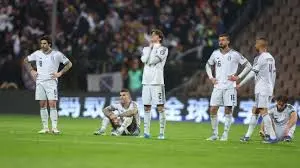
For Italy, the issue is more awkward than actionable. The four-time champions failed to qualify after losing on penalties to Bosnia-Herzegovina in the European playoffs. That fact alone limits the plausibility of any late switch. Even if political enthusiasm exists, qualification remains the central barrier. In the world of international football, pedigree can add prestige, but it does not replace the rules of entry unless the governing body creates an exception.
What If Politics Pushes Harder Than Sport?
The more challenging scenario is not a formal replacement, but prolonged pressure around the tournament. That could keep the story alive in the days before kickoff and force FIFA to defend its position more publicly. It could also create discomfort for stakeholders trying to keep the event focused on competition rather than diplomacy.
There is a limited but important clue in FIFA’s own regulations: the body has “sole discretion” if a participating association withdraws, and it may replace that association with another. That language is narrow, not open-ended. It does not describe a general power to rewrite the field for preference or prestige. So any attempt to stretch the rule would raise questions about consistency, fairness and institutional credibility.
| Scenario | What it means | Likelihood signal |
|---|---|---|
| Best case | The issue is closed quickly and the tournament proceeds on schedule with Iran in Group G | Strong, because FIFA has already affirmed the current plan |
| Most likely | Political comments continue, but no change is made to the field | Strong, because qualification and rules remain intact |
| Most challenging | Pressure intensifies and FIFA must repeatedly justify its position | Possible, but still constrained by the absence of a withdrawal |
Who Wins, Who Loses, and Why Does It Matter for the world?
The clear winners, if the current plan holds, are the institutions that preserve sporting order: FIFA, the teams already qualified, and the tournament schedule itself. The losers are those hoping to use a late political opening to alter the bracket. Italy may gain attention from the episode, but not a place in the competition unless circumstances change dramatically.
For the wider world, the significance lies in what this episode reveals about the overlap between sport and state power. A World Cup slot is not normally treated as an object of negotiation. Yet this debate shows how quickly high-profile events can become arenas for diplomacy, symbolism and personal lobbying. That does not mean the system is broken. It means the system is being tested in public.
The useful takeaway is that rules still matter more than rhetoric. Unless Iran withdraws, FIFA’s own framework points toward continuity, not substitution. Readers should watch for any shift in the governing body’s language, any sign of withdrawal, and any further attempts to turn a sporting decision into a political one. For now, the most grounded forecast is stability, not change, and the world will likely see the same World Cup field that has already been set.