Spain, Slovenia and Ireland have placed the European Union at the center of a widening political test, urging it to debate whether its association agreement with Israel should be suspended. The move comes as the three governments say conditions in Gaza, the occupied West Bank and Lebanon are worsening and that the bloc cannot stay “on the sidelines” any longer. Their appeal has sharpened an already difficult argument in Brussels: whether trade and diplomacy can remain intact when human rights and international law are, in their view, being breached.
Why the debate is now escalating
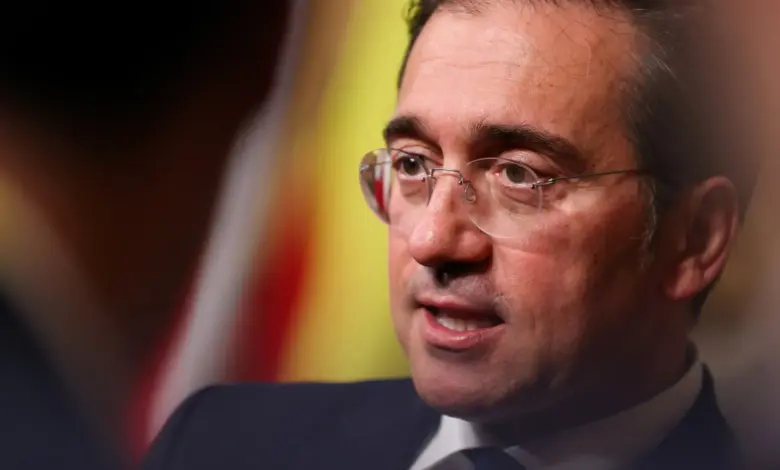
The immediate trigger is a formal request from Spain, Slovenia and Ireland that the issue be discussed by EU foreign ministers in Luxembourg. Spanish Foreign Minister Jose Manuel Albares said the three countries had asked for the suspension of the association agreement to be placed on the agenda. In their letter to EU foreign policy chief Kaja Kallas, the governments argued that Israel’s actions “contravene human rights and violate international law and international humanitarian law. ”
That language matters because the European Union-Israel pact is not only political; it also sets the frame for trade and broader relations. The three governments said Israel is in breach of Article 2 of the agreement, which ties relations to respect for human rights. They also said an earlier EU review had already found Israel was failing to meet those obligations, and that the situation has worsened since then.
What lies beneath the pressure on Brussels
The push is not limited to one policy lever. The same debate now encompasses the future of trade measures tied to settlement goods. France and Sweden are advancing a separate proposal for stronger restrictions on imports from illegal Israeli settlements in occupied Palestinian territories, including the possibility of tariffs and import limits. Their position, set out in an internal paper, argues the EU should take stronger action to limit commercial engagement with settlements.
The French and Swedish governments say settlement expansion is undermining the prospects for a two-state solution. They singled out the “E1 project” as a development that could cut off northern and southern parts of the West Bank under the control of the Palestinian Authority and isolate it from East Jerusalem. Their paper also said a total import ban on settlement goods could be justified because of the deteriorating situation.
This is where the political fault line inside the bloc becomes clear. Several states have resisted punitive steps in the past, forming a blocking minority that prevented sanctions. That history explains why the current push is framed less as an immediate break and more as a demand for debate, legal review and “bold and immediate action. ”
Expert and official arguments inside the dispute
Jose Manuel Albares framed the issue as a test of Europe’s credibility, saying he expected every European country to uphold what the International Court of Justice and the United Nations say on human rights and the defence of international law. He added that anything different would be “a defeat for the European Union. ”
The foreign ministers of Spain, Slovenia and Ireland said repeated appeals to Israel to reverse course had been ignored. Their letter cited the humanitarian crisis in Gaza, describing conditions as “unbearable, ” and pointed to continuing violations of the ceasefire agreement and insufficient aid entering the territory. They also warned that violence in the occupied West Bank was intensifying, with settlers acting “with absolute impunity” alongside military operations causing civilian deaths.
The same argument appears in the settlement debate. France and Sweden warned that expanding settlements and the controversial E1 project threaten the territorial basis for any future political settlement. Their request asks the European Commission to urgently examine the legal and practical feasibility of tariffs on settlement products and import restrictions through export licences.
Regional and global implications for the European Union
The issue has implications well beyond the immediate vote count in Brussels. If the European Union moves even partially toward suspension or tougher trade steps, it would signal a sharper willingness to connect market access with legal and humanitarian standards. If it does not, the bloc risks deepening internal divisions over how to respond to the Gaza war and the wider occupied territories.
The stakes are also financial and diplomatic. Kaja Kallas said at a donor conference in Brussels that the estimated cost of rebuilding Gaza had risen to $71bn. That figure underscores why member states are being pushed to decide whether aid, diplomacy and trade can still operate separately from accountability debates.
The broader regional impact is equally significant. Ireland is also seeking to revive its Occupied Territories Bill, which would ban trade in goods and services from illegal settlements in the occupied Palestinian territory, including the West Bank. In parallel, the current discussion reflects a growing view among some member states that the bloc’s response must match the scale of the crisis, not merely acknowledge it.
For now, the outcome remains open, but the political message is unmistakable: the European Union is being asked to choose whether its trade relationship with Israel can continue unchanged while human rights, humanitarian access and international law remain at the center of the dispute. How far will member states go when the next vote arrives?