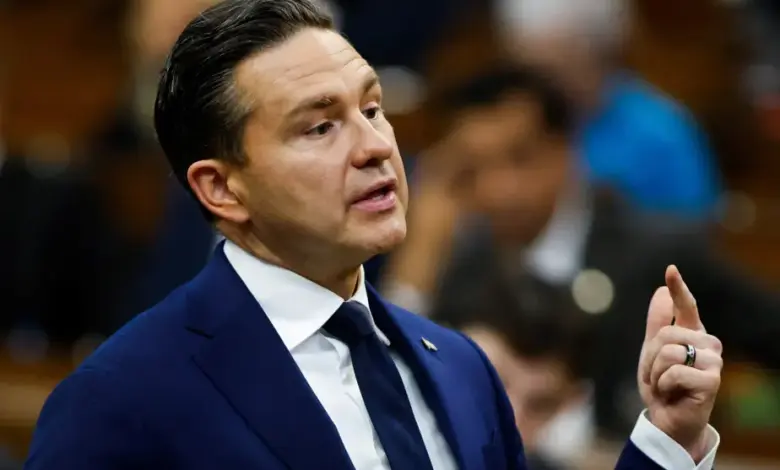
The word transfuge is now carrying political weight in Ottawa. Marilyn Gladu’s move to Mark Carney’s Liberal caucus, coming on the eve of the party’s national convention in Montreal, has become more than a headline about one MP’s shift. It is now a test of whether Pierre Poilievre can contain a string of defections that are beginning to shape the public reading of his leadership, while also giving the government a possible path to a majority in the Commons.
Why the latest transfuge matters now
Gladu is not just another name on a list. She is the fourth Conservative to cross since the end of last year, and the fifth opposition MP overall to join the Liberals since Mark Carney took office. In Ottawa, that kind of movement is rare enough to be noticed; when it happens repeatedly, it changes the political atmosphere. The immediate practical effect is clear: her arrival gives the government a better chance of securing a majority in the three by-elections scheduled for Monday. The broader effect is less mechanical and more strategic. Each transfuge gives the Liberals an opening to project momentum while forcing Conservatives to explain why their caucus keeps losing members.
Poilievre, leadership, and the optics of departure
Dimitri Soudas, former communications director to Stephen Harper, said Gladu’s departure weakens Pierre Poilievre’s leadership, and he argued that this latest move is more damaging than the earlier ones because it involved a “pure” Conservative. That assessment matters because it shifts the story from a single personal choice to a judgment about party cohesion. Chris d’Entremont had already pointed to Poilievre’s leadership style as one reason for leaving the Conservative caucus, while Michael Ma and Matt Jeneroux followed later. The pattern is not proof of an organized rebellion, but it does suggest a persistent vulnerability: when members begin to leave in sequence, the question is no longer only who is going, but why the leadership has not stopped the bleeding.
Amanda Galbraith, a former Harper adviser and partner at Oyster Group, offered a more tempered reading, saying the departures did not come from the Conservative caucus’s core and therefore may actually be a sign of internal unity. That view is important because it separates symbolic damage from structural damage. Yet symbolism still matters in politics. If the public sees a transfuge story repeat itself, the perception can outweigh the arithmetic.
Carney’s expanded tent and the risk of overreach
Carney has chosen not to treat Gladu’s arrival as an embarrassment. Instead, he has framed it as evidence that the Liberals can welcome different backgrounds while keeping the party’s values intact. He said he had extensive discussions with Gladu and stressed that she would vote with the government on abortion, equality, and the rights of Canadians to love who they love and be who they are. He also emphasized her business and management experience. That message is politically useful because it turns the transfuge into a sign of confidence rather than compromise.
But the approach carries risk. Some Liberals have welcomed the addition, while others are plainly aware that Gladu’s past positions on abortion, conversion therapy, vaccines, and social conservatism sit uneasily with standard Liberal messaging. Leah Gazan, the NDP MP, called Gladu an “extreme right-wing social conservative, ” while Yves-François Blanchet accused the Liberals of flirting with strong opponents of women’s control over their own bodies. Those reactions underline the central tension: a party that says it is broadening its tent must still persuade voters that the tent has not lost its shape. The transfuge strengthens the government numerically, but it also invites scrutiny over what principles are being stretched in the process.
Regional and national consequences
The timing is especially sensitive because the Liberal national convention is underway in Montreal, and the party is already projecting confidence. A fifth opposition MP joining the government side reinforces that image. Yet the same move also raises a larger question about political identity in a minority Parliament. If Carney can attract defectors from different ideological corners, the Liberals may be able to present themselves as the most stable vessel in Ottawa. If not, the accumulation of transfuge stories could eventually make the government look opportunistic rather than inclusive.
For the Conservatives, the challenge is immediate and reputational. Poilievre responded by urging Gladu to trigger a by-election and telling voters in Sarnia that they chose Conservatives, not a costly Liberal government. That response is meant to restore the language of mandate and accountability. Still, repeated defections keep pulling the discussion back to caucus discipline and leadership confidence rather than policy alone.
In the end, the transfuge story is no longer about one MP’s journey across the floor. It is about whether Carney’s openness becomes a strength and whether Poilievre can prevent more exits from defining his party’s public image. If the next weeks bring more movement, which leader will look more in control of the room?