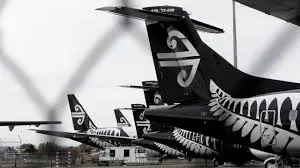
jet fuel airline cancellations have moved from a planning risk to a near-term operating reality as airlines face a sharp jump in fuel costs tied to the US-Israeli war with Iran. Air India and Air New Zealand have already moved to cut flights and raise fares, signaling how quickly higher fuel prices can force network changes.
What Happens When Fuel Becomes the Main Pressure Point?
For airlines, fuel typically makes up 20% to 40% of operating costs, which means even a short spike can change route decisions, pricing, and schedule reliability. Last week, the benchmark European jet fuel price reached an all-time high of $1, 838 per tonne, up from $831 before the war began. That gap has left airlines with little room to absorb the increase without passing some of it on to travelers.
The route risk is also growing. The Gulf is a major source of aviation fuel, supplying about 50% of Europe’s imports, and much of that supply moves through the Strait of Hormuz. The conflict has effectively closed that corridor in response to US and Israeli attacks, creating a supply shock that is being felt across airline balance sheets and schedules. Energy Intelligence has said the Al-Zour refinery in Kuwait alone provides roughly 10% of Europe’s jet fuel imports.
What If Airlines Keep Trimming Capacity?
Air New Zealand’s cancellations are expected to affect flights in and out of Auckland, Wellington and Christchurch, while smaller airports remain unchanged. The carrier said most affected customers are being offered alternative flights on the same day. Air India, meanwhile, is shifting its domestic fuel surcharge from a flat fee to one based on distance and has raised international surcharges in what it called one of the most challenging fuel cost environments airlines have faced in recent years.
Other carriers are taking similar steps. China Eastern Airlines has raised domestic surcharges, Korean Air has moved into emergency management mode, United Airlines and SAS have cut flights and increased ticket prices, Air France-KLM has said it will lift long-haul fares, and Cathay Pacific is raising its fuel surcharge. British Airways owner IAG and EasyJet have so far held off because their fuel was fixed before the war began.
| Possible outcome | What it could mean |
|---|---|
| Best case | Fuel disruptions ease and airlines stabilize schedules with limited extra cancellations. |
| Most likely | More fare increases, selective flight cuts, and continued use of surcharges. |
| Most challenging | Supply disruptions deepen, forcing broader cancellations and more aggressive price increases. |
What If the Conflict Continues Into the Next Booking Cycle?
Analysts warned that travellers should expect further ticket price rises and more cancelled flights as the conflict continues, and that view is consistent with the moves already underway. In Asia, Japan and South Korea are especially exposed because of their reliance on energy from the Middle East, making the current fuel shock broader than a single airline or region.
Ryanair’s Michael O’Leary said jet fuel supplies could start to be disrupted in May if the conflict continued, a reminder that the strain is not only about price but also availability. That distinction matters: when fuel becomes both expensive and harder to secure, airlines are more likely to protect cash flow by cutting capacity first and then adjusting fares.
Who Wins, Who Loses?
Winners are limited in this environment. Airlines that secured fuel at fixed prices before the war began have more breathing room. Travelers with flexible dates may still find same-day alternatives on some routes, as Air New Zealand is trying to provide. Everyone else faces the trade-off of higher fares, tighter schedules, and fewer choices.
Losers include carriers buying at current market rates, passengers on affected routes, and economies that rely heavily on Middle Eastern energy flows. For now, the clearest signal is that jet fuel airline cancellations are not a temporary scheduling issue but a symptom of a wider cost shock that may persist as long as the conflict does.
What Should Readers Watch Next?
The key indicators are simple: whether the conflict keeps the Strait of Hormuz constrained, whether jet fuel prices remain near current highs, and whether more airlines move from surcharge adjustments to outright capacity cuts. If those signals worsen, travelers should expect a longer period of higher fares and fewer options across multiple regions. If they ease, the pressure on schedules could stabilize more quickly. For now, jet fuel airline cancellations remain one of the clearest signs that the aviation market is adjusting to a fast-moving external shock.